

FAQs for Restless Leg Syndrome
Living with Restless Leg Syndrome (RLS) can be challenging, which is why our comprehensive FAQs are designed to provide clear, informative answers. Covering everything from symptoms and diagnosis to treatment options, lifestyle strategies, and long-term management, this guide addresses the questions most commonly asked by patients and their families. At Psychiatry of the Palm Beaches, our experienced clinicians offer evidence-based insights and personalized recommendations, empowering you to better understand RLS, manage uncomfortable sensations, improve sleep quality, and enhance overall daily functioning. For more information, contact us today or book an appointment online! We are conveniently located at 2950 Halcyon Lane Suite 605 Jacksonville, FL 32223.
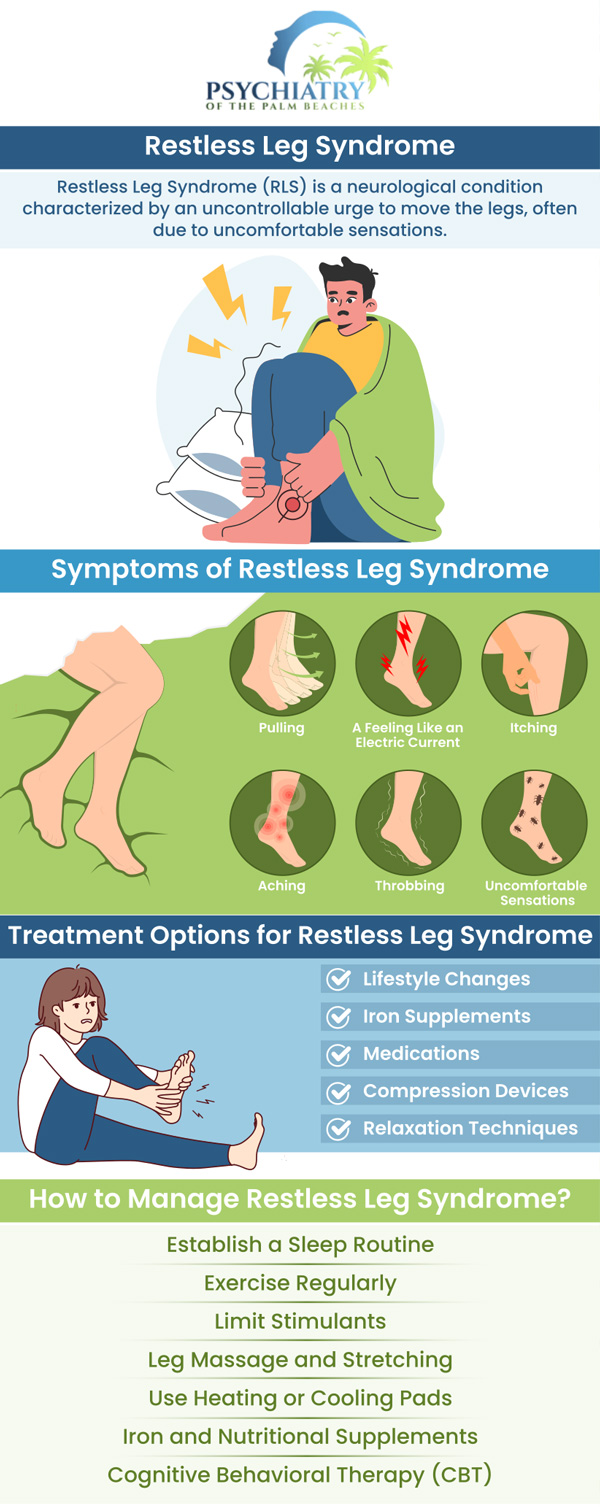
Table of Contents:
What are the symptoms of Restless Leg Syndrome?
What causes Restless Leg Syndrome?
How is Restless Leg Syndrome diagnosed?
How does Restless Leg Syndrome affect sleep?
Can Restless Leg Syndrome be hereditary?
What are the treatment options for Restless Leg Syndrome?
Can lifestyle changes help manage Restless Leg Syndrome?
How is Restless Leg Syndrome related to iron deficiency?
Can medication help with Restless Leg Syndrome symptoms?
Does caffeine make Restless Leg Syndrome worse?
Can stress trigger Restless Leg Syndrome?
What lifestyle changes help improve Restless Leg Syndrome?
How does Restless Leg Syndrome impact daily life?
How Does Psychiatry of the Palm Beaches Personalize Care for Restless Leg Syndrome?
Restless Leg Syndrome (RLS) is a neurological condition that causes an uncontrollable urge to move the legs, usually due to uncomfortable sensations such as creeping, crawling, tingling, burning, or itching deep within the legs. These symptoms typically worsen during periods of rest or inactivity—most often in the evening or at night—making it difficult to relax or fall asleep. While moving the legs (walking, stretching, or jiggling) can bring temporary relief, many individuals still struggle with ongoing discomfort.
Our team at Psychiatry of the Palm Beaches has experience evaluating and supporting individuals with RLS. We offer comprehensive assessments to identify the underlying causes of your symptoms, and we work with you to develop a personalized treatment plan. This may include medication management, lifestyle recommendations, and addressing any coexisting mental health concerns such as insomnia, depression, or anxiety.
While the exact cause of RLS is not fully understood, research suggests that several factors—including genetics, dopamine imbalance, certain medical conditions, medications, and lifestyle factors—can contribute to its development.
At Psychiatry of the Palm Beaches, we recognize that RLS is not only a physical condition but also one that can significantly impact mental health and overall well-being. Many patients with RLS experience sleep disturbances, which can lead to increased irritability, anxiety, and even depression. In fact, the relationship between RLS and mental health is bidirectional: psychiatric conditions such as anxiety disorders, depression, and stress can worsen RLS symptoms, while RLS itself can increase the risk of developing mood disorders.
Additionally, we take a holistic approach by considering factors such as sleep hygiene, lifestyle habits, and underlying medical conditions like iron deficiency or diabetes, all of which can contribute to RLS or influence your mental health. We work collaboratively with primary care providers, sleep specialists, and neurologists to provide comprehensive care tailored to each patient.
RLS is primarily diagnosed based on your clinical history and symptoms, as there is no single laboratory test for this condition.
During your evaluation, our mental health professionals will take the time to ask detailed questions about the sensations you experience in your legs, the timing and frequency of your symptoms, and whether they improve with movement. Key features we look for include an uncontrollable urge to move your legs, discomfort that worsens during periods of rest or inactivity, and symptoms that become more noticeable in the evening or at night.
If needed, we may recommend blood tests to check iron levels and overall health, or a sleep study (polysomnography) if you report significant sleep disturbances or if periodic limb movements during sleep are suspected.
RLS is characterized by uncomfortable sensations in the legs—often described as creeping, crawling, tingling, or itching—that usually worsen in the evening or at night when you are resting or lying down. This discomfort leads to an uncontrollable urge to move the legs, often making it difficult to fall asleep or stay asleep throughout the night.
The resulting sleep disruption from RLS frequently causes fragmented, poor-quality sleep and chronic sleep deprivation. Individuals with RLS often report excessive daytime sleepiness, difficulty concentrating, irritability, and a decreased sense of well-being. Importantly, the ongoing lack of restful sleep can increase the risk of developing mood disorders such as depression and anxiety, which are areas of particular focus in our psychiatric practice.
We offer comprehensive evaluation and personalized treatment plans that address both the physical symptoms of RLS and any co-occurring psychiatric concerns. By effectively managing RLS and its impact on your sleep, we strive to improve your overall quality of life, mood, and mental wellness.
Research indicates that RLS can be hereditary. Studies show that individuals with a family history of RLS are significantly more likely to develop the condition themselves—about 40-90% of people with RLS report having a first-degree relative with similar symptoms. This hereditary form, known as primary or idiopathic RLS, often begins at a younger age and may progress more gradually.
Several genetic factors have been linked to RLS, including specific gene variants such as MEIS1 and BTBD9. However, having these gene variants does not guarantee you will develop RLS.
We encourage anyone who experiences symptoms of RLS—especially those with a family history—to seek evaluation. Our experienced mental health professionals can assess your symptoms, review your family history, and work with you to develop a personalized treatment plan.
Restless Leg Syndrome (RLS), or Willis-Ekbom disease, is a neurological condition causing an uncontrollable urge to move the legs, often with uncomfortable sensations. At Psychiatry of the Palm Beaches, we take a patient-centered approach, addressing both neurological and psychological aspects of RLS.
● Thorough Assessment and Diagnosis: Our clinicians conduct detailed evaluations to identify contributing factors such as iron deficiency, kidney disease, or peripheral neuropathy. We also assess for co-occurring mood and sleep disorders, including anxiety, depression, or insomnia, and may order blood tests or coordinate with your primary care provider.
● Integrative Treatment Options: For mild symptoms, we focus on sleep hygiene, regular exercise, avoiding triggers like caffeine or alcohol, and stress management. Severe symptoms may require medications such as dopamine agonists or alpha-2-delta ligands, with careful monitoring to manage side effects and overall mental health.
● Supportive Therapies: Cognitive-behavioral therapy (CBT), leg massages, and pneumatic compression devices can complement treatment.
● Ongoing Care and Collaboration: Regular follow-ups ensure your plan remains effective. We work closely with you and other healthcare providers to provide comprehensive, integrated care for RLS and associated mental health concerns.
Lifestyle changes can significantly help reduce the frequency and severity of Restless Leg Syndrome (RLS). Regular exercise like walking, stretching, or yoga can ease symptoms, though vigorous activity should be avoided close to bedtime. Consistent sleep routines and a relaxing nighttime environment are essential, as fatigue can worsen RLS. Limiting triggers such as caffeine, nicotine, and alcohol, along with incorporating stress-reduction techniques like meditation or deep breathing, can also help. Engaging in hobbies or using physical strategies—such as heat or cold packs, warm baths, or gentle massage—may provide relief. At Psychiatry of the Palm Beaches, we take a holistic approach, assessing underlying medical conditions like iron deficiency and coordinating care with your primary provider. While lifestyle changes may not cure RLS, they can improve comfort and quality of life, and our team creates personalized plans tailored to each patient’s needs.
Restless Leg Syndrome (RLS), or Willis-Ekbom Disease, causes an uncontrollable urge to move the legs, often with uncomfortable sensations. At Psychiatry of the Palm Beaches, we recognize that RLS can affect sleep, mental health, and overall well-being.
Iron deficiency is a key factor in RLS. Iron is essential for dopamine production, which regulates muscle movement and brain communication. Low iron levels, especially in the brain, can disrupt dopamine function, contributing to the urges and sensations of RLS. Standard blood tests may not always reflect brain iron levels, making ferritin testing important.
Our team may recommend iron supplementation if a deficiency is found, carefully managing dosage to ensure safety. By addressing iron levels alongside other therapies, we provide a comprehensive, individualized approach to help reduce RLS symptoms and improve quality of life.
Medication can play a key role in effectively managing the uncomfortable sensations and urge to move the legs that characterize RLS—especially when lifestyle changes alone are not enough.
Our psychiatrists are well-versed in the latest treatment options for RLS, including dopaminergic agents, medications that affect calcium channels, certain anticonvulsants, and, in severe cases, low-dose opioids. Each of these medications works in a different way to help reduce symptoms, and our clinicians carefully consider your unique health profile, the severity of your symptoms, and any underlying conditions when developing your personalized treatment plan.
It’s important to remember that while medications can greatly reduce RLS discomfort, they may not cure the condition and can sometimes cause side effects or lose effectiveness over time. At Psychiatry of the Palm Beaches, we prioritize ongoing monitoring and adjustment of your treatment, combining medication management with holistic and non-pharmacological approaches whenever possible.
Caffeine—a stimulant found in coffee, tea, chocolate, and many soft drinks and energy drinks—can be particularly concerning for individuals with RLS. Because caffeine stimulates the nervous system, it has the potential to worsen the restlessness and sleep difficulties that are already common in people with RLS.
Our clinical experience at Psychiatry of the Palm Beaches, supported by research, suggests that caffeine can exacerbate RLS symptoms for some individuals. Caffeine may increase restlessness, make it harder to relax your legs, and disrupt your sleep cycle—potentially intensifying both your physical and emotional discomfort.
If you are receiving care at Psychiatry of the Palm Beaches and are concerned about RLS symptoms, we encourage you to:
● Track your caffeine consumption and any changes in your symptoms.
● Gradually reduce caffeinated products to see if your symptoms improve.
● Discuss your experiences with your provider, who can help tailor a comprehensive treatment plan to address both your physical and mental health needs.
Our team is committed to helping you find effective, personalized strategies for managing RLS and improving your overall quality of life.
Restless Leg Syndrome (RLS) is a neurological disorder that causes an overwhelming urge to move the legs, often accompanied by uncomfortable sensations such as tingling, itching, or aching. These symptoms are most noticeable during periods of rest or inactivity, particularly in the evenings or at night, and can severely disrupt sleep and quality of life.
Recent research and clinical experience have shown that stress can be a significant trigger for Restless Leg Syndrome in some individuals. While stress does not directly cause RLS, it can worsen symptoms or contribute to their onset in people who are predisposed to the disorder. This relationship is likely connected to how stress alters neurotransmitter levels in the brain, especially dopamine, which plays a key role in movement and sensation. Additionally, stress can negatively affect sleep quality, increase muscle tension, and amplify awareness of physical discomfort, all of which may intensify RLS symptoms.
At Psychiatry of the Palm Beaches, we offer a comprehensive approach to managing both the neurological and psychological aspects of conditions like RLS. Stress management is an essential part of our treatment plans. Incorporating relaxation techniques, regular physical activity, healthy sleep habits, and other evidence-based stress reduction strategies can help alleviate symptoms for many individuals.
If you continue to experience restless legs despite these lifestyle changes, or if RLS is significantly affecting your sleep and overall well-being, it is important to seek professional help.
Restless Leg Syndrome (RLS) symptoms can often be eased through lifestyle changes combined with professional support. At Psychiatry of the Palm Beaches, we guide patients in establishing consistent sleep routines to promote restorative rest. Reducing or avoiding stimulants like caffeine, nicotine, and alcohol—especially in the evening—can also help.
Regular, moderate exercise such as walking, stretching, or yoga supports leg comfort without worsening symptoms. Nutritional support, including monitoring iron levels, may be recommended if deficiency contributes to RLS. Relaxation techniques like warm baths, massages, mindfulness, and deep breathing can reduce stress and manage the urge to move.
Our clinicians also review medications that may exacerbate symptoms and coordinate with other healthcare providers if adjustments are needed. If lifestyle changes alone aren’t enough, we offer evaluation, behavioral therapies, and medication management to provide comprehensive relief and improve both physical comfort and overall quality of life.
Restless Leg Syndrome (RLS) affects more than just the legs—it can disrupt sleep, emotional well-being, and daily functioning. Uncomfortable sensations like tingling, itching, or crawling often worsen at rest, especially in the evening, making it hard to fall or stay asleep. Chronic sleep disruption can lead to fatigue, irritability, poor concentration, and increased risk of anxiety or depression.
RLS may also interfere with work, travel, or social activities, leaving individuals feeling frustrated or isolated. At Psychiatry of the Palm Beaches, our team addresses both the neurological and emotional aspects of RLS. Through personalized treatment plans—including medication management, behavioral therapy, and coping strategies—we help patients improve sleep, manage symptoms, and enhance overall quality of life.
At Psychiatry of the Palm Beaches, care for Restless Leg Syndrome is personalized around each patient’s symptoms, sleep concerns, stress levels, and daily routine. The clinic focuses on understanding how leg discomfort, restlessness, or nighttime symptoms may affect mood, energy, and overall quality of life. Treatment support may include sleep-focused guidance, behavioral strategies, therapy-based coping tools, and help addressing anxiety or emotional strain related to poor rest. By creating individualized care plans, Psychiatry of the Palm Beaches helps patients better manage symptoms, improve comfort, and support healthier daily functioning. For more information, contact us today or book an appointment online! We are conveniently located at 2950 Halcyon Lane Suite 605 Jacksonville, FL 32223. We serve patients from Jacksonville FL, Riverside FL, Mandarin FL, Julington Creek FL, Fruit Cove FL, Orange Park FL, and surrounding areas.
Check Out Our 5 Star Reviews



Additional Services You May Need
▸ Mental Wellness
▸ Relationship Coaching
▸ Depression and Mood Disorders
▸ Women’s Health
▸ Panic Disorder
▸ Medications Management
▸ Men’s Health
▸ Individual Psychotherapy
▸ Bipolar
▸ ADHD
▸ Geriatric Mental Health
▸ Couple’s Counseling
▸ Obsessive Compulsive Disorder
▸ Social Phobia Treatment
▸ Eating Disorders
▸ Post Traumatic Stress Disorder
▸ Psychotic Disorders



 Send Text
 How May I Help You?