

How Restless Leg Syndrome Contributes to Stress and Fatigue
Restless Leg Syndrome can create a frustrating cycle of nighttime discomfort, interrupted sleep, and daytime exhaustion. Dr. David Husted at Psychiatry of the Palm Beaches explains that ongoing sleep disruption often increases stress levels, irritability, and difficulty concentrating. By addressing both the neurological symptoms and the emotional toll, our dedicated team helps patients reduce fatigue, manage stress, and restore healthier sleep patterns. For more information, contact us or schedule an appointment online. We are conveniently located at 420 South State Road 7, Suite 112 Royal Palm Beach, FL 33414.
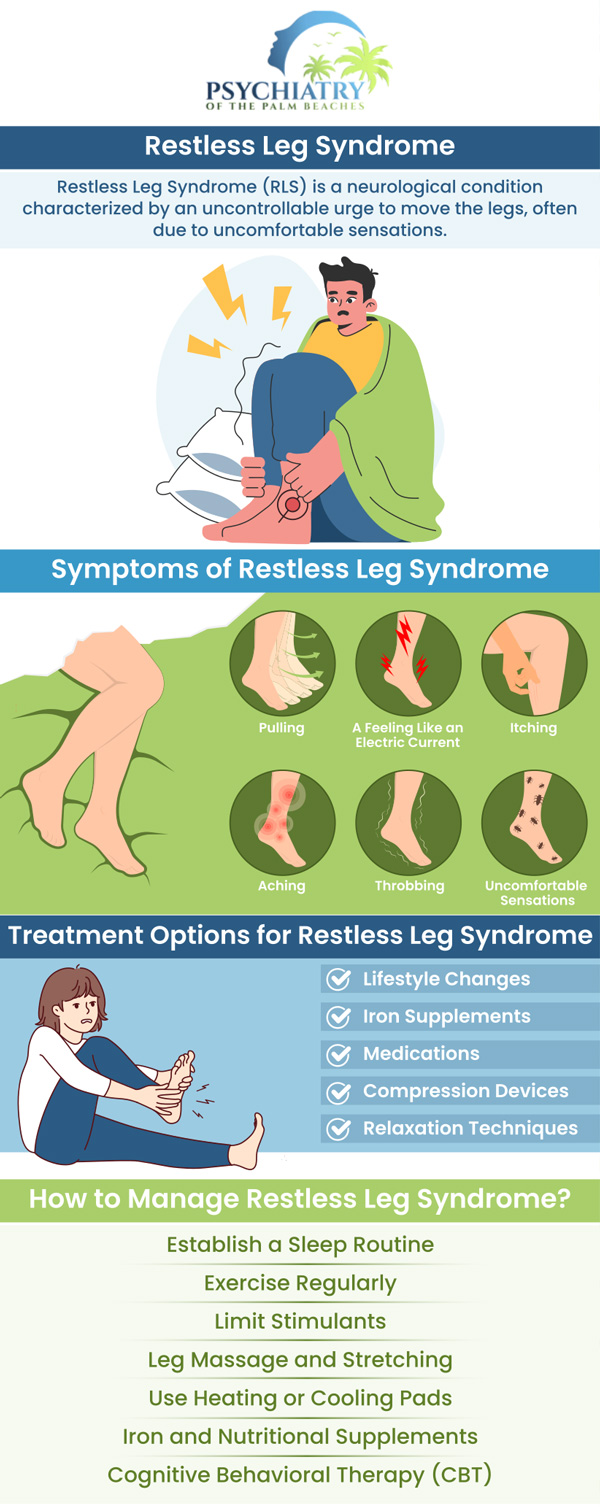
Table of Contents:
Can RLS cause emotional stress?
How does RLS-related sleep loss cause fatigue?
How can RLS-related fatigue impact daily life?
Are there any strategies for reducing stress caused by RLS?
Discover the Connection Between Restless Leg Syndrome, Stress, and Fatigue at Psychiatry of the Palm Beaches
RLS is a neurological condition that causes uncomfortable sensations in the legs and an uncontrollable urge to move them, especially at night or during periods of rest. This often disrupts sleep, leading to difficulties in falling or staying asleep. As a result, many individuals experience daytime fatigue, irritability, and trouble concentrating—all of which can contribute to increased emotional stress.
Our team understands that living with RLS can also lead to feelings of frustration, anxiety, or even depression, particularly when symptoms are severe or persistent. The unpredictable nature of RLS flare-ups and the effect on daily activities and social life can leave individuals feeling isolated or misunderstood. The ongoing struggle to manage symptoms can be both physically and mentally exhausting, further elevating stress levels.
We are committed to providing compassionate, comprehensive care for those facing the emotional challenges associated with RLS. We encourage anyone experiencing these symptoms to reach out and discuss their concerns with our experienced providers. By addressing both the physical symptoms of RLS and the related emotional stress, we can work together to develop an effective, personalized management plan that improves your overall quality of life.
RLS is a neurological condition characterized by uncomfortable sensations in the legs and an irresistible urge to move them, especially during periods of rest or inactivity. These symptoms often become more pronounced in the evening or at night, which can interfere with the ability to fall or stay asleep.
For many of our patients, the sleep disturbances caused by RLS lead to chronic fatigue and daytime tiredness. Repeated disruptions throughout the night deprive the body and mind of the deep, restorative stages of sleep necessary for optimal functioning. As a result, individuals with RLS often struggle with memory, concentration, and mood regulation—areas that are crucial for mental health.
Our team recognizes that the challenges of RLS extend beyond physical discomfort. The ongoing sleep loss, combined with the anxiety and frustration of not being able to get restful sleep, can contribute to or exacerbate mental health conditions such as depression and anxiety. We take an integrated approach to care, working with our patients to address both the neurological and psychological aspects of RLS. Our goal is to help each person regain restful sleep, manage fatigue, and improve quality of life through personalized treatment plans that may include therapy, lifestyle modifications, and, when appropriate, medication management.
Restless Legs Syndrome (RLS) can significantly disrupt sleep, leading to persistent fatigue that affects many aspects of daily life. For our patients, RLS-related fatigue often makes it difficult to concentrate at work or school, as ongoing tiredness can interfere with focus and information processing. This constant exhaustion may also reduce motivation and productivity, making routine tasks feel overwhelming.
We recognize that physical fatigue from RLS can limit participation in social activities and exercise, which may contribute to feelings of isolation or frustration. The emotional impact of chronic tiredness, including mood changes such as irritability or depression, is something we address with compassionate, comprehensive care. Over time, the combined effects of poor sleep and daytime fatigue can take a substantial toll on your overall well-being and quality of life.
Restless Legs Syndrome (RLS) can significantly impact both your sleep and daily life, often leading to heightened stress and frustration. At Psychiatry of the Palm Beaches, we understand that managing RLS isn’t just about addressing physical discomfort—it’s equally important to support your mental and emotional well-being.
How We Can Help You Manage RLS-Related Stress:
Establishing Healthy Sleep Routines: Our team can guide you in developing consistent sleep habits, such as going to bed and waking up at the same time each day. We’ll work with you to create a relaxing nighttime environment—quiet, dark, and cool—to help reduce nighttime restlessness and improve sleep quality.
Incorporating Physical Activity: Gentle daytime exercise, like walking or stretching, can sometimes ease RLS symptoms and lower stress levels. We can help you design an activity plan that fits your needs while avoiding triggers that might worsen symptoms.
Teaching Relaxation Techniques: As mental health specialists, we offer personalized training in stress-reduction methods. These techniques can help you manage anxiety, distract from physical discomfort, and improve your overall sense of calm.
Lifestyle Counseling: Our providers will help you identify and limit substances that may aggravate RLS or heighten stress, such as caffeine, nicotine, and alcohol. We also offer advice on healthy nutrition and hydration to support your overall wellness.
Psychotherapy and Support: If you find that the stress from RLS is overwhelming, Psychiatry of the Palm Beaches offers individual counseling and cognitive behavioral therapy (CBT). These evidence-based therapies can help you develop practical coping skills, manage anxiety, and improve your sleep habits. We also provide information about local and online support groups so you can connect with others facing similar challenges.
Collaborative Medical Management: Our psychiatrists work closely with you to assess your RLS symptoms, explore medication options if needed, and create a holistic treatment plan that supports both your physical and mental health.
Restless Leg Syndrome (RLS) often feels worse at the exact time you want to relax. At Psychiatry of the Palm Beaches, Dr. David Husted regularly helps patients understand how stress and fatigue can directly influence their symptoms.
The Stress-RLS Connection
When you are under stress, your body releases hormones like cortisol and adrenaline. Dr. Husted explains that these stress responses can disrupt the brain’s chemical balance, sometimes intensifying the uncomfortable sensations linked to RLS. Stress also interferes with sleep, and because RLS tends to flare up during periods of rest, this can create a frustrating cycle where stress worsens RLS and RLS increases stress.
Fatigue and RLS: A Two-Way Street
Dr. Husted often sees how exhaustion builds over time. RLS disrupts deep, restorative sleep, leading to daytime fatigue. That ongoing tiredness can make the nervous system more reactive, which may heighten symptoms at night. In this way, fatigue is both a result of RLS and a contributor to worsening episodes.
Our Approach at Psychiatry of the Palm Beaches
Dr. Husted takes a comprehensive, individualized approach. He may recommend stress-reduction techniques such as mindfulness, breathing exercises, structured routines, and consistent sleep habits. When needed, he provides therapy, medication management, or coordinates care with sleep specialists. The goal is clear: break the stress–fatigue cycle and help you regain more restful, consistent sleep. For more information, contact us or schedule an appointment online. We are conveniently located at 420 South State Road 7, Suite 112 Royal Palm Beach, FL 33414. We serve patients from Royal Palm Beach FL, Golden Lake FL, Westlake FL, Loxahatchee FL, Atlantis FL, and surrounding areas.
Check Out Our 5 Star Reviews



Additional Services You May Need
▸ Mental Wellness
▸ Relationship Coaching
▸ Depression and Mood Disorders
▸ Women’s Health
▸ Panic Disorder
▸ Medications Management
▸ Men’s Health
▸ Individual Psychotherapy
▸ Bipolar
▸ ADHD
▸ Geriatric Mental Health
▸ Couple’s Counseling
▸ Obsessive Compulsive Disorder
▸ Social Phobia Treatment
▸ Eating Disorders
▸ Post Traumatic Stress Disorder
▸ Psychotic Disorders



 Send Text
 How May I Help You?