

Managing and Preventing Restless Leg Syndrome Flare-Ups in Royal Palm Beach, FL
Managing Restless Leg Syndrome (RLS) requires a proactive approach to identify and minimize the specific lifestyle factors that trigger your uncomfortable symptoms. By maintaining consistent sleep hygiene, moderating caffeine intake, and incorporating targeted stretching or moderate exercise into your daily routine, you can significantly reduce the frequency and severity of nighttime disruptions. For a comprehensive, personalized treatment plan designed to help you achieve lasting relief and uninterrupted sleep, visit Dr. David Husted for a professional medical evaluation. For more information, contact us or schedule an appointment online. We are conveniently located at 420 South State Road 7 Suite 112 Royal Palm Beach, FL 33414.
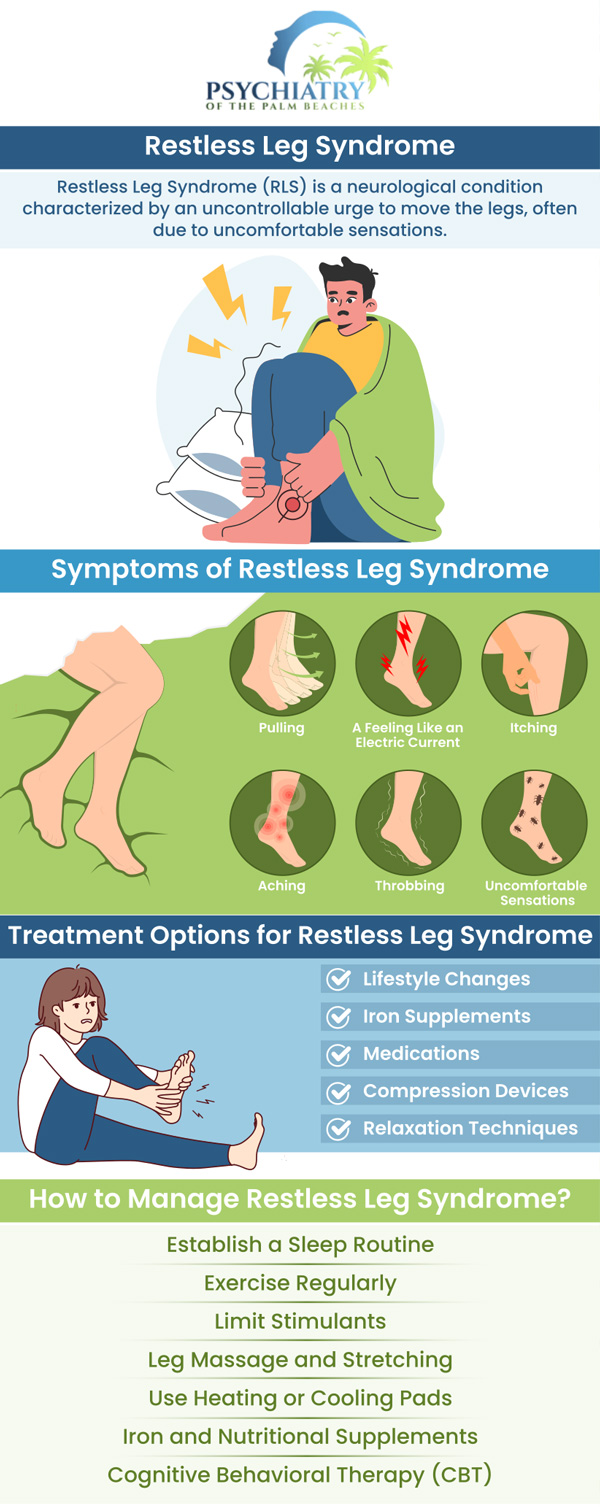
Table of Contents:
How can I prevent RLS flare-ups?
How does stress impact RLS flare-ups?
Is there a specific bedtime routine to help prevent RLS flare-ups?
How does managing sleep hygiene help with RLS flare-ups?
Preventing Flare-Ups: Restless Leg Syndrome Management at Psychiatry of the Palm Beaches
Restless Legs Syndrome (RLS) can affect more than just your legs. It can disrupt sleep, increase stress, and impact your mood. At Psychiatry of the Palm Beaches, we focus on practical, personalized strategies to help reduce flare-ups and improve overall well-being.
Lifestyle and Sleep Hygiene
Keeping a consistent sleep schedule is one of the most effective ways to manage RLS. Going to bed and waking up at the same time daily helps regulate your body’s rhythm. We also recommend a quiet, comfortable sleep environment and limiting screens before bedtime. Good sleep habits are especially important if anxiety or depression are also present.
Physical Activity and Nutrition
Light to moderate exercise, such as walking or stretching, can ease symptoms. However, intense workouts late in the evening may worsen discomfort. Iron deficiency is commonly linked to RLS, so we may recommend testing and supplementation if needed. A balanced diet supports both energy levels and cognitive function.
Substance Use and Medication Management
Caffeine, nicotine, and alcohol can trigger flare-ups. Reducing these substances often improves both sleep and symptom control. Some medications, including certain antidepressants or antihistamines, may aggravate RLS. We carefully review your prescriptions and adjust them when appropriate.
Relaxation and Stress Reduction
Stress can intensify symptoms. Mindfulness, breathing exercises, gentle yoga, or therapy can help calm the nervous system and reduce flare frequency.
Comprehensive, Individualized Care
If symptoms persist, we provide thorough evaluations and tailored treatment plans to help you achieve better sleep and greater comfort.
Stress plays a significant role in the frequency and severity of Restless Legs Syndrome (RLS) flare-ups. Stress triggers the release of hormones like cortisol and adrenaline, which can disrupt neurological balance and interfere with dopamine pathways in the brain—a key factor in RLS symptoms. As a result, stressful periods can intensify the uncomfortable sensations in the legs, making the urge to move even stronger, especially at night when RLS is often at its worst.
We also know that stress commonly impacts sleep, leading to insomnia or restless nights. Because poor sleep is a major trigger for RLS, this can create a challenging cycle: stress disrupts sleep, and lack of quality sleep worsens RLS symptoms. Furthermore, mental health conditions such as anxiety and depression—conditions we frequently help patients manage at Psychiatry of the Palm Beaches—are linked with more severe RLS experiences.
Our team is dedicated to providing comprehensive care that addresses both the physical and psychological aspects of RLS. We offer stress management strategies, including relaxation techniques, counseling, and lifestyle guidance, to help break the cycle of stress and improve both sleep and RLS symptoms.
A consistent bedtime routine is one of the most effective ways to reduce RLS discomfort. Our specialists often recommend winding down at least an hour before bed with relaxing activities. Warm baths can help relax your leg muscles and may ease the urge to move your legs.
Lifestyle Adjustments for Symptom Relief
Our psychiatrists encourage avoiding stimulants like caffeine and nicotine—especially in the evening—as these can worsen RLS symptoms. Gentle leg massage or using a heating pad on your legs may provide additional relief.
We also advise maintaining a regular sleep schedule. Creating a calm, comfortable sleep environment—free from excessive noise or electronic distractions—can further promote restful sleep.
Incorporating Physical Activity and Relaxation
Moderate exercise during the day (not too close to bedtime) is often beneficial, but it’s important to avoid overexertion, as this can sometimes make symptoms worse. Techniques such as deep breathing, mindfulness meditation, or other relaxation exercises recommended by our clinicians can help calm both your mind and body before sleep.
RLS often causes uncomfortable sensations in the legs, particularly at night or during periods of rest, which can make it difficult to fall or stay asleep. This disrupted sleep can, in turn, intensify RLS symptoms, creating an ongoing cycle of discomfort and fatigue. Our clinicians work closely with patients to break this cycle by integrating evidence-based sleep hygiene practices into their treatment plans.
Some key sleep hygiene recommendations we offer at Psychiatry of the Palm Beaches include:
Maintaining a Consistent Sleep Schedule: Going to bed and waking up at the same times each day helps regulate the body’s internal clock, making it easier to fall asleep and minimizing periods of wakefulness when RLS symptoms may worsen.
Optimizing the Sleep Environment: Creating a calm, comfortable bedroom—keeping it cool, dark, and quiet—can encourage deeper, more restful sleep.
Reducing Evening Stimulation: Limiting screen time, bright lights, stimulating activities, and heavy meals in the hours before bedtime can decrease the likelihood of nighttime RLS flare-ups.
Exercise and Lifestyle Modifications: Engaging in regular physical activity earlier in the day can help ease symptoms, but intense exercise close to bedtime may worsen them. Our team also advises reducing caffeine and alcohol intake, as both can disrupt sleep and exacerbate RLS.
Restless Leg Syndrome (RLS) can be frustrating, especially when it disrupts your sleep and daily routine. At Psychiatry of the Palm Beaches, Dr. David Husted works closely with each patient to create a practical, personalized plan to reduce flare-ups and improve quality of life.
Personalized Flare-Up Prevention
Dr. Husted begins by identifying your specific triggers. Caffeine, nicotine, alcohol, and certain medications can worsen symptoms. Together, you’ll review your habits and prescriptions to pinpoint what may be contributing and make realistic adjustments.
Sleep Hygiene and Routine
A steady sleep schedule is essential. Dr. Husted helps you establish consistent bed and wake times, along with simple changes that create a calm, comfortable sleep environment to reduce nighttime discomfort.
Balanced Physical Activity
Gentle movement such as walking, stretching, or yoga can ease symptoms. Dr. Husted recommends activity that fits your lifestyle, while avoiding intense late-evening exercise that may aggravate RLS.
Comprehensive Health Assessment
Because RLS may be linked to iron deficiency or other medical conditions, Dr. Husted conducts a thorough evaluation and coordinates with other providers when necessary to address underlying causes.
Stress Management and Mental Health Support
Stress often intensifies symptoms. Mindfulness, relaxation exercises, and therapy can help regulate the nervous system and reduce flare frequency.
Medication Management
If lifestyle changes are not enough, Dr. Husted may recommend medication, carefully tailored and monitored for safety and effectiveness.
Ongoing Partnership in Care
Dr. Husted believes in consistent follow-up and open communication, ensuring you feel supported as you work toward better sleep and symptom control. For more information, contact us or schedule an appointment online. We are conveniently located at 420 South State Road 7 Suite 112 Royal Palm Beach, FL 33414. We serve patients from Royal Palm Beach FL, Golden Lake FL, Westlake FL, Loxahatchee FL, Atlantis FL, and surrounding areas.
Check Out Our 5 Star Reviews



Additional Services You May Need
▸ Mental Wellness
▸ Relationship Coaching
▸ Depression and Mood Disorders
▸ Women’s Health
▸ Panic Disorder
▸ Medications Management
▸ Men’s Health
▸ Individual Psychotherapy
▸ Bipolar
▸ ADHD
▸ Geriatric Mental Health
▸ Couple’s Counseling
▸ Obsessive Compulsive Disorder
▸ Social Phobia Treatment
▸ Eating Disorders
▸ Post Traumatic Stress Disorder
▸ Psychotic Disorders



 Send Text
 How May I Help You?