

Restless Legs Syndrome During Pregnancy: Questions to Discuss With a Doctor
Pregnancy brings many changes, but feeling an uncomfortable urge to move your legs whenever you try to rest can be especially frustrating. Restless legs syndrome (RLS) can interrupt sleep, cause nighttime discomfort, and leave expecting mothers feeling exhausted the following day. Although symptoms often improve after childbirth, understanding their possible causes can help patients find appropriate relief. At Psychiatry of the Palm Beaches in Fort Lauderdale, FL, our team provides evaluation for restless legs syndrome and discusses concerns involving sleep, mental health, and psychiatric medications. For more information, please contact us or book an appointment online. We are conveniently located at 3107 Stirling Road, Suite 107, Ft. Lauderdale, FL 33312.
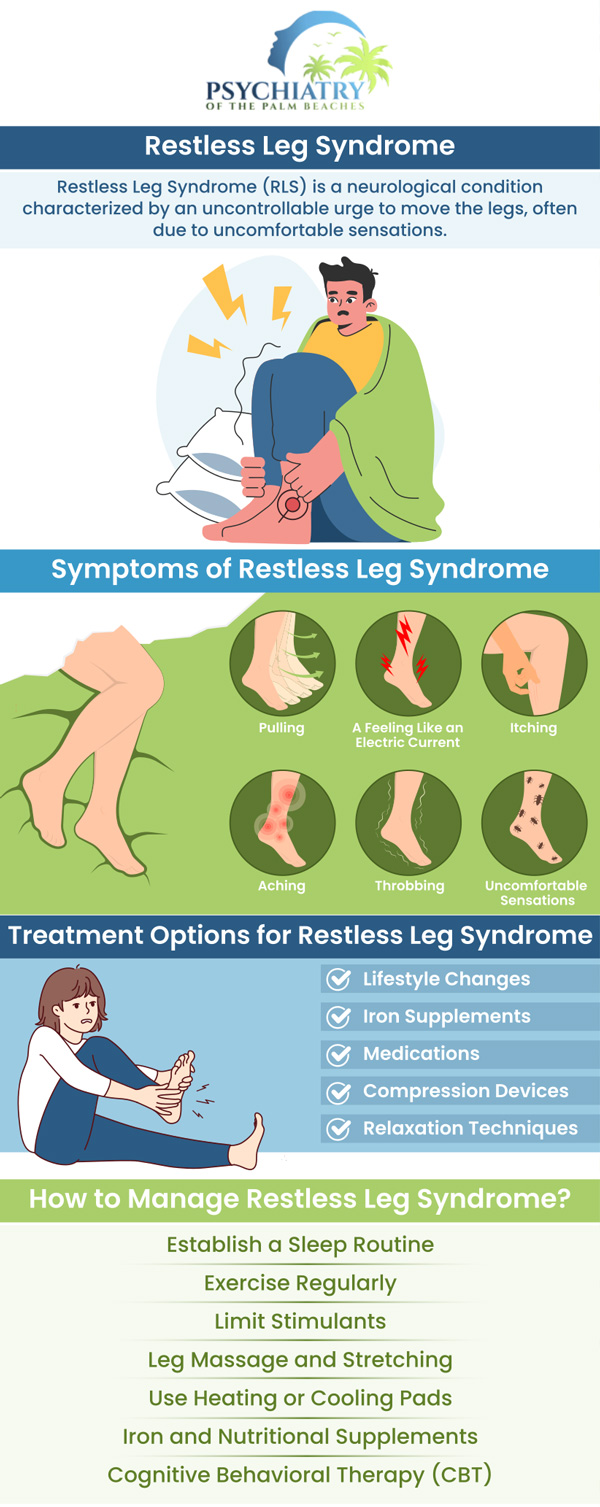
Table of Contents:
Why might restless legs symptoms begin or worsen during pregnancy?
Could low iron be causing my restless legs syndrome during pregnancy?
How are medications and supplements reviewed when managing RLS during pregnancy?
What follow-up may be needed if restless legs symptoms continue after delivery?
What should pregnant patients discuss with Psychiatry of the Palm Beaches in Fort Lauderdale, FL, about coordinating care for restless legs symptoms?
Restless legs syndrome may develop or become more noticeable during pregnancy because of changes in iron needs, hormones, and other physical processes. Symptoms are particularly common during the second and third trimesters, when the body is undergoing significant changes.
RLS typically causes uncomfortable sensations in the legs, often described as crawling, tingling, pulling, or an urge to move. These feelings usually become worse during periods of rest, especially in the evening, and temporarily improve with movement.
Several factors may contribute to pregnancy-related RLS:
● Increased iron requirements: Pregnancy increases the body’s need for iron, and reduced iron stores may contribute to symptoms.
● Hormonal changes: Shifts in pregnancy hormones may influence the development or severity of RLS.
● Family history: Patients with relatives who have RLS may be more likely to experience symptoms.
● Existing RLS: Women who had symptoms before pregnancy may notice that they become more frequent or uncomfortable.
Not every uncomfortable leg sensation indicates RLS. Persistent pain, muscle cramps, and swelling may have different causes that require medical evaluation. Recognizing these differences can help pregnant patients describe their symptoms clearly and receive appropriate care.
Yes, low iron levels may contribute to restless legs syndrome (RLS) during pregnancy, particularly during the second and third trimesters. As pregnancy progresses, the body needs more iron to support the growing baby and increased blood supply. When iron stores become low, they may affect dopamine activity in the brain, which helps control movement. This can lead to uncomfortable sensations in the legs, including tingling, crawling, pulling, or a strong urge to move, especially at night or while resting.
Pregnant women can experience iron-related restless legs symptoms even without anemia. A healthcare provider may recommend blood tests, including serum ferritin, hemoglobin, and transferrin saturation, to check iron levels. If iron stores are low, medically supervised iron supplementation may help reduce symptoms.
Low iron isn’t the only possible cause of RLS during pregnancy. Hormonal changes and other factors may also contribute. Fortunately, pregnancy-related restless legs symptoms often improve after delivery. Women experiencing frequent symptoms or disrupted sleep should discuss them with their obstetric healthcare provider to determine appropriate testing and treatment.
Managing restless legs syndrome during pregnancy requires careful consideration of medication safety. Some treatments used for RLS outside pregnancy may not be appropriate for expecting mothers because information about fetal safety is limited.
A medication review should include prescription drugs, over-the-counter products, prenatal vitamins, herbal preparations, and sleep supplements. Certain antihistamines, nausea medications, and psychiatric medications may worsen RLS symptoms in some individuals. However, patients should never suddenly discontinue prescribed psychiatric medication, because doing so may create additional health risks.
When symptoms are manageable, clinicians generally prioritize non-medication approaches, such as maintaining consistent sleep routines, practicing gentle physical activity when approved by the obstetric clinician, and trying comfortable leg stretches or massage.
Warm baths may also provide relief, provided the water temperature is safe during pregnancy and overheating is avoided. If iron deficiency contributes to symptoms, a clinician may recommend appropriate iron treatment. Intravenous iron is reserved for selected situations and requires specialist assessment.
At Psychiatry of the Palm Beaches, our team offers psychiatric evaluation, which may be relevant when patients have concerns about how existing mental health medications affect their sleep or restlessness.
Pregnancy-related restless legs symptoms often improve after childbirth, but improvement is not always immediate. Some patients continue experiencing discomfort, particularly if iron deficiency or another contributing condition remains present.
When symptoms persist after delivery, our team may recommend reassessing iron levels, reviewing medications, and evaluating sleep patterns. Follow-up may also help determine whether symptoms represent ongoing RLS or another condition that causes similar discomfort.
New mothers may experience interrupted sleep because of infant care, making it important to distinguish typical postpartum sleep disruption from persistent leg symptoms. For breastfeeding patients, medication and supplement decisions also require consideration of possible effects on the infant. If symptoms continue, become more severe, or interfere with daily functioning, further evaluation by a primary care clinician, sleep specialist, or neurologist may be appropriate.
Pregnant patients experiencing restless legs symptoms may benefit from discussing how sleep disturbances, psychiatric medications, and prenatal health concerns fit together. Psychiatry of the Palm Beaches provides restless legs syndrome services, psychiatric medication management, and women’s mental health care. Its Fort Lauderdale location offers an opportunity to discuss concerns that may overlap with mental health and sleep.
Before an appointment, patients can prepare by recording when symptoms started, how frequently they occur, which activities improve discomfort, and how significantly their sleep is affected. They should also bring an updated medication list, information about prenatal supplements, and any recent blood test results.
Useful questions include whether a medication could be contributing to symptoms, whether additional specialist evaluation is appropriate, and how treatment decisions should be discussed with the patient’s obstetric clinician.
Patients should ask which clinician will manage each part of their care and how relevant information can be shared between providers. For more information, contact us today or book an appointment online. We are conveniently located at 3107 Stirling Road, Suite 107, Ft. Lauderdale, FL 33312. We serve patients from Ft. Lauderdale FL, Ravenswood Estates FL, Oakridge FL, Emerald Hills FL, Avon Park FL, Liberia FL, and surrounding areas.
Check Out Our 5 Star Reviews



Additional Services You May Need
▸ Mental Wellness
▸ Relationship Coaching
▸ Depression and Mood Disorders
▸ Women’s Health
▸ Panic Disorder
▸ Medications Management
▸ Men’s Health
▸ Individual Psychotherapy
▸ Bipolar
▸ ADHD
▸ Geriatric Mental Health
▸ Couple’s Counseling
▸ Obsessive Compulsive Disorder
▸ Social Phobia Treatment
▸ Eating Disorders
▸ Post Traumatic Stress Disorder
▸ Psychotic Disorders



 Send Text
 How May I Help You?
