
FAQs for Child Psychiatry
Raising a child who is facing mental health challenges can be a complex journey, but you don’t have to navigate it without a roadmap. Our child psychiatry FAQs deliver straightforward, practical answers to your most urgent questions about sudden behavioral shifts, emotional struggles, and developmental stages. The dedicated team at Psychiatry of the Palm Beaches is committed to providing evidence-based, highly individualized treatment plans. We empower parents and caregivers with the exact tools they need to address these hurdles head-on, ensuring their child can build healthy, resilient cognitive and social skills for the future. For more information, contact us or schedule an appointment online. We are located at 3107 Stirling Road, Suite 107, Ft. Lauderdale, FL 33312.
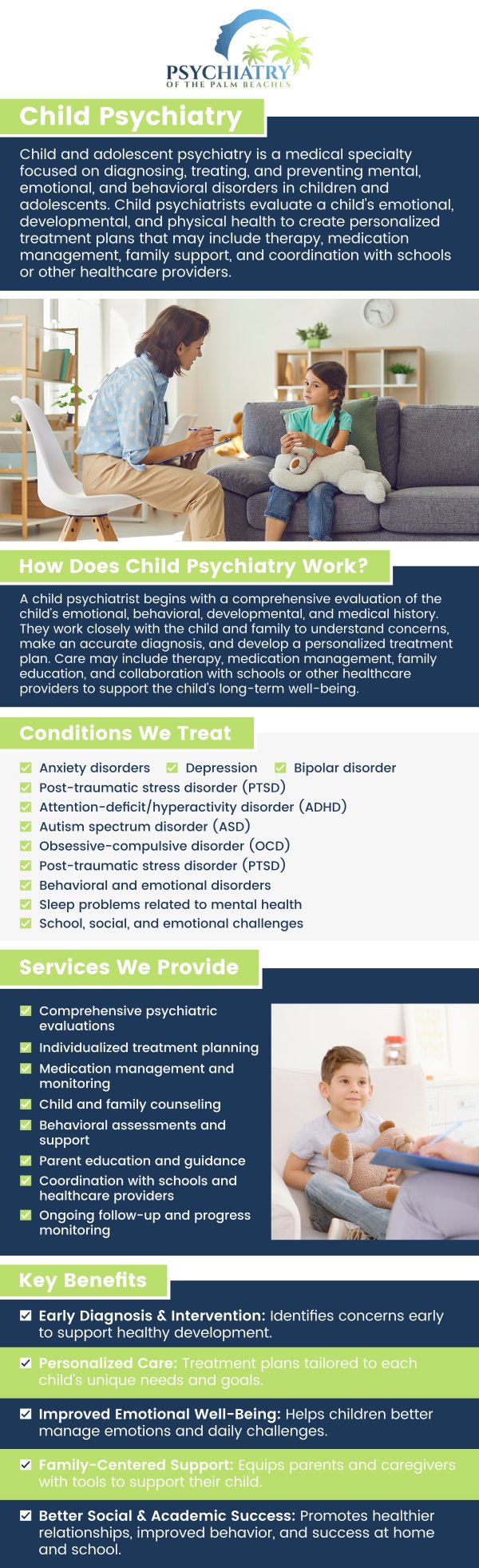
Table of Contents:
When should my child see a psychiatrist?
How does child psychiatry differ from adult psychiatry?
What types of conditions do child psychiatrists treat?
How are medications used in child psychiatry?
How are therapy and medication combined in child psychiatry?
How is a child’s mental health assessed by a psychiatrist?
What should I expect during my child’s first visit to a psychiatrist?
What treatments are available for childhood depression or anxiety?
Can child psychiatry help with behavioral issues?
What role does family therapy play in child psychiatry?
How long does treatment in child psychiatry take?
What are the signs my child may need psychiatric care?
Are there age-specific treatments in child psychiatry?
How can I support my child during psychiatric treatment?
Compassionate Child Psychiatry Support at Psychiatry of the Palm Beaches
Parents should consider scheduling a psychiatric evaluation for their child if they notice sudden, severe, or persistent changes in behavior, mood, or academic performance. According to the providers at Psychiatry of the Palm Beaches, seeking early intervention is crucial if your child is experiencing overwhelming anxiety, drastic mood swings, intense outbursts, severe social withdrawal, or sudden disruptions in their sleeping and eating habits. A specialized psychiatrist should also be consulted if behavioral issues begin to negatively impact their daily functioning at home, at school, or with their peers. By stepping in early, mental health professionals can provide an accurate diagnosis and develop a personalized treatment plan, helping your child build emotional resilience, manage their specific symptoms, and ultimately live their best life.
Child psychiatry is a specialized field that focuses on the unique developmental, cognitive, and emotional stages of young minds, which differ vastly from those of fully developed adults. While adult psychiatry often relies heavily on direct patient interviews regarding complex internal feelings, child psychiatry frequently incorporates behavioral observations and vital input from parents, teachers, and pediatricians. Children typically lack the advanced vocabulary to articulate their emotional distress, so symptoms often manifest as behavioral issues, academic struggles, or physical complaints like stomachaches. Furthermore, the expert team at Psychiatry of the Palm Beaches understands that treating a child requires a deeply family-centered approach, actively involving caregivers in the therapeutic process to ensure a highly supportive environment that fosters healthy long-term development.
Child psychiatrists diagnose and treat a wide spectrum of developmental, emotional, and behavioral disorders. At Psychiatry of the Palm Beaches, comprehensive care covers numerous pediatric mental health conditions, including Attention-Deficit/Hyperactivity Disorder (ADHD), Autism Spectrum Disorder, Asperger’s Syndrome, and severe behavioral conditions such as Oppositional Defiant Disorder. Additionally, child psychiatrists are highly skilled in treating early-onset mood and anxiety disorders, including generalized anxiety, social phobia, obsessive-compulsive disorder (OCD), pediatric depression, and post-traumatic stress disorder (PTSD). By carefully assessing a child’s specific symptoms, environmental stressors, and developmental stage, psychiatric professionals can identify the exact underlying condition and outline an effective, highly personalized treatment plan meticulously tailored to the child’s unique needs.
The decision to utilize medication in child psychiatry is made with extreme care, thorough evaluation, and continuous, strict monitoring. At Psychiatry of the Palm Beaches, providers believe in a conservative and highly personalized approach to pediatric medication management. When necessary, medications are used to help effectively regulate brain chemistry, reduce the intensity of overwhelming symptoms, and stabilize drastic mood swings, making it significantly easier for the child to engage in behavioral therapy. Medications are often prescribed for conditions like severe ADHD, moderate to severe depression, or crippling anxiety. The psychiatric team ensures that parents are fully informed and comfortable with treatment decisions, carefully monitoring the child for any side effects while aiming for the lowest effective therapeutic dose.
Combining specialized therapy and medication is often the most effective, evidence-based approach for treating complex pediatric mental health conditions. At Psychiatry of the Palm Beaches, a typical treatment plan heavily integrates personalized psychotherapy with careful medication management to address both the physical and emotional aspects of a disorder. Medication helps stabilize severe neurochemical symptoms—such as intense anxiety, impulsivity, or deep depressive episodes—creating a clearer, much calmer mental state for the child. Once stabilized, the child can actively and successfully participate in psychotherapies, such as Cognitive Behavioral Therapy (CBT). This holistic combination empowers the child to learn essential coping mechanisms, improve their emotional regulation, and address the root causes of their behavior while receiving necessary biological support.
Assessing a child’s mental health is a highly comprehensive, collaborative, and detailed process. Because children often struggle to verbalize their complex internal emotions, psychiatrists at Psychiatry of the Palm Beaches rely on a multifaceted diagnostic approach. The evaluation typically involves direct, age-appropriate clinical interviews with the child to observe their daily behavior, communication skills, and emotional responses. Additionally, the psychiatrist gathers extensive health history and behavioral reports from parents, caregivers, and occasionally teachers to fully understand how the child functions across different environments. By compassionately listening and synthesizing these varying perspectives, the provider can accurately identify underlying conditions, pinpoint specific behavioral triggers, and establish a clear, personalized roadmap for effective treatment and support.
During your child’s first visit to Psychiatry of the Palm Beaches, the primary focus is entirely on establishing trust, ensuring comfort, and gathering comprehensive diagnostic information. The provider will warmly welcome both the parent and the child, understanding that the initial appointment can feel highly intimidating. The psychiatrist will conduct a detailed clinical interview, asking thorough questions about the child’s developmental history, medical background, current symptoms, and family dynamics. While part of the session involves speaking directly with the child in an age-appropriate, non-threatening manner, significant time will be dedicated to discussing observations with the parents. This foundational conversation allows the psychiatrist to begin formulating an accurate diagnosis and collaborating with the family on a preliminary treatment plan.
Childhood depression and anxiety are highly treatable, and the mental health specialists at Psychiatry of the Palm Beaches offer several effective interventions tailored specifically to young patients. The foundation of treatment usually involves individual psychotherapy, most notably Cognitive Behavioral Therapy (CBT). CBT effectively helps children identify negative thought patterns, fully understand their emotional triggers, and develop practical, healthy coping mechanisms. For more severe cases, conservative medication management, such as the use of pediatric-approved SSRIs, may be introduced to help stabilize the child’s mood and alleviate paralyzing physical symptoms. Furthermore, treatments often incorporate family counseling and holistic lifestyle adjustments—like improving sleep hygiene and routines—to ensure the child has a consistently supportive, stress-reducing environment at home.
Absolutely. Child psychiatry is highly effective in diagnosing and treating severe behavioral issues, which are very often the outward manifestation of underlying emotional distress, developmental disorders, or specific learning disabilities. Conditions such as ADHD, Oppositional Defiant Disorder (ODD), and Impulse Control Disorders frequently present as extreme defiance, explosive anger, or destructive impulsivity. The experts at Psychiatry of the Palm Beaches utilize comprehensive psychiatric assessments to pinpoint the exact root causes of these ongoing behavioral cycles. Through specialized interventions like Cognitive Behavioral Therapy (CBT) and Parent Management Training, child psychiatrists help young patients develop essential self-regulation skills while simultaneously equipping parents with effective, structured strategies to carefully manage explosive behavior and restore long-term harmony to the home.
Family therapy plays a pivotal and indispensable role in child psychiatry, as a child’s mental health is deeply intertwined with their immediate home environment and daily family dynamics. At Psychiatry of the Palm Beaches, providers deeply understand that treating the child in total isolation is often insufficient. Family therapy sessions aim to significantly improve communication, safely resolve ongoing conflicts, and educate parents and siblings about the child’s specific psychiatric condition. By heavily involving the family, the therapist helps establish a deeply unified support system, teaching caregivers how to effectively respond to the child’s symptoms, reinforce positive behaviors, and minimize environmental triggers. This collaborative, team-based approach is absolutely essential for facilitating long-term healing and ensuring ongoing emotional stability.
The duration of psychiatric treatment for a child is entirely unique to the individual and depends heavily on the specific diagnosis, the overall severity of the symptoms, and how the child responds to initial interventions. Some children dealing with mild anxiety, acute stress, or a temporary adjustment disorder may only require a few short months of targeted psychotherapy to learn highly effective coping skills. However, children with chronic or complex conditions, such as Autism Spectrum Disorder, severe ADHD, or major depressive disorder, typically require long-term, ongoing care that consistently combines both therapy and careful medication management. The expert team at Psychiatry of the Palm Beaches continuously evaluates each child’s progress, seamlessly adjusting their personalized treatment plan to ensure sustained mental wellness.
Recognizing the early warning signs that your child urgently needs psychiatric care is vital for effective, long-term intervention. Parents should be highly vigilant for drastic, unexplained changes in their child’s normal baseline behavior. Key indicators include intense, prolonged emotional outbursts, severe social isolation or withdrawal from friends, a sudden drop in overall academic performance, or a persistent refusal to attend school. Additionally, physical symptoms like frequent, unexplained stomachaches or headaches, extreme changes in sleeping and eating habits, and devastating expressions of hopelessness or self-harm are critical red flags. If you notice any of these distressing symptoms significantly disrupting your child’s daily life, scheduling a consultation with the compassionate professionals at Psychiatry of the Palm Beaches is highly recommended.
Yes, successful child psychiatry relies heavily on utilizing age-specific, developmentally appropriate treatments. The overall cognitive and emotional capabilities of a five-year-old are vastly different from those of a fifteen-year-old, meaning therapeutic approaches must be very carefully tailored. For younger children, psychiatrists often utilize play therapy and targeted behavioral modification techniques, as they frequently lack the vocabulary for complex traditional talk therapy. Parental involvement is also heavily emphasized for this particular age group. For adolescents, the therapeutic approach typically shifts toward more sophisticated individual psychotherapy, such as Cognitive Behavioral Therapy (CBT), which focuses heavily on developing self-awareness, identity, and highly independent coping skills. At Psychiatry of the Palm Beaches, clinical interventions are always expertly customized to match the patient’s exact developmental stage.
Supporting your child during their psychiatric treatment requires profound patience, open communication, and highly active participation in their overall care plan. The single most important step is creating a profoundly safe, non-judgmental environment at home where your child feels completely comfortable expressing their complex emotions. Following the clinical guidance of your providers at Psychiatry of the Palm Beaches is absolutely crucial; this means ensuring they attend all scheduled therapy sessions, strictly adhering to any prescribed medication regimens, and seamlessly implementing recommended behavioral strategies at home. Educating yourself thoroughly about your child’s specific condition also fosters deep empathy. Finally, practicing active, compassionate listening and celebrating their small steps of progress significantly builds their self-esteem and greatly enhances treatment success.
Watching your child struggle with their mental, emotional, or behavioral health is one of the most difficult experiences a parent can face. Whether they are navigating anxiety, ADHD, sudden mood changes, or complex developmental hurdles, finding the right support is crucial. At Psychiatry of the Palm Beaches, we believe that pediatric mental health care must be as compassionate as it is clinical. We strive to create a safe, welcoming, and judgment-free environment where children and adolescents feel genuinely heard, understood, and comfortable expressing themselves.
Our experienced child psychiatry team takes a holistic, evidence-based approach to pediatric care. We know that children are continuously growing and evolving, which is why we look beyond the immediate symptoms to understand the whole child. For more information, contact us or schedule an appointment online. We are located at 3107 Stirling Road, Suite 107, Ft. Lauderdale, FL 33312.We serve patients from Ft. Lauderdale FL, Hollywood FL, Oakridge FL, Dania Beach FL, Lauderhill FL, and surrounding areas.
Check Out Our 5 Star Reviews



Additional Services You May Need
▸ Mental Wellness
▸ Relationship Coaching
▸ Depression and Mood Disorders
▸ Women’s Health
▸ Panic Disorder
▸ Medications Management
▸ Men’s Health
▸ Individual Psychotherapy
▸ Bipolar
▸ ADHD
▸ Geriatric Mental Health
▸ Couple’s Counseling
▸ Obsessive Compulsive Disorder
▸ Social Phobia Treatment
▸ Eating Disorders
▸ Post Traumatic Stress Disorder
▸ Psychotic Disorders



 Send Text
 How May I Help You?