

FAQs for Impulse Control Disorder
Impulse Control Disorder (ICD) can significantly affect behavior, decision-making, and relationships, which is why our comprehensive FAQs provide clear, informative answers. This guide covers key areas such as common symptoms, underlying causes, diagnosis, treatment options, and strategies for managing impulsive behaviors. At Psychiatry of the Palm Beaches, our experienced professionals offer evidence-based guidance and personalized support to help individuals and families understand ICD, reduce harmful behaviors, and improve daily functioning and overall well-being. For more information, contact us today or book an appointment online! We are conveniently located at 2950 Halcyon Lane Suite 605 Jacksonville, FL 32223.
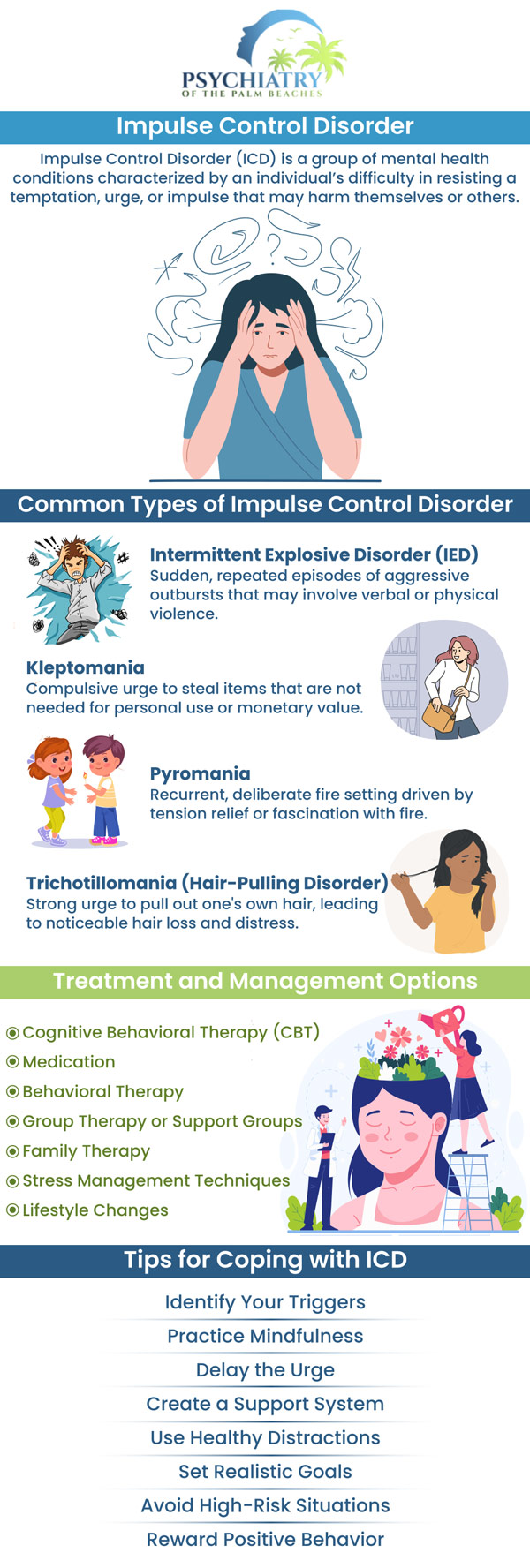
Table of Contents:
What are the different types of Impulse Control Disorders?
How is Impulse Control Disorder diagnosed?
What are the symptoms of Impulse Control Disorder?
How does Impulse Control Disorder affect daily life?
What causes Impulse Control Disorder?
Can Impulse Control Disorder be treated?
What types of therapy help manage Impulse Control Disorder?
Can medication help with Impulse Control Disorder?
How can I stop myself from acting on impulsive behaviors?
Is Impulse Control Disorder hereditary?
What are the risks of untreated Impulse Control Disorder?
Can Impulse Control Disorder lead to other mental health issues?
How does therapy help in managing Impulse Control Disorder?
How does impulsivity impact relationships?
Mental Health Support for Impulsive Decision-Making
Impulse control disorders are a group of behavioral conditions that include:
● Conduct disorder: An ongoing pattern of aggression and violation of social norms or rules.
● Oppositional defiant disorder (ODD): An ongoing pattern of defiance and hostility toward authority figures.
● Kleptomania: An overwhelming and irresistible urge to steal.
● Pyromania: The uncontrollable urge to start fires to release tension and anxiety.
● Intermittent explosive disorder: Outbursts of explosive or violent behavior due to anger.
To receive a diagnosis, you must see a psychiatric specialist. Diagnosis is based on the criteria outlined in the DSM-5, requiring signs and symptoms to be prevalent for a minimum of six to twelve months. A specialist will conduct a comprehensive assessment of your health history and may rely on reports from close contacts—such as parents, siblings, peers, or teachers—to gain a detailed understanding of your behavioral symptoms.
The symptoms fall into three main categories:
● Behavioral symptoms: Engaging in risky decision-making, stealing, frequent lying, explosive or violent behavior, extreme defiance, and causing property damage.
● Cognitive symptoms: Obsessions, uncontrollable urges, ongoing irritability or agitation, difficulty concentrating, and intrusive thoughts.
● Psychosocial symptoms: Depressed or low mood, drastic mood swings, feelings of detachment, social isolation, low self-esteem, and increased anxiety.
Impulse control disorder significantly disrupts daily life by subjecting the individual to strong, abrupt, and uncontrollable urges to act in ways that often violate social norms or the rights of others. These impulsive behaviors happen frequently, swiftly, and entirely without regard for the potential consequences. In a typical day, this can manifest as explosive angry outbursts in public spaces, engaging in highly risky decision-making, or unexpectedly destroying property. Because the individual cannot easily resist these intense urges, their daily routine is often chaotic and unpredictable. Over time, this consistent lack of behavioral control leads to severe real-world consequences, including deep relationship strain with family and friends, academic or occupational failures, and even potential criminal charges. Consequently, the disorder makes maintaining a stable, fulfilling, and peaceful daily life incredibly difficult without seeking professional psychiatric intervention.
While the precise root causes of impulse control disorders are highly complex and vary from person to person, they are generally understood to stem from a combination of underlying biological, genetic, and environmental factors. At Psychiatry of the Palm Beaches, the diagnostic approach focuses on understanding that when emotional outbursts or the persistent compulsion to break rules occur frequently, there is typically a deep-seated behavioral disorder driving these actions. These compulsions are frequently triggered by specific emotional states, environmental stressors, or past traumas that disrupt normal cognitive processing. Disruptions in the brain’s neural pathways, particularly those governing self-regulation and reward mechanisms, also play a significant role. Identifying these underlying root causes and carefully analyzing a patient’s behavioral cycles is essential for understanding why these uncontrollable urges develop and how they can be managed effectively.
Yes, impulse control disorders can absolutely be treated, and seeking professional support is the most effective way to manage the condition. Because these disorders cause individuals to act without regard for the consequences of their activities, specialized psychiatric care is crucial for helping patients stay out of trouble and avoid severe psychosocial or legal repercussions. At Psychiatry of the Palm Beaches, once a thorough evaluation is completed and a formal diagnosis is established, our expert team creates a highly personalized treatment plan. By identifying specific patterns of impulsivity, noticing environmental triggers, and evaluating the patient’s emotional states, treatment helps individuals address the root causes of their symptoms. With consistent and targeted professional intervention, patients can learn to manage their impulsive behaviors effectively, leading to a much less distressing, healthier, and significantly more fulfilling life.
Several specialized therapeutic approaches are highly effective in managing the symptoms of impulse control disorders. At Psychiatry of the Palm Beaches, common and highly recommended approaches include Cognitive Behavioral Therapy (CBT) and Parent Management Training (PMT). Cognitive Behavioral Therapy focuses on helping patients identify their specific patterns of impulsivity, notice environmental or emotional triggers, and deeply understand their behavioral cycles. By addressing the root causes behind their symptoms, CBT empowers individuals to develop healthier coping mechanisms and improve self-regulation. Parent Management Training is particularly beneficial for children and adolescents dealing with conditions like oppositional defiant disorder or conduct disorder. This therapy equips parents with specialized strategies to manage their child’s explosive behavior, reinforce positive actions, and foster a more stable home environment. Together, these personalized therapeutic interventions provide a strong foundation for long-term behavioral management.
While specialized behavioral therapies like Cognitive Behavioral Therapy are the primary cornerstone of impulse control disorder treatment, medication can also play a vital supportive role. When a patient visits a psychiatric specialist for a formal diagnosis, the doctor will carefully outline all recommended treatment options based on the individual’s specific symptoms. In many cases, a comprehensive, personalized treatment plan may include medication management. Medications are not a cure-all, but they can be highly effective in helping to regulate the brain’s chemistry, reduce the intensity of overwhelming and uncontrollable urges, and stabilize drastic mood swings. Furthermore, medications are often crucial for treating co-occurring mental health issues that frequently accompany impulse control disorders, such as severe anxiety, persistent depression, or ongoing irritability, ultimately making it easier for the patient to engage successfully in their behavioral therapy.
Stopping yourself from acting on sudden, impulsive behaviors can feel incredibly overwhelming, but taking immediate, proactive steps can help you regain control. If you notice symptoms of an impulse control disorder in yourself, such as frequent emotional outbursts or a compulsion to break rules, the first and most important recommendation is to keep track of these behaviors and schedule a consultation with a psychiatrist. Professional help is essential because these conditions involve strong, abrupt, and uncontrollable urges that are difficult to manage alone. At Psychiatry of the Palm Beaches, our team conducts comprehensive assessments to pinpoint your unique patterns of impulsivity. By working with a professional to notice your specific triggers, understand your emotional states, and address the root causes of your behavioral cycles, you can learn effective strategies to successfully resist acting on harmful impulses.
The development of an impulse control disorder is highly complex and is typically influenced by a combination of biological, environmental, and genetic factors, meaning that heredity can indeed play a significant role. While the specific genetic mechanisms are still being studied, having a close family history of mental health conditions, behavioral disorders, or substance abuse issues can increase a person’s underlying vulnerability to developing an impulse control disorder. This genetic predisposition can affect how the brain regulates impulses, processes rewards, and manages emotional states. However, genetics alone do not determine whether someone will develop the condition. Environmental triggers, such as stressful life events, trauma, or a chaotic upbringing, frequently interact with these hereditary factors to bring about the behavioral, cognitive, and psychosocial symptoms associated with disorders like intermittent explosive disorder or kleptomania.
The risks of leaving an impulse control disorder untreated are severe and can cause profound distress for both the individual and their loved ones. Because the condition involves uncontrollable urges to act without regard for consequences, untreated individuals frequently engage in risky decision-making, violent behavior, or property damage. Over time, this ongoing pattern of destructive behavior can lead to devastating real-world outcomes. Untreated symptoms frequently result in extreme social isolation, ruined personal and professional relationships, and significant academic or occupational failures. Furthermore, actions such as stealing or explosive public outbursts can easily lead to serious legal trouble and criminal charges. In addition to these external consequences, the individual often suffers from worsening psychosocial symptoms, including severe depression, drastic mood swings, and crippling anxiety, highlighting the urgent need for professional psychiatric intervention and a personalized treatment plan.
Yes, an impulse control disorder can frequently lead to or exacerbate other significant mental health issues. The intense, uncontrollable nature of the disorder brings about a wide variety of debilitating psychosocial and cognitive symptoms that severely impact an individual’s overall well-being. Living with the constant stress of unpredictable impulses, angry outbursts, and the resulting societal or personal consequences often causes a profound emotional toll. As a result, individuals frequently experience secondary mental health conditions, including severe depression, persistent low moods, drastic mood swings, and a feeling of emotional detachment. Additionally, the social isolation and relationship strain caused by their impulsive actions can lead to exceedingly low self-esteem and drastically increased anxiety. Addressing these co-occurring mental health issues is a critical component of the comprehensive, personalized treatment plans provided by psychiatric specialists at Psychiatry of the Palm Beaches.
Therapy plays an absolutely essential role in successfully managing an impulse control disorder by providing a structured, supportive environment for deep behavioral change. At Psychiatry of the Palm Beaches, the therapeutic approach begins with careful evaluation and comprehensive assessments to pinpoint the patient’s exact patterns of impulsivity. Through specialized methods like Cognitive Behavioral Therapy (CBT), the therapist works closely with the individual to help them notice their unique environmental triggers and evaluate their internal emotional states. By understanding the complete behavioral cycle, patients learn to actively address the underlying root causes of their symptoms rather than simply reacting blindly to sudden urges. This intensive process empowers individuals with healthy coping mechanisms, improved self-regulation techniques, and the critical cognitive tools necessary to prevent destructive behaviors, ultimately leading to a more balanced and fulfilling life.
Impulsivity has a profoundly negative impact on personal relationships, often causing severe emotional strain and long-term damage. Because impulse control disorders compel individuals to act swiftly, abruptly, and completely without regard for the rights of others or the consequences of their actions, their behavior can be highly destructive to those around them. Common symptoms such as frequent lying, extreme defiance, explosive anger, and stealing from family members or friends create an environment of chaos and unpredictability. This ongoing pattern of aggression and violation of social norms inevitably leads to a complete loss of trust and deep resentment among loved ones. Over time, the distress caused to family, peers, and romantic partners frequently results in ruined relationships, severe social isolation, and an overwhelming sense of detachment, underscoring the vital importance of seeking professional psychiatric help and treatment.
At Psychiatry of the Palm Beaches, care for Impulse Control Disorder is designed to help patients better understand and manage urges that can impact daily life, relationships, and work or school performance. The clinic provides personalized treatment plans tailored to each patient’s symptoms, behavioral patterns, and goals. Approaches may include cognitive behavioral strategies, therapy-based coping tools, emotional regulation techniques, and guidance for building healthier decision-making habits. Psychiatry of the Palm Beaches focuses on helping patients increase self-awareness, strengthen coping skills, and develop more deliberate responses, supporting long-term emotional balance and improved overall well-being. For more information, contact us today or book an appointment online! We are conveniently located at 2950 Halcyon Lane Suite 605 Jacksonville, FL 32223. We serve patients from Jacksonville FL, Riverside FL, Mandarin FL, Julington Creek FL, Fruit Cove FL, Orange Park FL, and surrounding areas.
Check Out Our 5 Star Reviews



Additional Services You May Need
▸ Mental Wellness
▸ Relationship Coaching
▸ Depression and Mood Disorders
▸ Women’s Health
▸ Panic Disorder
▸ Medications Management
▸ Men’s Health
▸ Individual Psychotherapy
▸ Bipolar
▸ ADHD
▸ Geriatric Mental Health
▸ Couple’s Counseling
▸ Obsessive Compulsive Disorder
▸ Social Phobia Treatment
▸ Eating Disorders
▸ Post Traumatic Stress Disorder
▸ Psychotic Disorders



 Send Text
 How May I Help You?