

Common Symptoms of Restless Leg Syndrome You Should Know in Melbourne, FL
Recognizing the common symptoms of Restless Leg Syndrome (RLS) is the first step toward getting a better night’s sleep and reclaiming your energy. Many people experience an overwhelming, creeping, or pulling sensation deep within their legs that creates an irresistible urge to move them, particularly when resting, sitting for long periods, or trying to fall asleep. If these frustrating nighttime disruptions are leaving you exhausted and stressed during the day, consult Dr. David Husted for a proper evaluation and an effective, personalized treatment plan. For more information, contact us today or book an appointment online! We are conveniently located at 6300 North Wickham Road Suite 110 Melbourne, FL 32940.
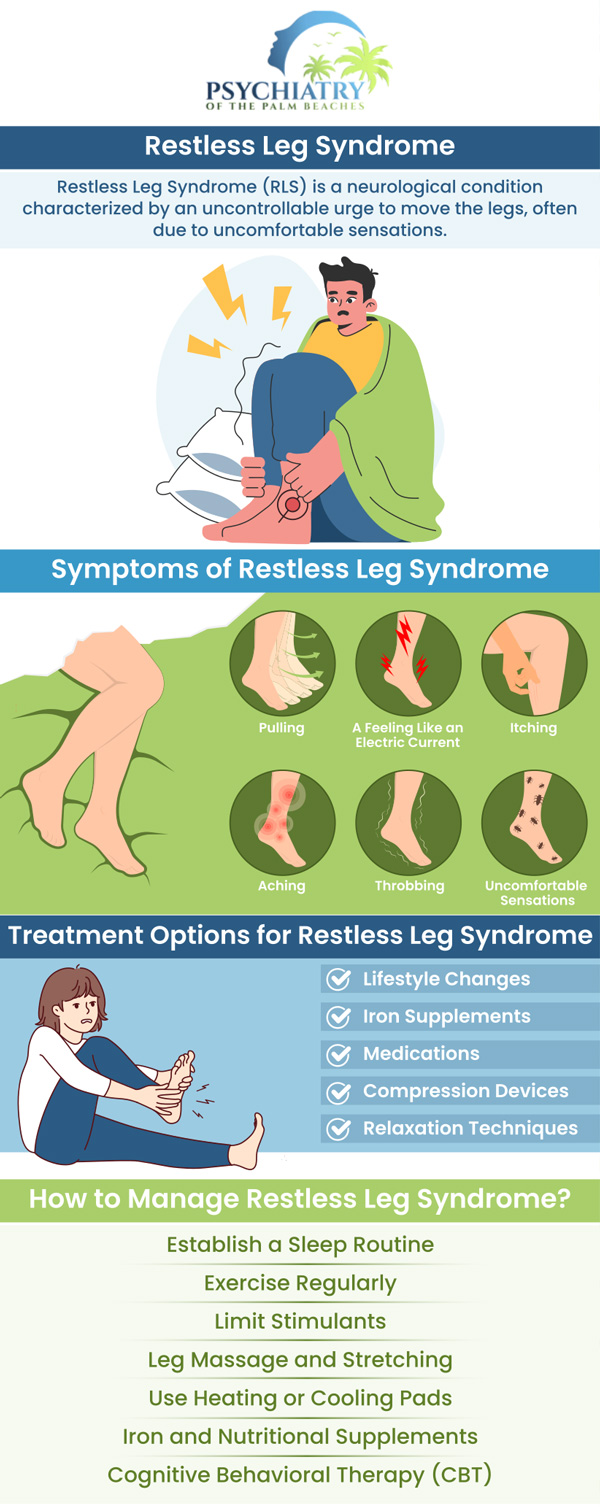
Table of Contents:
What are the most common symptoms of Restless Leg Syndrome (RLS)?
When do RLS symptoms typically occur?
Can RLS symptoms be mild or severe?
Can RLS symptoms affect other parts of the body besides the legs?
Recognizing the Common Symptoms of Restless Leg Syndrome at Psychiatry of the Palm Beaches
Restless Leg Syndrome (RLS) is more than just a physical condition—it can significantly impact your mental well-being and quality of life. It often accompanied by uncomfortable sensations such as creeping, crawling, tingling, itching, or pulling feelings deep within the legs. For many of our patients, RLS disrupts sleep and leads to daytime fatigue, difficulty concentrating, and even mood changes such as anxiety or irritability. At Psychiatry of the Palm Beaches, our experienced team recognizes the strong connection between RLS and mental health. We offer comprehensive evaluations and personalized treatment plans that address both the physical symptoms and the psychological effects of RLS.
RLS symptoms most commonly occur in the evening or at night, especially when you are at rest. Many of our patients notice an irresistible urge to move their legs or experience uncomfortable sensations while sitting or lying down—often during quiet activities like reading, watching TV, or trying to fall asleep.
We recognize that these symptoms can become more pronounced as the day progresses, often peaking at night and making it difficult to fall or stay asleep. This disruption in sleep can contribute to mood changes, anxiety, and even depression, which are concerns we frequently address in our practice. Daytime symptoms may also arise during extended periods of inactivity, such as during long flights or car rides.
If you are struggling with RLS and its effects on your mental health or daily functioning, the team at Psychiatry of the Palm Beaches is here to help. Our comprehensive approach considers both the physical symptoms of RLS and the emotional impact, offering personalized treatment plans to help you regain restful nights and improve your overall well-being.
For some, RLS symptoms may be mild and only occur occasionally, causing minor discomfort or restlessness, typically in the evening or at night. While these milder symptoms might not significantly interfere with daily life or sleep, it’s still important to address them early to prevent progression.
For others, RLS symptoms can be much more severe. Individuals may experience intense sensations—such as crawling, tingling, or aching in the legs—that happen frequently and last for long periods. These more severe symptoms often disrupt sleep, leading to daytime fatigue, mood changes, difficulty concentrating, and a reduced quality of life. In our experience at Psychiatry of the Palm Beaches, we’ve seen that stress, poor sleep, and certain medications can worsen RLS symptoms, making comprehensive psychiatric care vital.
If you or a loved one are experiencing symptoms of Restless Legs Syndrome, whether mild or severe, our team encourages you to reach out for a thorough evaluation. Our specialized providers can help you explore effective treatment options and lifestyle adjustments tailored to your needs.
Restless Legs Syndrome (RLS) is widely recognized for causing uncomfortable sensations and an overwhelming urge to move the legs, particularly during periods of rest or inactivity. However, RLS symptoms are not always restricted to the legs. Some individuals experience similar sensations in other parts of the body, such as the arms, and, less commonly, the torso or face. These atypical presentations are more likely to occur in severe or long-standing cases.
RLS can affect both the body and mind, impacting quality of life and sleep. The underlying mechanisms are believed to involve how the nervous system processes movement and sensation, and are not limited to the legs alone. Additionally, RLS often co-occurs with mood or sleep disorders, which are within our specialty.
If you are experiencing RLS-like symptoms—whether in your legs or elsewhere- we offer evidence-based treatment options and ongoing support to help you manage your symptoms and improve your well-being.
At Psychiatry of the Palm Beaches, our experienced team led by Dr. David Husted is committed to providing compassionate, comprehensive care for a wide range of neurological and psychiatric conditions—including Restless Leg Syndrome (RLS). RLS is a neurological disorder characterized by an uncontrollable urge to move the legs, often accompanied by uncomfortable sensations. Dr. Husted emphasizes that the hallmark symptom of RLS is this irresistible urge, often described by patients as creeping, crawling, tingling, pulling, or itching deep within the legs.
These sensations tend to occur most often during periods of rest or inactivity, especially in the evening or at night. Patients may find temporary relief by moving, stretching, walking, or shaking their legs. Unfortunately, these symptoms can disrupt sleep and result in daytime fatigue, mood changes, or difficulty concentrating—issues that are of particular concern in psychiatric care.
RLS doesn’t only affect the legs; Dr. Husted notes that similar sensations can occasionally be experienced in the arms or other parts of the body. The severity and frequency of symptoms can range from mild and occasional to severe and persistent, often impacting a person’s overall quality of life and emotional well-being.
At Psychiatry of the Palm Beaches, we recognize the importance of identifying the unique pattern of RLS symptoms—such as their timing, triggers, and relief with movement—to ensure accurate diagnosis and tailored treatment. Our practice offers a holistic approach, addressing both the physical and psychological effects of RLS, and works closely with each patient to develop an individualized management plan that may include lifestyle modifications, medication, and support for sleep and mood concerns. For more information, contact us today or book an appointment online! We are conveniently located at 6300 North Wickham Road Suite 110 Melbourne, FL 32940. We serve patients from Melbourne FL, Palm Bay FL, Suntree FL, Viera West FL, Satellite Beach FL, West Melbourne FL and surrounding areas.
Check Out Our 5 Star Reviews



Additional Services You May Need
▸ Mental Wellness
▸ Relationship Coaching
▸ Depression and Mood Disorders
▸ Women’s Health
▸ Panic Disorder
▸ Medications Management
▸ Men’s Health
▸ Individual Psychotherapy
▸ Bipolar
▸ ADHD
▸ Geriatric Mental Health
▸ Couple’s Counseling
▸ Obsessive Compulsive Disorder
▸ Social Phobia Treatment
▸ Eating Disorders
▸ Post Traumatic Stress Disorder
▸ Psychotic Disorders



 Send Text
 How May I Help You?