

FAQs for General Adaptation Syndrome
General Adaptation Syndrome (GAS) describes how the body reacts to stress in stages, affecting physical and emotional health. Our FAQs provide clear, practical answers to common questions about GAS, including its stages, symptoms, causes, and long-term effects. Our experienced team at Psychiatry of the Palm Beaches helps individuals recognize stress responses, manage chronic stress, and support overall health and well-being. For more information, contact us or schedule an appointment online. We are located at 3107 Stirling Road, Suite 107, Ft. Lauderdale, FL 33312.
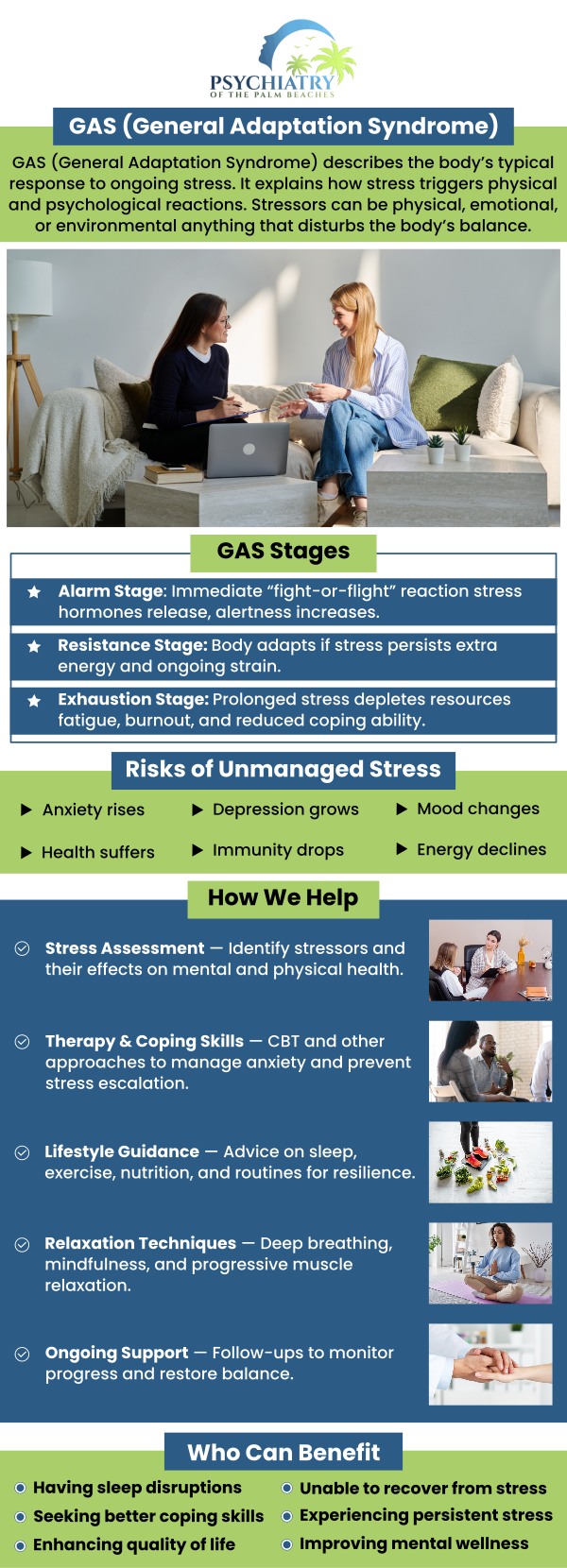
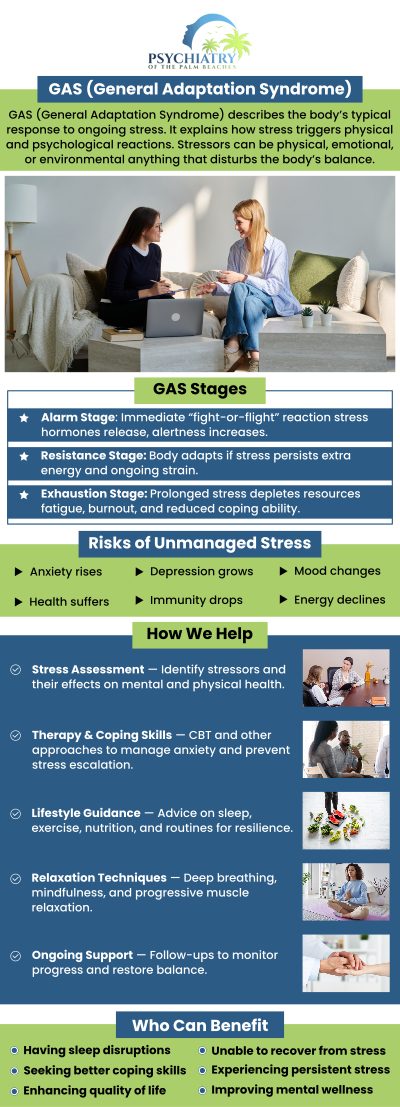
Table of Contents:
What are the three stages of General Adaptation Syndrome?
How does the body react in the alarm stage of GAS?
What happens during the resistance stage of GAS?
What is the exhaustion stage of GAS?
How does GAS relate to stress?
Can General Adaptation Syndrome lead to physical illness?
How does chronic stress affect General Adaptation Syndrome?
What role does cortisol play in GAS?
How can I manage the effects of General Adaptation Syndrome?
How does GAS impact mental health?
How long can someone stay in the resistance stage of GAS?
What are the long-term effects of reaching the exhaustion stage?
Can General Adaptation Syndrome affect work productivity?
Managing General Adaptation Syndrome with Psychiatry of the Palm Beaches
General Adaptation Syndrome (GAS) unfolds over three distinct phases: alarm, resistance, and exhaustion. The first stage, the alarm phase, triggers the body’s immediate “fight or flight” response to a stressor. If the stress continues, the body enters the second stage, the resistance phase, where it attempts to adapt to the stress and maintain normal functioning while remaining on high alert. Finally, if the stressor remains unresolved, the body transitions into the exhaustion stage, where its physical and mental resources are completely depleted. At Psychiatry of the Palm Beaches, our team helps patients understand these three stages to effectively identify their stressors, recognize early signs of physiological strain, and restore balance to their mind and body.
The alarm stage is the initial phase of General Adaptation Syndrome and serves as the body’s immediate stress response to a perceived threat or challenge. During this phase, individuals experience a rapid “fight or flight” reaction. The body recognizes the stressor and responds with a sudden burst of energy to either confront or evade the situation. This physiological shift is characterized by the sudden release of powerful stress hormones like adrenaline and cortisol. As a result, individuals may notice physical symptoms such as an increased heart rate, elevated blood pressure, sweaty palms, rapid breathing, and muscle tension. Emotionally, the alarm stage can trigger feelings of heightened alertness, acute anxiety, panic, or irritability. Recognizing these early signs is crucial, as prolonged activation of this alarm response can eventually push the body into a state of chronic physiological strain and depletion.
During the resistance stage of General Adaptation Syndrome, the body attempts to adapt to ongoing stress and return to a state of homeostasis while still remaining on high alert. If a stressor persists past the initial alarm phase, the body strives to channel its resources toward continuous stress management. Physiological responses stabilize slightly compared to the initial surge, but resistance to stress remains higher than normal. While the body tries to maintain normal functioning, this adaptation comes at a cost. Individuals often experience symptoms such as ongoing fatigue, irritability, difficulty concentrating, and muscle pain or tension. Behavioral changes, including sleep disturbances and appetite shifts, are also common. At this stage, the body’s energy reserves slowly deplete. Without adequate recovery or treatment, this persistent state of alertness and physiological overactivation can ultimately push an individual toward exhaustion and severe burnout.
The exhaustion stage is the final and most severe phase of General Adaptation Syndrome. It occurs when a person is exposed to prolonged, chronic stress, and the body’s physiological and mental resources become completely depleted. Because the body has spent an extended period in a state of heightened alertness during the resistance phase, it can no longer maintain its coping mechanisms. In this phase, stress resistance significantly drops, leading to an increased vulnerability to illnesses. Patients frequently experience chronic fatigue, severe depression, emotional instability, and anxiety. Physically, the immune system weakens, making individuals more susceptible to infections, gastrointestinal problems, cardiovascular issues, and unexplained chronic pain. At Psychiatry of the Palm Beaches, we recognize that reaching the exhaustion stage often leads to severe burnout, requiring comprehensive and personalized treatment plans to help individuals restore their energy, improve concentration, and stabilize their well-being.
General Adaptation Syndrome directly relates to stress by serving as the foundational biological model for how the human body reacts to prolonged psychological, physical, or environmental pressure. Developed by Hans Selye, GAS explains the patterned physiological changes that occur when stress disrupts the body’s natural equilibrium. Whether the stressor is a physical injury, emotional grief, demanding work environments, or relationship issues, GAS illustrates that the body undergoes a universal response. It begins with an immediate physical reaction, attempts to adapt to the ongoing strain, and eventually faces systemic breakdown if the stress is not resolved. Stress is the primary trigger that activates and drives the progression through the alarm, resistance, and exhaustion stages. Understanding this relationship helps healthcare providers at Psychiatry of the Palm Beaches create holistic, targeted treatment plans to address chronic overactivation of the body’s stress response.
Yes, progressing through the stages of General Adaptation Syndrome can directly lead to serious physical illness. The physical impact of prolonged stress is profound, particularly when the body reaches the exhaustion stage. As the body continuously channels its resources into managing persistent stress during the resistance phase, its energy reserves are severely depleted. This ongoing physiological strain leads to a compromised immune system, making the individual highly susceptible to bacterial and viral infections. Patients suffering from untreated GAS frequently present with physical complaints such as chronic fatigue, frequent illness, tension headaches, severe digestive problems, and unexplained pain. Over time, the chronic overactivation of stress hormones can also contribute to cardiovascular problems and high blood pressure. Because the mind and body are intrinsically linked, addressing GAS is crucial for preventing these debilitating long-term medical complications and restoring overall physical resilience.
Chronic stress is the driving force behind the progression and severity of General Adaptation Syndrome. When stress is acute and temporary, the body can successfully move through the alarm stage, address the threat, and return to a healthy baseline. However, chronic stress traps the body in a prolonged state of physiological strain. Continuous exposure to unyielding psychological, physical, or environmental stressors forces the body to remain in the resistance phase for extended periods. This constant demand for adaptation rapidly depletes the body’s energy reserves and prevents crucial recovery. Ultimately, chronic stress causes the stress response mechanisms to activate continuously, leading directly to the exhaustion stage. The mental and emotional burden from chronic situations—like a demanding job or persistent worry—causes the body to react as if facing a constant physical threat, resulting in severe burnout, sleep disruptions, and systemic health consequences.
Cortisol, a primary stress hormone, plays a critical role throughout the progression of General Adaptation Syndrome. During the initial alarm stage, the body recognizes a threat and responds by releasing a sudden surge of hormones, including cortisol and adrenaline. This sudden release triggers the “fight or flight” response, rapidly increasing energy supplies, elevating blood pressure, and increasing heart rate to handle the immediate challenge. If the stressor persists into the resistance phase, cortisol levels often remain elevated as the body attempts to maintain alertness and adapt to the ongoing pressure. However, chronic overactivation and continuous circulation of cortisol can become highly detrimental. Prolonged exposure to high cortisol levels contributes to systemic inflammation, sleep disturbances, immune system suppression, and cognitive issues. Managing cortisol levels through relaxation techniques and therapy is a crucial part of effectively treating GAS and restoring balance.
Managing the effects of General Adaptation Syndrome requires a comprehensive, holistic approach that addresses both your physical and psychological well-being. At Psychiatry of the Palm Beaches, our team emphasizes evidence-based stress-reduction strategies and lifestyle modifications. Patients are encouraged to engage in regular physical activity, which helps rebalance the nervous system and lower stress hormones. Incorporating relaxation techniques—such as mindfulness meditation, deep breathing exercises, progressive muscle relaxation, or yoga—can effectively calm the mind and reduce physiological arousal. Prioritizing consistent sleep hygiene and maintaining a nutritious diet are also vital for restoring depleted energy reserves. Additionally, working with a psychiatric provider for Cognitive Behavioral Therapy (CBT) can help you identify stressors, challenge negative thought patterns, and build resilience. Through a personalized combination of therapy, physical wellness, and potential medication management, individuals can effectively reverse the damaging effects of GAS.
General Adaptation Syndrome profoundly impacts mental health by placing the mind under immense, continuous strain. While GAS primarily describes a physiological response, research consistently shows that the chronic stress driving these stages significantly increases the risk of severe psychological issues. In the early alarm and resistance stages, individuals frequently experience heightened anxiety, emotional volatility, panic, irritability, and persistent feelings of tension. As the body’s resources dwindle and the person enters the exhaustion stage, these emotional challenges often escalate into serious mental health conditions, including clinical depression, profound emotional instability, and unhealthy coping behaviors. Patients may suffer from deep burnout, social withdrawal, loss of motivation, and debilitating cognitive issues like difficulty concentrating. Addressing GAS requires integrated psychiatric care to help patients stabilize their emotional well-being, improve cognitive focus, and overcome the profound mental fatigue caused by prolonged physiological stress.
The length of time an individual remains in the resistance stage of General Adaptation Syndrome varies widely depending on their personal resilience, overall health, and the intensity of the ongoing stress. During this phase, the body is actively trying to adapt to persistent physical or psychological stressors, maintaining a state of high alert while attempting to function normally. Some individuals might sustain this physiological balancing act for a few weeks, while others could remain in the resistance stage for several months if dealing with long-term pressures like a demanding job or chronic illness. However, the resistance stage cannot be maintained indefinitely. The continuous overactivation of the stress response requires immense energy. If the stressors remain unresolved and adequate recovery is not achieved, the body’s coping resources will eventually run out, leading to a rapid and inevitable decline into the exhaustion stage.
Reaching the exhaustion stage of General Adaptation Syndrome carries severe, long-term consequences for both physical and mental well-being. By the time this final phase occurs, the body’s adaptive resources are completely depleted, and stress resistance is drastically reduced. Long-term physical effects frequently include a severely compromised immune system, rendering the individual highly susceptible to frequent viral and bacterial infections. Furthermore, patients face an increased risk of chronic cardiovascular problems, ongoing gastrointestinal issues, and significant weight fluctuations. Mentally and emotionally, the long-term effects are equally devastating. Individuals often experience debilitating burnout, deep clinical depression, chronic anxiety, and persistent cognitive difficulties such as memory loss and poor concentration. Recovery from the exhaustion stage is a slow process that typically requires intensive psychiatric and medical intervention, substantial lifestyle modifications, and dedicated therapy to restore the body’s resilience and heal depleted systemic functions.
Yes, General Adaptation Syndrome significantly impacts work productivity, particularly as an individual progresses through the stages of chronic stress. While the initial alarm stage might provide a temporary surge of adrenaline to meet a quick deadline, the subsequent stages severely erode professional performance. During the resistance phase, the body struggles to maintain equilibrium, which frequently leads to ongoing fatigue, difficulty concentrating, and persistent irritability. Employees may experience decreased cognitive focus and emotional volatility, making it challenging to manage daily responsibilities or collaborate with peers. If the stress goes unaddressed and the individual reaches the exhaustion stage, work productivity often collapses entirely. This final phase is characterized by severe mental burnout, debilitating depression, and a loss of motivation. Patients experiencing this level of physiological depletion often suffer from high absenteeism and an inability to perform standard professional tasks without comprehensive intervention.
When prolonged stress pushes your body and mind into the exhaustion phase of General Adaptation Syndrome (GAS), finding professional support is critical to restoring your overall health. At Psychiatry of the Palm Beaches, our experienced clinicians take a comprehensive, personalized approach to intercepting this chronic cycle of fight-or-flight. By combining thorough psychiatric assessments, careful medication management, and targeted evidence-based therapies like Cognitive Behavioral Therapy (CBT), we help you process emotional distress and rebuild a resilient nervous system. We are dedicated to equipping you with sustainable, actionable coping strategies in a compassionate environment, empowering you to safely reverse burnout, manage overwhelming anxiety, and confidently reclaim a balanced, energized life. For more information, contact us or schedule an appointment online. We are located at 3107 Stirling Road, Suite 107, Ft. Lauderdale, FL 33312.We serve patients from Ft. Lauderdale FL, Hollywood FL, Oakridge FL, Dania Beach FL, Lauderhill FL, and surrounding areas.
Check Out Our 5 Star Reviews



Additional Services You May Need
▸ Mental Wellness
▸ Relationship Coaching
▸ Depression and Mood Disorders
▸ Women’s Health
▸ Panic Disorder
▸ Medications Management
▸ Men’s Health
▸ Individual Psychotherapy
▸ Bipolar
▸ ADHD
▸ Geriatric Mental Health
▸ Couple’s Counseling
▸ Obsessive Compulsive Disorder
▸ Social Phobia Treatment
▸ Eating Disorders
▸ Post Traumatic Stress Disorder
▸ Psychotic Disorders



 Send Text
 How May I Help You?