

Asperger’s Syndrome and Executive Functioning: Managing Everyday Tasks
Managing everyday responsibilities can sometimes feel more complicated than expected. For some adults with Asperger’s syndrome, organizing a schedule, starting an assignment, or switching between activities may require extra effort. These challenges can be related to executive function, a group of mental skills that help people plan, organize, manage time, and complete tasks. Asperger’s syndrome is an older diagnostic term now included under autism spectrum disorder (ASD). Some adults continue to use Asperger’s to describe their experiences. At Psychiatry of the Palm Beaches in Palm Beach Gardens, FL, our team recognizes that several overlapping concerns can affect daily functioning. Understanding executive function challenges can help adults identify practical supports and determine when professional guidance may be useful. For more information, contact us today or book an appointment. We are conveniently located at 11641 Kew Gardens Ave Ste 209, Palm Beach Gardens, FL 33410.
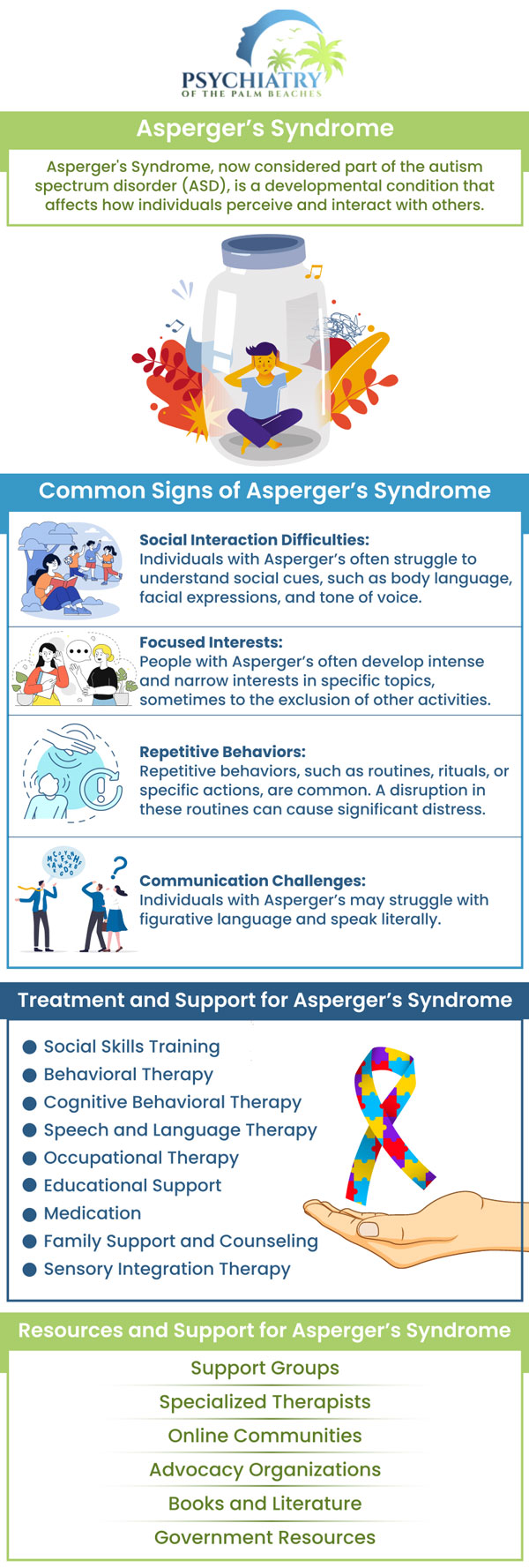
Table of Contents:
What is executive function, and how does it affect daily routines?
Why can starting or switching tasks feel difficult for some autistic adults?
What practical strategies can help with planning and time management?
When should difficulties with everyday tasks prompt a professional evaluation?
What should adults discuss about executive functioning during an appointment at Psychiatry of the Palm Beaches in Palm Beach Gardens, FL?
Executive function refers to mental skills that help people organize their thoughts, make decisions, manage priorities, and complete activities. These skills support almost everything people do, from getting ready in the morning to managing work responsibilities and personal appointments.
Executive function includes several important abilities:
● Working memory: Remembering information long enough to use it, such as following instructions.
● Planning and organization: Identifying priorities and arranging tasks in a useful order.
● Cognitive flexibility: Adjusting to changes or moving between different activities.
● Task initiation: Getting started on an activity without unnecessary delays.
● Self-monitoring: Noticing mistakes, tracking progress, and adjusting an approach when needed.
Some autistic adults experience challenges in one or more of these areas. For example, someone may remember detailed information about a favorite subject but struggle to organize a weekly schedule.
Executive function difficulties do not indicate low intelligence or a lack of motivation. Understanding which skills are challenging can make it easier to choose suitable routines and support systems.
Starting a task involves more than deciding to do something. A person may need to understand the instructions, determine where to begin, estimate the time required, and prepare for several steps. For some autistic adults, this process can become overwhelming, especially when a responsibility feels complicated or unclear.
Someone might know that household chores need attention but feel unsure which activity to begin first. Another person may become deeply focused on an interesting project and find it difficult to shift attention toward an unrelated responsibility.
Unexpected changes can also create challenges. A sudden meeting, canceled appointment, or change in work instructions may interrupt a familiar routine. Sensory differences, stress, anxiety, and difficulty managing competing demands can make transitions harder for some individuals.
However, these experiences vary considerably. Not every autistic adult has executive function difficulties, and having trouble starting tasks does not automatically indicate autism. Recognizing specific patterns can help individuals develop strategies that match their needs rather than forcing themselves into routines that consistently create frustration.
Managing executive function challenges often begins with making responsibilities easier to understand and organize. Small adjustments to daily routines may reduce confusion and help adults approach tasks more confidently.
The following strategies may be useful:
1. Break larger responsibilities into smaller steps: Instead of writing “clean the apartment” on a task list, divide the responsibility into manageable activities, such as washing dishes, organizing one room, and taking out the trash. Smaller steps can make starting easier.
2. Create a predictable daily schedule: Regular times for meals, work, household responsibilities, and rest may provide helpful structure. Keeping some flexibility in the schedule can also make unexpected changes easier to manage.
3. Use calendars and reminders: Phone alerts, written planners, and digital calendars can help track appointments, deadlines, and recurring responsibilities. Choose a system that is comfortable and simple enough to maintain.
4. Make the first step clear: When starting feels difficult, identify one action that requires minimal preparation. Opening a document or placing cleaning supplies on a counter may help create a practical starting point.
5. Allow extra time between activities: Building short transition periods into a schedule may make it easier to finish one activity, prepare for another, and manage unexpected interruptions.
6. Reduce unnecessary distractions: A quieter workspace, organized desk, or reduced background noise may support concentration, particularly for adults who experience sensory sensitivities.
No single strategy works for everyone. Trying one adjustment at a time can help adults determine what is useful without creating another overwhelming routine.
For individuals experiencing persistent difficulties, professional support may help identify additional approaches.
Occasional forgetfulness, procrastination, or difficulty organizing responsibilities can happen to anyone. However, a professional evaluation may be appropriate when these challenges become frequent, cause significant distress, or interfere with important daily activities.
Examples include regularly missing essential appointments, struggling to complete job responsibilities, having difficulty managing finances, or repeatedly falling behind on basic personal needs.
Executive function difficulties are not unique to autism. Attention-deficit/hyperactivity disorder (ADHD), anxiety, depression, sleep problems, and other health concerns can also affect concentration, planning, and organization.
A professional evaluation can help explore possible contributing factors rather than assuming every difficulty is related to Asperger’s syndrome.
When an adult is seeking an autism diagnosis, a broader assessment may consider developmental history, communication patterns, sensory experiences, and other characteristics. Executive function challenges alone cannot establish an ASD diagnosis.
Treatment recommendations depend on the findings. Psychological support, skill-building strategies, or treatment for co-occurring conditions may be considered. Medication does not cure autism or directly resolve every executive function difficulty, and any medication decision requires individualized consideration of benefits and risks.
An appointment is an opportunity to explain how everyday responsibilities have become challenging and identify concerns that deserve closer attention. At Psychiatry of the Palm Beaches, our team encourages patients to describe specific situations rather than feeling pressured to explain everything using medical terms.
Before an appointment, consider noting when difficulties happen, which responsibilities are most affected, and whether particular environments or schedule changes make them worse. It may also help to discuss sleep patterns, stress, mood changes, attention difficulties, current medications, and strategies that have already been tried.
Our team provides psychiatric services, including care for ADHD, anxiety, and mood concerns, along with psychotherapy. Depending on individual needs, a clinician may discuss relevant psychiatric concerns, possible support options, or whether additional specialized autism assessment would be helpful. Our goal is to understand the person’s experiences and identify realistic next steps that support daily functioning. For more information, contact us today or book an appointment. We are conveniently located at 11641 Kew Gardens Ave Ste 209, Palm Beach Gardens, FL 33410. We serve patients from Palm Beach Gardens, Juno Ridge, North Palm Beach, Cabana Colony, Lake Park FL, and surrounding areas.
Check Out Our 5 Star Reviews



Additional Services You May Need
▸ Mental Wellness
▸ Relationship Coaching
▸ Depression and Mood Disorders
▸ Women’s Health
▸ Panic Disorder
▸ Medications Management
▸ Men’s Health
▸ Individual Psychotherapy
▸ Bipolar
▸ ADHD
▸ Geriatric Mental Health
▸ Couple’s Counseling
▸ Obsessive Compulsive Disorder
▸ Social Phobia Treatment
▸ Eating Disorders
▸ Post Traumatic Stress Disorder
▸ Psychotic Disorders



 Send Text
 How May I Help You?
