

Transform Your Mental Health with Brainsway TMS Therapy
BrainsWay TMS Therapy offers a cutting-edge, medication-free option for easing symptoms of treatment-resistant depression. At Psychiatry of the Palm Beaches, our team uses this advanced technology to stimulate underactive brain regions linked to mood, helping patients achieve clearer thinking, improved energy, and emotional stability. With attentive guidance and individualized treatment plans, we support each patient’s journey toward long-lasting relief and renewed well-being. For more information, contact us today or book an appointment online. We are conveniently located at 11641 Kew Gardens Ave Ste 209, Palm Beach Gardens, FL 33410.
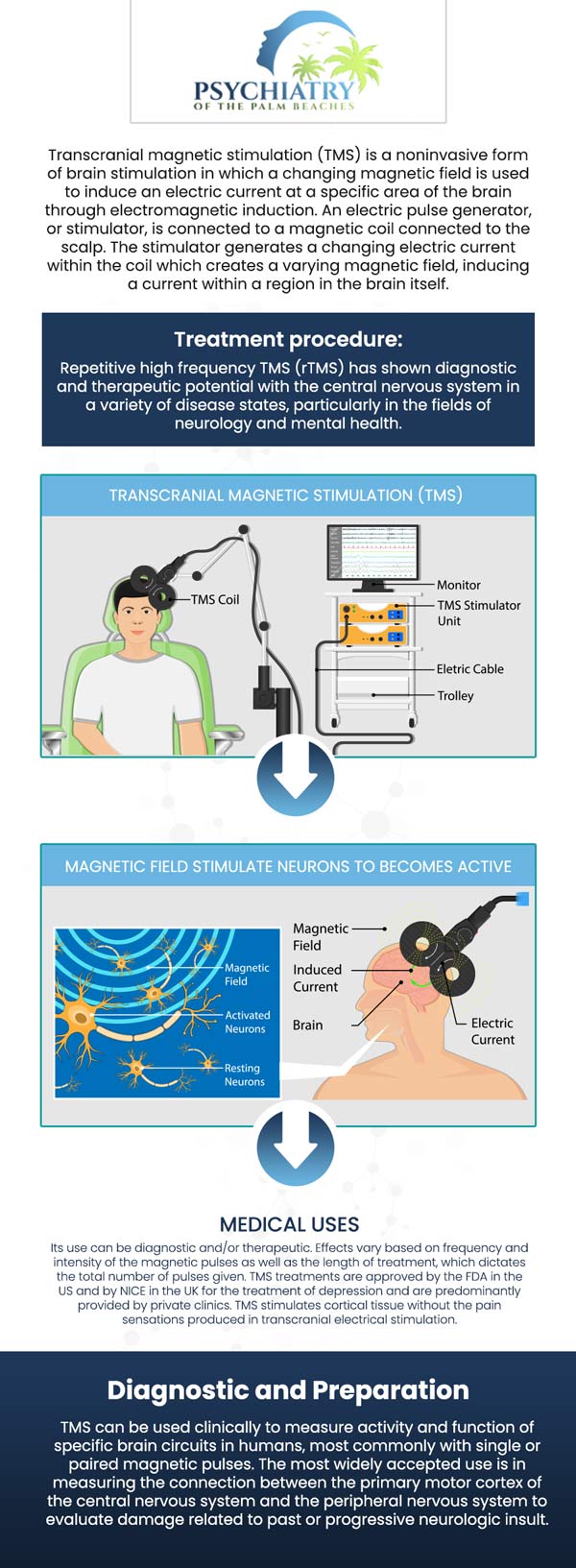
Table of Contents:
How does TMS therapy help with treatment-resistant depression?
How many TMS therapy sessions are needed?
Can TMS therapy be used alongside other treatments for depression?
Who should avoid TMS therapy?
Noninvasive Depression Relief Through BrainsWay TMS with Dr. David Husted MD
At Psychiatry of the Palm Beaches, we are committed to providing innovative, evidence-based treatments for individuals struggling with depression—especially those who have not found relief with traditional therapies like medication or talk therapy. One of the advanced treatments we offer is Transcranial Magnetic Stimulation (TMS) therapy, an FDA-approved, non-invasive procedure for treatment-resistant depression.
TMS therapy uses focused magnetic fields to stimulate specific regions of the brain involved in mood regulation, particularly the left dorsolateral prefrontal cortex, an area often underactive in people with depression. During each session at our Palm Beach office, an electromagnetic coil is gently placed against your scalp, delivering targeted magnetic pulses that activate neurons and strengthen connectivity within mood-related brain circuits.
Many of our patients seek TMS after finding limited success with antidepressant medications or psychotherapy. TMS is designed to restore normal brain function by increasing activity in underactive areas of the brain, often resulting in significant improvements in mood, energy, and daily functioning. Treatment typically involves daily sessions (five days a week) over the course of several weeks, with many patients experiencing noticeable relief from depressive symptoms.
Non-Invasive and Well-Tolerated: TMS does not require anesthesia and is associated with minimal side effects—unlike many medications.
Personalized Care: Our experienced psychiatric team will work with you to develop a treatment plan tailored to your unique needs and monitor your progress closely.
Innovative, Science-Based Treatment: TMS offers a new hope for individuals whose depression has not improved with other therapies, helping patients reclaim their quality of life.
We understand that every patient’s journey with Transcranial Magnetic Stimulation (TMS) therapy is unique. The number of TMS therapy sessions needed can vary depending on your individual condition, the specific treatment protocol, and how you respond to therapy. Typically, our standard TMS treatment for depression consists of approximately 20 to 30 sessions, administered five days a week over a four to six-week period.
Many of our patients begin to notice positive changes in their symptoms within the first few weeks, while others may require the full course of treatment to experience significant improvement. After completing the initial series, some individuals may benefit from additional maintenance or tapering sessions to help sustain their progress. Our experienced providers will work closely with you to monitor your progress and adjust your treatment plan as needed to ensure optimal results.
It is important to follow the personalized treatment plan recommended by our medical team to achieve the best possible outcome with TMS therapy. If you have any questions about the TMS process or want to learn more about how it can help, our compassionate staff at Psychiatry of the Palm Beaches is here to support you every step of the way.
We are committed to providing comprehensive care for individuals struggling with depression, including innovative treatments like Transcranial Magnetic Stimulation (TMS) therapy. TMS is a safe and effective option, particularly for patients who have not experienced sufficient relief from traditional treatments such as medication or psychotherapy.
Our experienced team understands that depression treatment is not one-size-fits-all. That’s why we often incorporate TMS therapy into a broader treatment plan tailored to each patient’s needs. Many of our patients continue their prescribed antidepressant medications while undergoing TMS, and current clinical evidence suggests that combining these approaches can improve overall outcomes. In addition, we encourage patients to continue participating in psychotherapy or counseling sessions during their TMS treatment to address both the biological and emotional aspects of depression.
TMS therapy is designed to work seamlessly alongside your current treatments. There are generally no significant interactions between TMS and most antidepressant medications. However, our clinicians will review your full medical history and current treatments before starting TMS. This allows us to make any necessary adjustments—such as modifying medication dosages or coordinating therapy session timing—to ensure optimal, safe results.
We are committed to providing safe, effective, and personalized treatments for mental health conditions, including Transcranial Magnetic Stimulation (TMS) therapy. TMS is a proven option for individuals struggling with depression, particularly when traditional medications or psychotherapy have not provided sufficient relief. However, not everyone is an ideal candidate for TMS, and your safety is our top priority.
Before starting TMS, our team will conduct a comprehensive evaluation to ensure this treatment is safe for you. TMS is generally well-tolerated, but certain individuals should avoid it due to increased risks:
Metallic Implants or Devices: People with non-removable metal in or near the head (such as cochlear implants, deep brain stimulators, aneurysm clips, or metal plates) should not undergo TMS. The magnetic fields in TMS can interact with these objects, leading to safety concerns.
History of Seizures or Epilepsy: TMS can rarely trigger seizures, especially in those with a personal or family history of seizure disorders. If you have a history of seizures, please discuss this thoroughly with our clinicians.
Pregnancy: If you are pregnant or think you might be pregnant, consult with our team before starting TMS. The effects of TMS during pregnancy are not fully understood.
Other Neurological or Psychiatric Conditions: Individuals with certain neurological conditions (such as severe head injuries or brain tumors) or specific psychiatric diagnoses may not be suitable candidates for TMS.
Our experienced providers will review your complete medical and psychiatric history before recommending TMS therapy. Your safety and well-being are our highest priorities. If you have questions or concerns about whether TMS is appropriate for you, we encourage you to contact us for a thorough evaluation.
At Psychiatry of the Palm Beaches, Dr. David Husted offers a noninvasive solution for depression using BrainsWay TMS. This therapy uses magnetic pulses to activate underactive brain areas, providing renewed hope for patients looking to avoid medication side effects. For more information, contact us today or book an appointment online. We are conveniently located at 11641 Kew Gardens Ave Ste 209, Palm Beach Gardens, FL 33410. We serve patients from Palm Beach Gardens FL, Juno Ridge FL, North Palm Beach FL, Cabana Colony FL, Lake Park FL, and surrounding areas.
Check Out Our 5 Star Reviews



Additional Services You May Need
▸ Mental Wellness
▸ Relationship Coaching
▸ Depression and Mood Disorders
▸ Women’s Health
▸ Panic Disorder
▸ Medications Management
▸ Men’s Health
▸ Individual Psychotherapy
▸ Bipolar
▸ ADHD
▸ Geriatric Mental Health
▸ Couple’s Counseling
▸ Obsessive Compulsive Disorder
▸ Social Phobia Treatment
▸ Eating Disorders
▸ Post Traumatic Stress Disorder
▸ Psychotic Disorders



 Send Text
 How May I Help You?