

Self-Defeating Personality Disorder Treatment Clinic in Jupiter, FL
Psychiatry of the Palm Beaches in Jupiter, FL, provides specialized treatment for self-defeating personality disorder (SDPD). Our team is dedicated to helping individuals recognize and overcome self-sabotaging behaviors through personalized therapy. By identifying negative thought patterns and developing healthier coping strategies, we empower patients to regain control over their emotional well-being. With our support, you can begin your journey to lasting recovery and improved self-esteem. For more information, contact us today or book an appointment online. We are conveniently located at 3893 Military Trail Suite 3 Jupiter, FL 33458.
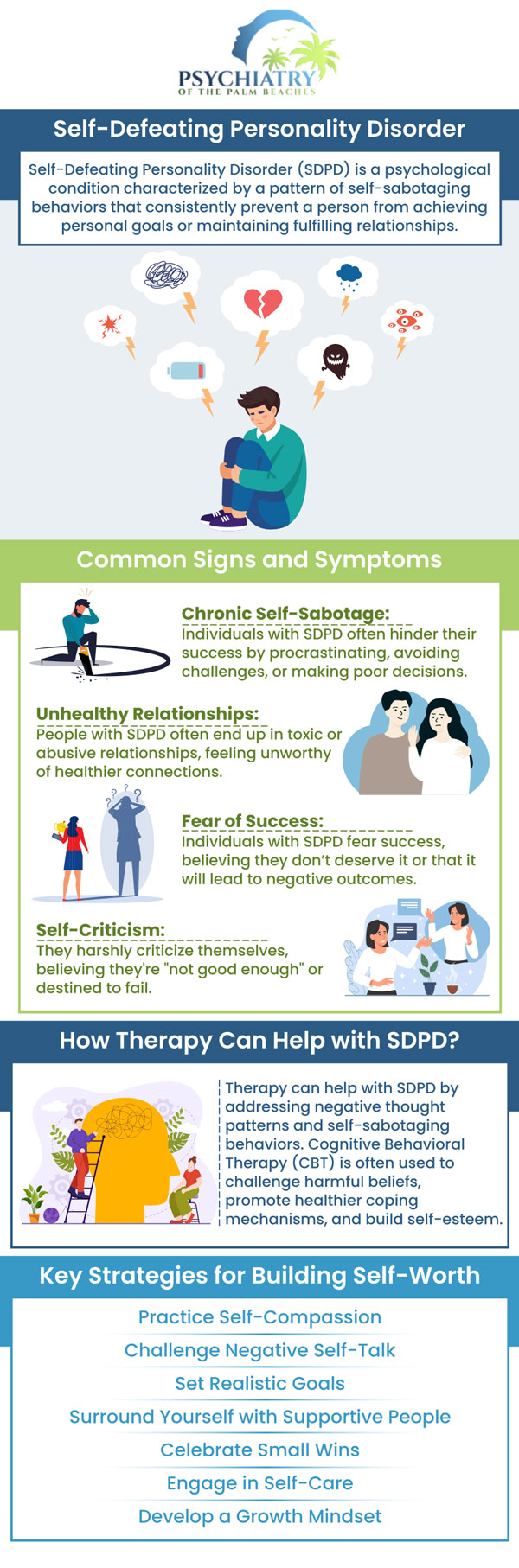
Table of Contents:
How can positive affirmations and self-compassion exercises support self-defeating personality disorder recovery?
What are the benefits of long-term counseling for self-defeating personality disorder?
Can self-defeating behavior patterns be prevented through awareness training?
How does personalized therapy planning improve treatment success in self-defeating personality disorder?
How can positive affirmations and self-compassion exercises support self-defeating personality disorder recovery?
What are the benefits of long-term counseling for self-defeating personality disorder?
Can self-defeating behavior patterns be prevented through awareness training?
How does personalized therapy planning improve treatment success in self-defeating personality disorder?
Healing from Self-Defeating Personality Disorder with Dr. David Husted
We understand that individuals struggling with self-defeating personality disorder (SDPD), also known as masochistic personality disorder, often face persistent patterns of self-sabotage, chronic guilt, and feelings of inadequacy. These patterns are commonly fueled by deeply rooted negative beliefs and a harsh inner critic, which can undermine both emotional well-being and progress in therapy.
As part of our holistic and patient-centered approach, we incorporate positive affirmations and self-compassion exercises into our treatment plans for SDPD. Positive affirmations—brief, constructive statements such as “I am worthy of happiness” or “My needs are valid”—are powerful tools we teach our patients to help challenge and replace their habitual negative self-talk. Practiced consistently, affirmations can gradually shift an individual’s internal narrative from one dominated by self-criticism to one grounded in self-acceptance and encouragement. We guide our patients in creating personalized affirmations that resonate with their unique experiences and recovery goals.
In addition, our clinicians emphasize the importance of self-compassion. We introduce self-compassion exercises—including guided meditations, compassionate letter writing, and mindfulness practices—to help patients learn to respond to setbacks with understanding rather than self-judgment. These practices are designed to address the core issue of excessive self-criticism in SDPD, enabling patients to break the cycle of self-defeating behaviors and develop greater emotional resilience.
We understand the unique challenges faced by individuals living with self-defeating personality disorder—a condition characterized by chronic self-sabotage, persistent feelings of unworthiness, and difficulty breaking free from negative patterns. Our practice offers long-term counseling, providing a compassionate and expert approach to support individuals on their journey toward healing and growth.
Through sustained therapeutic engagement with our experienced psychiatrists and therapists, clients can begin to uncover the deep-seated beliefs and emotional triggers that drive self-defeating behaviors. Our safe and supportive environment allows clients to explore difficult past experiences, often rooted in childhood or early relationships, that may contribute to ongoing patterns of self-criticism and self-punishment.
As therapy progresses, our clinicians work collaboratively with each individual to identify and reframe negative thought patterns, understand their impact on daily decisions and relationships, and develop healthier coping strategies. We emphasize the importance of building self-esteem and practicing self-compassion, as well as learning practical skills such as setting boundaries and asserting personal needs—crucial steps in breaking the cycle of self-defeat.
We believe that long-term counseling fosters a reliable therapeutic relationship, enabling clients to gradually build trust, engage in deeper emotional work, and nurture hope for lasting change. Throughout the process, our team supports clients in tracking their progress, celebrating meaningful milestones, and developing resilience in the face of setbacks.
We recognize that self-defeating behavior patterns—such as procrastination, self-sabotage, and persistent negative self-talk—often have complex origins. These behaviors may stem from deep-seated beliefs, past experiences, or ingrained coping mechanisms, and they can significantly hinder personal growth, relationships, and overall mental well-being.
Our practice offers evidence-based approaches, including awareness training, to help patients identify and address these patterns. Awareness training incorporates strategies such as mindfulness, self-reflection, and cognitive-behavioral techniques—tools that are proven to be effective in psychiatric care. Through these methods, patients learn to recognize the triggers and automatic thoughts that contribute to self-defeating behaviors. This increased self-awareness enhances emotional regulation and promotes a greater sense of control over actions and decisions.
While awareness training does not guarantee the complete elimination of self-defeating behaviors, it significantly improves the ability to manage and reduce their impact. With consistent practice and professional support from our team, patients are empowered to make conscious choices that support their mental health and personal development.
If you or a loved one is struggling with persistent negative patterns or would like to learn more about how awareness training can help, our compassionate team is here to guide you toward lasting change and improved well-being.
We recognize that every individual facing self-defeating personality disorder (SDPD) has a unique background, set of challenges, and personal strengths. That’s why we emphasize personalized therapy planning to significantly enhance treatment success for our patients. Unlike standardized, one-size-fits-all approaches, our clinicians take the time to understand your specific history, triggers, coping styles, and any coexisting mental health issues. This allows us to tailor your treatment to effectively target the self-defeating beliefs and behaviors that often characterize SDPD—such as chronic self-sacrifice, seeking out negative situations, or sabotaging personal achievement.
Our experienced team conducts thorough, individualized assessments to uncover the core cognitive patterns and emotional wounds that fuel self-defeating cycles. We explore factors such as early attachment experiences, past invalidation or rejection, and long-standing beliefs about self-worth in a safe, supportive environment. Based on your unique profile, we may utilize evidence-based interventions including cognitive-behavioral therapy, schema-focused therapy, or dialectical behavior therapy, adapting these approaches to best meet your needs.
Personalized therapy planning at our practice also means incorporating your strengths, preferences, and values into your recovery journey. We believe that when you feel heard and understood, you’re more empowered to engage in the therapeutic process—and more likely to experience meaningful change. Our clinicians adjust the pace, intensity, and focus of each session based on your comfort and progress, helping to minimize overwhelm and reduce the risk of therapy dropout.
We understand that individuals struggling with self-defeating personality disorder (SDPD), also known as masochistic personality disorder, often face persistent patterns of self-sabotage, chronic guilt, and feelings of inadequacy. These patterns are commonly fueled by deeply rooted negative beliefs and a harsh inner critic, which can undermine both emotional well-being and progress in therapy.
As part of our holistic and patient-centered approach, we incorporate positive affirmations and self-compassion exercises into our treatment plans for SDPD. Positive affirmations—brief, constructive statements such as “I am worthy of happiness” or “My needs are valid”—are powerful tools we teach our patients to help challenge and replace their habitual negative self-talk. Practiced consistently, affirmations can gradually shift an individual’s internal narrative from one dominated by self-criticism to one grounded in self-acceptance and encouragement. We guide our patients in creating personalized affirmations that resonate with their unique experiences and recovery goals.
In addition, our clinicians emphasize the importance of self-compassion. We introduce self-compassion exercises—including guided meditations, compassionate letter writing, and mindfulness practices—to help patients learn to respond to setbacks with understanding rather than self-judgment. These practices are designed to address the core issue of excessive self-criticism in SDPD, enabling patients to break the cycle of self-defeating behaviors and develop greater emotional resilience.
By integrating these evidence-based strategies into our therapeutic work, we empower individuals with SDPD to challenge negative beliefs, reduce self-criticism, and cultivate a more supportive and compassionate relationship with themselves. Our commitment is to provide every patient with the tools and support they need to break free from self-sabotage and foster lasting recovery.
We understand the unique challenges faced by individuals living with self-defeating personality disorder—a condition characterized by chronic self-sabotage, persistent feelings of unworthiness, and difficulty breaking free from negative patterns. Our practice offers long-term counseling, providing a compassionate and expert approach to support individuals on their journey toward healing and growth.
Through sustained therapeutic engagement with our experienced psychiatrists and therapists, clients can begin to uncover the deep-seated beliefs and emotional triggers that drive self-defeating behaviors. Our safe and supportive environment allows clients to explore difficult past experiences, often rooted in childhood or early relationships, that may contribute to ongoing patterns of self-criticism and self-punishment.
As therapy progresses, our clinicians work collaboratively with each individual to identify and reframe negative thought patterns, understand their impact on daily decisions and relationships, and develop healthier coping strategies. We emphasize the importance of building self-esteem and practicing self-compassion, as well as learning practical skills such as setting boundaries and asserting personal needs—crucial steps in breaking the cycle of self-defeat.
We believe that long-term counseling fosters a reliable therapeutic relationship, enabling clients to gradually build trust, engage in deeper emotional work, and nurture hope for lasting change. Throughout the process, our team supports clients in tracking their progress, celebrating meaningful milestones, and developing resilience in the face of setbacks.
At Psychiatry of the Palm Beaches, we recognize that self-defeating behavior patterns—such as procrastination, self-sabotage, and persistent negative self-talk—often have complex origins. These behaviors may stem from deep-seated beliefs, past experiences, or ingrained coping mechanisms, and they can significantly hinder personal growth, relationships, and overall mental well-being.
Our practice offers evidence-based approaches, including awareness training, to help patients identify and address these patterns. Awareness training incorporates strategies such as mindfulness, self-reflection, and cognitive-behavioral techniques—tools that are proven to be effective in psychiatric care. Through these methods, patients learn to recognize the triggers and automatic thoughts that contribute to self-defeating behaviors. This increased self-awareness enhances emotional regulation and promotes a greater sense of control over actions and decisions.
Our clinicians work collaboratively with patients to help them become more attuned to their internal states and habitual responses. By doing so, individuals can interrupt negative patterns before they become entrenched, fostering healthier coping strategies and more constructive behaviors over time.
While awareness training does not guarantee the complete elimination of self-defeating behaviors, it significantly improves the ability to manage and reduce their impact. With consistent practice and professional support from our team, patients are empowered to make conscious choices that support their mental health and personal development.
If you or a loved one is struggling with persistent negative patterns or would like to learn more about how awareness training can help, our compassionate team is here to guide you toward lasting change and improved well-being.
We recognize that every individual facing self-defeating personality disorder (SDPD) has a unique background, set of challenges, and personal strengths. That’s why we emphasize personalized therapy planning to significantly enhance treatment success for our patients. Unlike standardized, one-size-fits-all approaches, our clinicians take the time to understand your specific history, triggers, coping styles, and any coexisting mental health issues. This allows us to tailor your treatment to effectively target the self-defeating beliefs and behaviors that often characterize SDPD—such as chronic self-sacrifice, seeking out negative situations, or sabotaging personal achievement.
Our experienced team conducts thorough, individualized assessments to uncover the core cognitive patterns and emotional wounds that fuel self-defeating cycles. We explore factors such as early attachment experiences, past invalidation or rejection, and long-standing beliefs about self-worth in a safe, supportive environment. Based on your unique profile, we may utilize evidence-based interventions including cognitive-behavioral therapy, schema-focused therapy, or dialectical behavior therapy, adapting these approaches to best meet your needs.
Personalized therapy planning at our practice also means incorporating your strengths, preferences, and values into your recovery journey. We believe that when you feel heard and understood, you’re more empowered to engage in the therapeutic process—and more likely to experience meaningful change. Our clinicians adjust the pace, intensity, and focus of each session based on your comfort and progress, helping to minimize overwhelm and reduce the risk of therapy dropout.
Our team at Psychiatry of the Palm Beaches offers specialized treatment for self-defeating personality disorder (SDPD), focusing on breaking the cycle of negative thought patterns. Through therapy, patients learn to challenge their self-defeating behaviors and develop healthier emotional responses. This treatment empowers individuals to move beyond self-sabotage and lead a more fulfilling and balanced life.
By focusing on your individual challenges and resources, Psychiatry of the Palm Beaches strives to help you break free from self-defeating patterns, build healthier self-esteem, and form more positive relationship dynamics. Our commitment to personalized, compassionate care can lead to more sustained and successful outcomes than generic treatment plans. If you or a loved one is struggling with self-defeating behaviors, we invite you to reach out and discover how our tailored approach can support your journey toward lasting well-being. For more information, contact us today or book an appointment online. We are conveniently located at 3893 Military Trail Suite 3 Jupiter, FL 33458. We serve patients from Jupiter FL, North Palm Beach FL, Riviera Beach FL, West Palm Beach FL, and surrounding areas.
Check Out Our 5 Star Reviews



Additional Services You May Need
▸ Mental Wellness
▸ Relationship Coaching
▸ Depression and Mood Disorders
▸ Women’s Health
▸ Panic Disorder
▸ Medications Management
▸ Men’s Health
▸ Individual Psychotherapy
▸ Bipolar
▸ ADHD
▸ Geriatric Mental Health
▸ Couple’s Counseling
▸ Obsessive Compulsive Disorder
▸ Social Phobia Treatment
▸ Eating Disorders
▸ Post Traumatic Stress Disorder
▸ Psychotic Disorders



 Send Text
 How May I Help You?