

What is Augmentation in Restless Legs Syndrome Treatment?
Restless legs syndrome (RLS) can make evenings uncomfortable and sleep difficult. Treatment may help at first, but it can be confusing when symptoms return earlier, last longer, or feel stronger than before. Sometimes, this pattern is a medication-related problem called augmentation. Taking more of the same medicine may make symptoms worse over time. At Psychiatry of the Palm Beaches, our team offers restless legs syndrome care in Jacksonville, Florida. Recognizing warning signs helps patients discuss treatment. For more information, contact us today or book an appointment. We are conveniently located at 2950 Halcyon Lane Suite 605 Jacksonville, FL 32223.
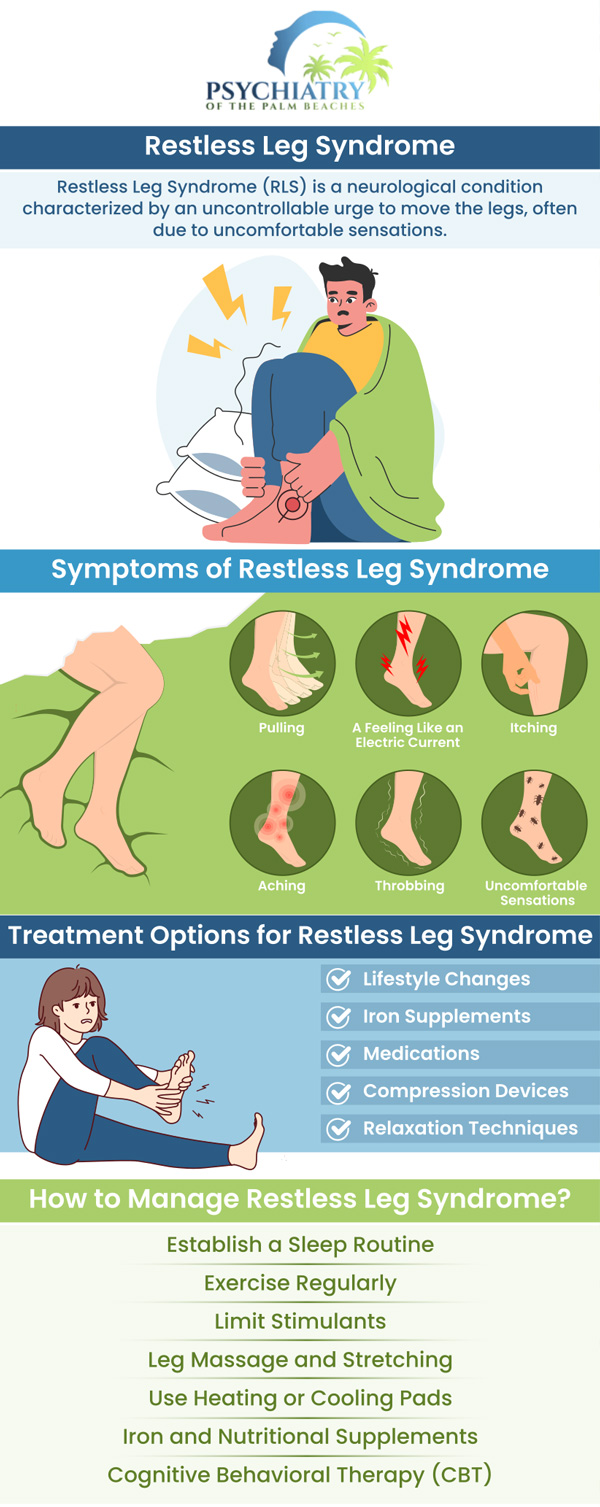
Table of Contents:
What does augmentation mean in restless legs syndrome treatment?
How is augmentation different from an occasional RLS flare-up?
Which changes in symptom timing or intensity should patients report to a prescriber?
Why is medical guidance important before changing an RLS medication?
How can patients request a medication review at Psychiatry of the Palm Beaches in Jacksonville, FL, when restless legs symptoms worsen?
Augmentation is a worsening of RLS symptoms linked to certain medications that increase dopamine activity in the brain. Medicines such as pramipexole, ropinirole, rotigotine, and levodopa may reduce symptoms initially. But with ongoing use, some patients find that their legs become restless earlier in the day, symptoms start more quickly during rest, or discomfort reaches other body areas.
For example, someone who previously noticed symptoms only at bedtime might begin feeling an urge to move during afternoon meetings or car rides. The medication may seem to wear off sooner, even when taken as prescribed.
Augmentation does not mean that someone has taken a medication incorrectly. It is a recognized treatment complication. Current sleep medicine guidelines therefore advise against routinely using dopamine-acting drugs for long-term RLS treatment. A change in symptoms deserves review rather than an automatic dose increase.
An occasional flare-up is a temporary period when RLS feels more troublesome. Poor sleep, changes in routine, caffeine, certain medications, and other health concerns can contribute. Symptoms may return to their usual pattern afterward. By contrast, augmentation tends to involve a persistent shift in when symptoms start or how widely and strongly they occur, especially after a period of benefit from a dopamine-acting medication.
The distinction is not always obvious. Ordinary progression of RLS, a missed dose, or symptoms returning as medicine wears off can resemble augmentation. Low iron stores, untreated sleep apnea, pregnancy, and other medical issues may also affect symptoms. A clinician considers the full history before identifying the cause.
Keeping a brief symptom log while arranging a review can be useful. Write down when the discomfort begins, how long it lasts, whether movement helps, and when medications are taken. A record makes these patterns easier to discuss.
Patients should report a clear change from their usual RLS pattern, even if the medicine still provides some relief. Warning signs include symptoms starting in the afternoon rather than late evening; needing to move after sitting for a shorter time; stronger sensations; discomfort spreading from the legs to the arms; or relief that does not last as long as it once did.
Another concern is needing earlier or extra doses to get through the day. These experiences can be clues to augmentation, but they do not establish a diagnosis on their own. Tell the prescriber when the change began and whether it followed a new medication or dosage adjustment. Share a complete list of prescription drugs, over-the-counter sleep or allergy products, and supplements. Some antidepressants, sedating antihistamines, and medicines that block dopamine may worsen RLS symptoms.
Medication management is a service at Psychiatry of the Palm Beaches, where reviewing a patient’s full medication history can help identify possible concerns. Patients should also explain how disrupted sleep is affecting mood, attention, and daily activities.
Stopping or changing an RLS medicine without guidance can create additional problems. Suddenly discontinuing a dopamine agonist may cause severe rebound restlessness, major sleep disruption, and sometimes mood symptoms. Taking more medication without medical advice can also increase the risk of worsening augmentation or other side effects, including compulsive behaviors with dopamine agonists.
A prescriber may review the diagnosis, look for aggravating factors, and consider blood tests for ferritin and transferrin saturation, which help assess iron status. Iron treatment is not appropriate for everyone and should be guided by test results.
When clinically appropriate, alternatives such as gabapentin or pregabalin may be considered. These drugs have their own precautions, including sleepiness, dizziness, and dosing concerns for people with impaired kidney function.
If a medication change is needed, the clinician may plan a gradual adjustment and monitor symptoms closely. A sleep medicine or neurology consultation may be helpful for difficult cases. Patients should contact their prescriber promptly if symptoms worsen substantially or sleep becomes severely disrupted, rather than attempting to manage the dose themselves.
Our team provides care for restless legs syndrome, and medication management is among their services. Patients can explain that their symptoms have shifted despite treatment and ask which clinician is best suited to review the concern. Before the visit, prepare a list of medication names, doses, and the times they are taken. Bring notes about when symptoms now begin, how much sleep is lost, and any recent changes in mood, health, or other medicines. Mention whether the current prescription comes from a different clinician so care can be coordinated appropriately.
A review is an opportunity to discuss what has changed, check for possible medication-related worsening, and decide whether further evaluation is needed. The safest next step is a conversation with the prescribing clinician, supported by a clear description of the symptoms.
Patients can contact Psychiatry of the Palm Beaches or use the online appointment request to ask about an RLS medication review. For more information, contact us today or book an appointment. We are conveniently located at 2950 Halcyon Lane Suite 605 Jacksonville, FL 32223. We serve patients from Jacksonville FL, Southwood FL, Arrowhead FL, Loretto FL, Mandarin FL, Sunbeam FL, and surrounding areas.
Check Out Our 5 Star Reviews



Additional Services You May Need
▸ Mental Wellness
▸ Relationship Coaching
▸ Depression and Mood Disorders
▸ Women’s Health
▸ Panic Disorder
▸ Medications Management
▸ Men’s Health
▸ Individual Psychotherapy
▸ Bipolar
▸ ADHD
▸ Geriatric Mental Health
▸ Couple’s Counseling
▸ Obsessive Compulsive Disorder
▸ Social Phobia Treatment
▸ Eating Disorders
▸ Post Traumatic Stress Disorder
▸ Psychotic Disorders



 Send Text
 How May I Help You?
