

FAQs for Panic Disorder
Experiencing sudden panic attacks can be a frightening and isolating experience, but relief is within reach. We created this FAQ resource to bring comfort and clarity to patients and their families by addressing the complexities of Panic Disorder. From understanding warning signs and environmental triggers to exploring modern therapies and everyday coping strategies, we cover it all. Here at Psychiatry of the Palm Beaches, our compassionate team provides tailored, evidence-backed care designed to help you break free from the cycle of anxiety, restore your peace of mind, and confidently thrive in your daily routine. For more information, contact us today or book an appointment online! We are conveniently located at 2950 Halcyon Lane Suite 605 Jacksonville, FL 32223.
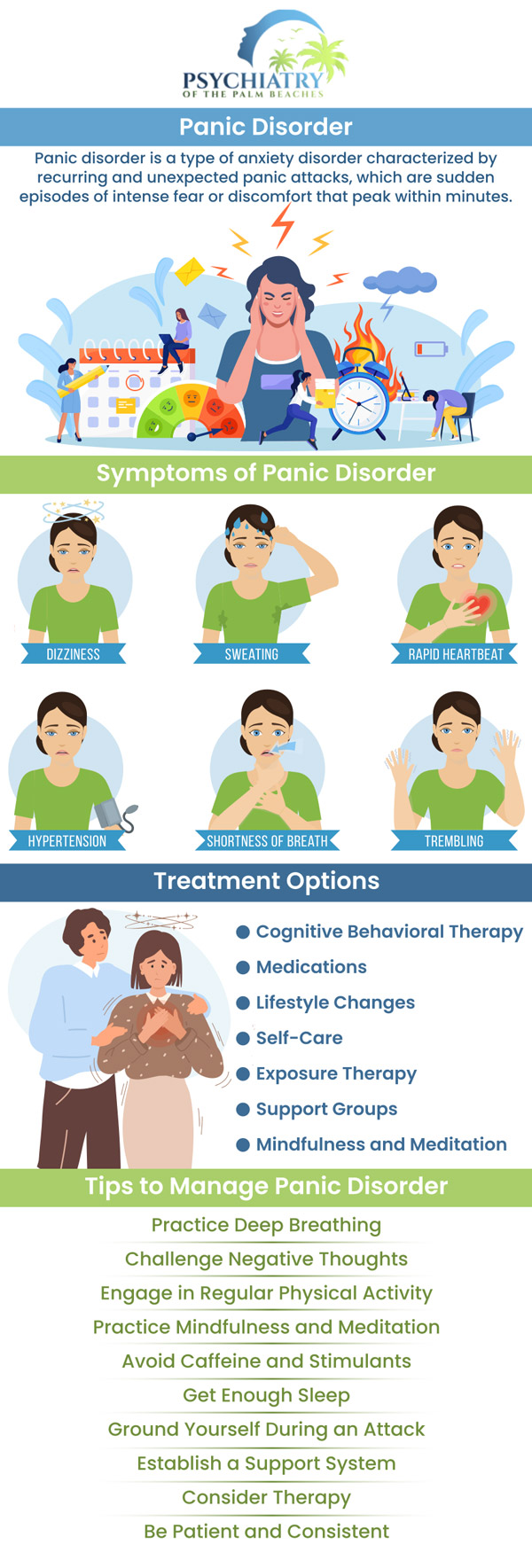
Table of Contents:
What are the symptoms of Panic Disorder?
How is Panic Disorder diagnosed?
What causes Panic Disorder?
Can Panic Disorder be treated effectively?
How does Panic Disorder affect daily life?
What is a panic attack?
How long do panic attacks last?
What are the treatment options for Panic Disorder?
Can therapy help with Panic Disorder?
Can Panic Disorder be prevented?
Is medication necessary for treating Panic Disorder?
How can I manage Panic Disorder symptoms on my own?
Can Panic Disorder be linked to other mental health conditions?
Is Panic Disorder the same as anxiety?
Supportive Treatment for Panic Disorder at Psychiatry of the Palm Beaches
Panic disorder is characterized by recurrent, unexpected panic attacks—sudden surges of intense fear or discomfort that reach a peak within minutes. During these episodes, individuals may experience a variety of physical symptoms such as a racing heartbeat, sweating, trembling, shortness of breath, chest pain, dizziness, tingling sensations, or even nausea.
The fear of future panic attacks often leads to significant changes in behavior, such as avoiding certain places or situations where escape might be difficult. This persistent worry and avoidance can interfere with daily life and distinguish panic disorder from isolated panic attacks.
At Psychiatry of the Palm Beaches, our experienced team offers compassionate, evidence-based care for individuals struggling with panic disorder. We provide comprehensive evaluation and personalized treatment plans—including therapy, medication management, and lifestyle recommendations—to help you regain a sense of control and improve your quality of life.
At Psychiatry of the Palm Beaches, clinicians provide compassionate assessment for individuals experiencing frequent panic attacks. During evaluation, psychiatrists review symptoms such as chest pain, heart palpitations, shortness of breath, dizziness, and intense fear, noting frequency, duration, and triggers.
Diagnosis follows DSM-5 criteria, focusing on recurrent, unexpected panic attacks and any persistent worry or behavioral changes afterward. Clinicians also ensure symptoms aren’t caused by other medical conditions, substance use, or psychiatric disorders.
To rule out underlying health issues, we may recommend a physical exam, lab tests, or an ECG to check for thyroid or heart conditions that can mimic panic symptoms. Standardized assessment tools may also be used to gauge the severity and impact of symptoms.
This approach ensures an accurate diagnosis and guides a personalized treatment plan to manage panic disorder effectively.
Panic disorder results from a combination of biological, psychological, and environmental factors. At Psychiatry of the Palm Beaches, we consider all these aspects when evaluating and treating each individual.
● Genetics and Brain Chemistry: Panic disorder often runs in families, indicating a genetic predisposition. Changes in brain areas that regulate fear, like the amygdala, and imbalances in neurotransmitters such as serotonin and norepinephrine, can increase susceptibility to panic attacks.
● Psychological and Emotional Triggers: Stressful life events, trauma, or major changes can trigger panic attacks. Childhood abuse, neglect, or loss of a loved one may heighten vulnerability. Some people are highly sensitive to bodily sensations, interpreting normal changes as threats, which fuels panic cycles.
● Environmental and Lifestyle Factors: Ongoing stress, substance use, excessive caffeine, and certain medical conditions—such as thyroid, heart, or respiratory issues—can trigger or worsen panic disorder.
At Psychiatry of the Palm Beaches, we recognize that panic disorder—marked by recurrent, unexpected panic attacks and ongoing worry—can disrupt daily life. The good news is that effective treatment is available, and our team is here to help.
We offer evidence-based therapies, including Cognitive-Behavioral Therapy (CBT), the gold standard for treating panic disorder. CBT helps patients understand and manage the thoughts and behaviors that trigger panic attacks. Exposure techniques are often used to gradually reduce fear and build confidence in managing symptoms.
Our board-certified psychiatrists may also prescribe medications such as SSRIs, SNRIs, or, in some cases, benzodiazepines to reduce the frequency and severity of panic attacks. Lifestyle modifications—including regular exercise, stress management, and avoiding stimulants—are emphasized to support recovery.
At Psychiatry of the Palm Beaches, early intervention and personalized treatment plans are key. Many patients see significant improvement and go on to lead fulfilling lives. Ongoing communication ensures treatment can be adjusted as needs change, promoting lasting progress and well-being.
Panic Disorder causes recurrent, unexpected panic attacks—sudden episodes of intense fear with physical symptoms like heart palpitations, shortness of breath, and dizziness. At Psychiatry of the Palm Beaches, we understand how this can disrupt daily life.
Individuals often live in constant worry about another attack, avoiding places or situations that may trigger panic. Everyday activities such as socializing, working, or running errands can feel overwhelming. This anticipation, combined with physical symptoms, can impair focus, memory, and decision-making, and may lead to frequent medical visits.
Without treatment, panic disorder can progress to agoraphobia, causing social isolation and straining relationships. Sleep problems, fatigue, and reduced quality of life are common.
Our clinicians provide personalized care to help patients manage symptoms, overcome avoidance behaviors, and regain independence, improving overall well-being and daily functioning.
A panic attack is a sudden episode of intense fear or discomfort that reaches its peak within minutes, often occurring unexpectedly and without any clear cause or real danger. During a panic attack, you might experience symptoms such as a racing heart, sweating, trembling, shortness of breath, chest pain, nausea, dizziness, chills, or a sensation of impending doom. Some people also feel detached from reality or themselves, a phenomenon known as depersonalization or derealization.
A panic attack is characterized by a sudden surge of intense fear or discomfort that can be overwhelming. Typically, symptoms peak within 10 minutes and most panic attacks last between 5 and 20 minutes, although this can vary. In rare cases, symptoms may persist for up to an hour. After an attack, it’s common to feel fatigued or unsettled, but the physical and emotional symptoms usually subside on their own.
While panic attacks are frightening, it’s important to remember that they are not physically harmful. However, frequent or prolonged panic attacks can significantly impact your quality of life.
Panic Disorder involves recurrent, unexpected panic attacks that can disrupt daily life. At Psychiatry of the Palm Beaches, we provide compassionate, evidence-based care tailored to each individual.
● How We Help at Psychiatry of the Palm Beaches: Treatment usually combines psychotherapy, medication management, and lifestyle support in a safe, confidential environment.
● Psychotherapy: Cognitive-Behavioral Therapy (CBT) helps identify and change thought and behavior patterns that trigger panic attacks. Exposure techniques gradually reduce fear and improve coping.
● Medication Management: Board-certified psychiatrists may prescribe SSRIs or SNRIs to reduce attack frequency and severity. Short-term benzodiazepines may be used for immediate relief, with careful monitoring for safety.
● Lifestyle Support: Guidance on exercise, sleep, nutrition, and stress-management techniques—like mindfulness and relaxation—helps prevent future attacks. Avoiding triggers such as caffeine, alcohol, and drugs is also emphasized.
Therapy is a cornerstone of our approach to managing and treating panic disorder, and many of our patients have found significant relief through working with our experienced psychiatrists and licensed therapists.
One of the primary therapies we offer is Cognitive Behavioral Therapy (CBT), an evidence-based treatment that helps patients identify and change the thought patterns and behaviors that trigger panic attacks. Through CBT at Psychiatry of the Palm Beaches, you’ll learn valuable coping strategies, relaxation techniques, and practical skills to gradually face and overcome situations that cause anxiety. In addition to CBT, our clinicians may recommend other therapeutic modalities, such as exposure therapy, to help you confront and desensitize your fears in a supportive, controlled environment. We also provide a safe, non-judgmental space to explore underlying issues—such as stress or past trauma—that may be contributing to your symptoms.
Our integrated approach means that, when appropriate, therapy may be combined with medication management to achieve the best possible outcomes. Whether used alone or alongside medication, therapy can help you manage anxiety more effectively, boost your confidence, and improve your overall quality of life.
Panic disorder is a type of anxiety disorder characterized by recurrent and unexpected panic attacks. While it may not always be possible to prevent panic disorder entirely, there are effective strategies and lifestyle choices that can help reduce the risk or manage symptoms before they become more severe.
At Psychiatry of the Palm Beaches, our team is committed to helping patients recognize early signs of anxiety and providing comprehensive care to address these symptoms before they progress. Early intervention, personalized stress management techniques, and learning healthy coping mechanisms play a crucial role in minimizing the risk of developing panic disorder. We encourage a balanced lifestyle that includes regular exercise, sufficient sleep, and a nutritious diet, all of which support overall mental well-being.
While factors such as genetics can sometimes be beyond your control, being proactive about your mental health is essential. At Psychiatry of the Palm Beaches, we are here to partner with you every step of the way—providing expert guidance, compassionate care, and empowering you to take charge of your mental wellness.
While medication is not always necessary for treating Panic Disorder, it can be an effective option for many of our patients. The decision to use medication depends on several factors, including the severity of symptoms, personal preferences, whether other mental health conditions are present, and how much panic attacks disrupt daily life.
Many people find significant relief through psychotherapy alone—especially cognitive-behavioral therapy (CBT), which is considered the gold standard for treating Panic Disorder. At Psychiatry of the Palm Beaches, our experienced clinicians utilize CBT to help patients understand and manage their anxiety and panic attacks, often without the use of medication.
However, for those experiencing more severe or persistent symptoms, or when therapy alone has not provided sufficient relief, medications such as selective serotonin reuptake inhibitors (SSRIs), serotonin-norepinephrine reuptake inhibitors (SNRIs), or benzodiazepines may be considered. These medications can help reduce the frequency and intensity of panic attacks, improving overall quality of life.
At Psychiatry of the Palm Beaches, we understand how overwhelming Panic Disorder can feel. While professional care is the most effective approach, several self-help strategies can help reduce symptoms.
● Practice Deep Breathing: Slow, controlled breathing can calm your nervous system during anxiety or panic attacks. Inhale through your nose for four counts, hold briefly, and exhale through your mouth for six counts to regain control.
● Challenge Unhelpful Thoughts: Recognize catastrophic thinking and remind yourself that panic symptoms are uncomfortable but not dangerous. Positive self-talk and affirmations can reinforce safety and empowerment.
● Stay Active and Healthy: Regular exercise, adequate sleep, balanced nutrition, and avoiding stimulants like caffeine and nicotine can lower anxiety and improve mood.
● Incorporate Relaxation Techniques: Mindfulness, yoga, and progressive muscle relaxation reduce stress and build long-term resilience.
● Face Your Fears Gradually: Gradual exposure to feared situations can help regain confidence and independence.
● Track Your Progress: Journaling symptoms and triggers helps identify patterns and supports professional care if needed.
When to Seek Help: While these self-help strategies can be very effective, you don’t have to face panic disorder alone. If your symptoms are interfering with your daily life or you find them difficult to manage, Psychiatry of the Palm Beaches is here to help. Our compassionate team offers personalized treatment plans—including therapy and medication management—to support your journey to recovery.
Many individuals struggling with panic disorder also experience other mental health conditions—a situation known as comorbidity. Common co-occurring disorders include depression, generalized anxiety disorder, social anxiety disorder, and specific phobias. These conditions are often linked by shared risk factors such as genetics, changes in brain chemistry, and environmental influences like early life trauma or ongoing stress.
When multiple mental health concerns exist together, diagnosis and treatment can become more complex. For example, depressive symptoms—such as persistent sadness or loss of interest—can overlap with the intense fear and anxiety typical of panic attacks.
Anxiety is a natural response to stress, such as before an exam or a job interview, and everyone experiences it from time to time. However, when anxiety becomes excessive and starts to interfere with daily activities, it may be classified as an anxiety disorder. Anxiety disorders are a group of mental health conditions characterized by persistent feelings of worry, nervousness, or fear that go beyond typical everyday stress.
Panic disorder is a specific type of anxiety disorder that we frequently diagnose and treat at Psychiatry of the Palm Beaches. It is marked by recurrent, unexpected panic attacks—sudden episodes of intense fear or discomfort that cause severe physical symptoms like a racing heart, shortness of breath, chest pain, dizziness, or abdominal distress, often without any clear trigger. Individuals with panic disorder may develop a persistent concern about experiencing future attacks, leading them to avoid certain situations or places.
It’s possible to have anxiety without ever experiencing a panic attack, and those with panic disorder may not always feel anxious between episodes. That’s why a thorough evaluation by our experienced psychiatric professionals is crucial: to differentiate between general anxiety and panic disorder, and to develop a personalized treatment plan.
At Psychiatry of the Palm Beaches, care for Panic Disorder is centered on helping patients understand their symptoms and manage sudden episodes of intense fear, rapid heartbeat, shortness of breath, dizziness, and racing thoughts. The clinic creates personalized treatment plans based on each patient’s triggers, symptom patterns, lifestyle, and emotional health needs. Support may include therapy-based coping tools, anxiety management strategies, medication management when appropriate, and guidance for handling panic episodes more confidently. Psychiatry of the Palm Beaches provides supportive mental health care focused on daily stability, improved coping, and better quality of life. For more information, contact us today or book an appointment online! We are conveniently located at 2950 Halcyon Lane Suite 605 Jacksonville, FL 32223. We serve patients from Jacksonville FL, Riverside FL, Mandarin FL, Julington Creek FL, Fruit Cove FL, Orange Park FL, and surrounding areas.
Check Out Our 5 Star Reviews



Additional Services You May Need
▸ Mental Wellness
▸ Relationship Coaching
▸ Depression and Mood Disorders
▸ Women’s Health
▸ Panic Disorder
▸ Medications Management
▸ Men’s Health
▸ Individual Psychotherapy
▸ Bipolar
▸ ADHD
▸ Geriatric Mental Health
▸ Couple’s Counseling
▸ Obsessive Compulsive Disorder
▸ Social Phobia Treatment
▸ Eating Disorders
▸ Post Traumatic Stress Disorder
▸ Psychotic Disorders



 Send Text
 How May I Help You?