
Masochistic Sexual Behavior Treatment in Stuart, FL
Masochistic sexual behavior treatment helps individuals break distressing patterns and develop healthier, more empowered ways of relating and expressing intimacy. At Psychiatry of the Palm Beaches, our team provides empathetic, confidential support using evidence-based therapies that address emotional triggers, underlying experiences, and behavioral cycles. We work collaboratively to foster insight, strengthen coping skills, and guide patients toward safer, more fulfilling relational and sexual well-being. For more information, contact us today or book an appointment online. We are conveniently located at 729 SW Federal Hwy Suite #104, Stuart, FL 34994.
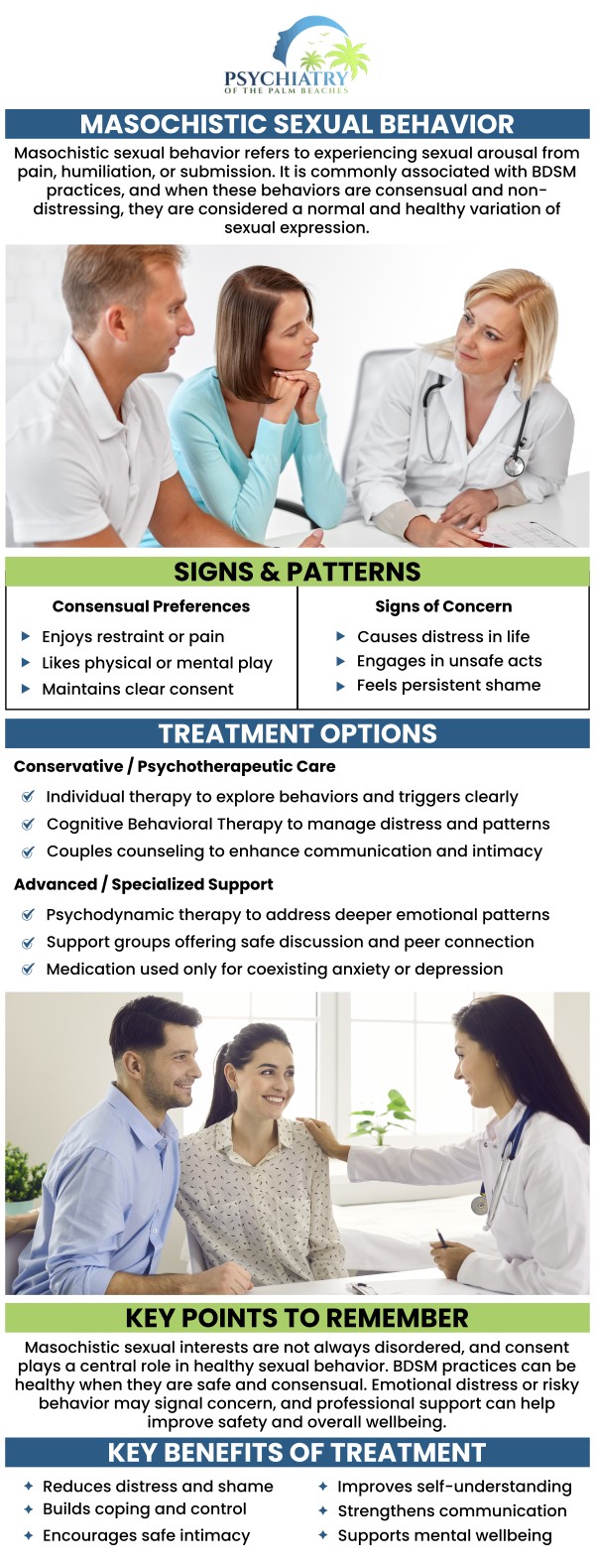
Table of Contents:
What are the psychological causes of masochistic sexual behavior?
How can understanding masochistic behavior contribute to personal growth and healthier relationships?
Is masochistic sexual behavior linked to other mental health conditions?
Can masochistic sexual behavior be a form of sexual addiction?
Personalized Treatment Plans for Masochistic Sexual Behavior Created by Dr. David Husted, MD
At Psychiatry of the Palm Beaches, we recognize that human sexuality is complex, and individuals may experience a wide range of desires and behaviors. Masochistic sexual behavior—characterized by deriving pleasure from pain, humiliation, or submission—is one such variation that can have a variety of psychological origins.
Research suggests that masochistic tendencies can develop due to a combination of early life experiences, personality factors, and learned associations. For some, childhood experiences involving strict discipline, emotional neglect, or inconsistent caregiving may contribute to later associations of pain or submission with acceptance or affection. In other cases, repeated experiences linking sexual arousal with pain or humiliation can reinforce these desires through conditioning.
Certain personality traits, such as sensation-seeking, a need for escapism, or low self-esteem, may also increase the likelihood of engaging in masochistic behaviors. For some individuals, these behaviors serve as a coping mechanism for psychological distress, emotional numbness, or unresolved feelings of guilt or shame.
Psychodynamic theories further suggest that masochistic sexual behavior may stem from unconscious conflicts, such as the desire to master past traumas or internalized hostility. Cultural influences and media exposure can also shape sexual interests and behaviors.
Exploring and understanding masochistic behavior in a safe, consensual, and self-reflective manner can significantly contribute to personal growth and the development of healthier relationships. Often, individuals who explore masochistic tendencies may have an opportunity to understand their boundaries, desires, and emotional needs in a deeper way. When approached thoughtfully, these behaviors can serve as a tool for emotional release, self-discovery, and improved communication between partners.
For many, engaging with masochistic behavior allows individuals to confront past trauma or emotional issues in a controlled and healing environment. It can encourage self-awareness, allowing someone to better understand why they may have these desires and how to integrate them healthily into their sexual expression. This process can also foster empathy and deeper trust between partners, as clear communication and consent are vital for engaging in these activities safely.
Masochism can also be a way of releasing stress or tension, offering a psychological “reset” for some individuals. As with any form of sexual expression, when individuals understand the role masochistic behavior plays in their lives, they are more likely to approach it with a sense of balance and respect for themselves and their partners, thus promoting emotional well-being and intimacy.
We recognize the importance of providing compassionate, evidence-based care for all aspects of mental health, including concerns related to sexual behavior. Masochistic sexual behavior, which involves sexual arousal from experiences such as being humiliated, bound, or made to suffer, is one form of sexual expression seen in some individuals.
It is essential to differentiate between consensual masochistic activities—often practiced within the context of BDSM (bondage, dominance, submission, and masochism)—and more severe forms that may lead to distress or interfere with daily functioning. Research indicates that consensual masochistic behavior, when practiced safely and with clear mutual agreement, is not inherently linked to mental health disorders. In fact, individuals who participate in consensual BDSM activities often experience similar or even better psychological well-being compared to those who do not.
However, at Psychiatry of the Palm Beaches, we understand that when masochistic tendencies become extreme, uncontrollable, or cause significant distress or impairment in relationships, work, or other areas of life, they may be classified as sexual masochism disorder, as outlined in the DSM-5. In these cases, there can sometimes be a higher prevalence of co-occurring mental health conditions—such as depression, anxiety, or trauma-related disorders—although this is not always the case.
Our specialists are experienced in providing sensitive, nonjudgmental assessments and support for individuals with concerns about their sexual behaviors and overall mental health. Consensual masochistic sexual behavior is not typically linked to mental health conditions and does not usually require intervention. However, if these behaviors are associated with significant distress, lack of consent, or interfere with daily functioning, a comprehensive psychological evaluation can be beneficial.
At Psychiatry of the Palm Beaches, our clinicians frequently work with individuals and couples who have questions or concerns about various aspects of their sexuality, including masochistic sexual behaviors. Masochistic sexual interests—where a person derives pleasure from pain, humiliation, or submission—are a recognized and consensual variation of human sexuality for many adults. When practiced safely and with mutual consent, these behaviors are not inherently pathological or a sign of mental illness.
However, sometimes individuals or their partners worry whether masochistic behaviors might be a symptom of sexual addiction (also known as hypersexuality or compulsive sexual behavior). Sexual addiction is characterized by persistent, escalating sexual urges or behaviors that feel out of control, cause significant distress, and interfere with daily life, relationships, or work. The key difference between healthy sexual expression—including consensual masochism—and sexual addiction is the presence of compulsion, loss of control, and negative consequences.
It’s important to stress that not everyone who enjoys masochistic sexual activities is struggling with sexual addiction. Many people incorporate elements of pain or submission into their sex lives as part of consensual BDSM, which can be a healthy and fulfilling expression of sexuality. Concerns arise primarily when these behaviors become compulsive, interfere with daily functioning, or lead to harm for oneself or others.
Dr. David Husted, MD, creates personalized treatment plans designed to help patients gain control over harmful or unwanted sexual urges. Each plan focuses on emotional regulation, self-awareness, and understanding personal triggers.For more information, contact us today or book an appointment online. We are conveniently located at 729 SW Federal Hwy Suite #104, Stuart, FL 34994. We serve patients from Stuart FL, Palm City FL, Port St. Lucie FL, River Park FL, White City FL, Port Salerno FL, and surrounding areas.
Check Out Our 5 Star Reviews



Additional Services You May Need
▸ Mental Wellness
▸ Relationship Coaching
▸ Depression and Mood Disorders
▸ Women’s Health
▸ Panic Disorder
▸ Medications Management
▸ Men’s Health
▸ Individual Psychotherapy
▸ Bipolar
▸ ADHD
▸ Geriatric Mental Health
▸ Couple’s Counseling
▸ Obsessive Compulsive Disorder
▸ Social Phobia Treatment
▸ Eating Disorders
▸ Post Traumatic Stress Disorder
▸ Psychotic Disorders



 Send Text
 How May I Help You?