
Interventional Psychiatry Clinic in Melbourne, FL
Interventional psychiatry offers advanced treatments for mental health conditions, utilizing innovative therapies like transcranial magnetic stimulation (TMS) and ketamine therapy. Led by Dr. David Husted, our clinic specializes in providing relief for individuals who have not responded to traditional treatments. With a personalized approach, we aim to improve mental well-being by offering cutting-edge solutions to manage and overcome mental health challenges. For more information, please contact us or book an appointment online. We are conveniently located at 6300 North Wickham Road Suite 110 Melbourne, FL 32940.
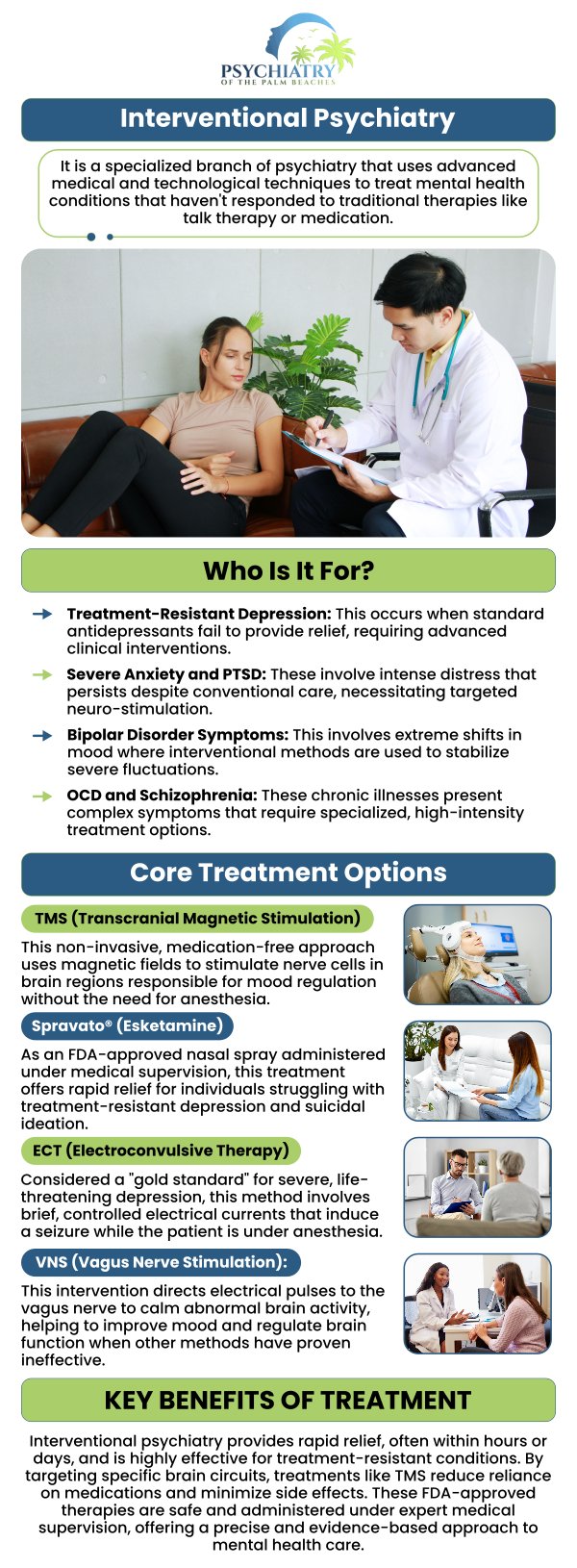
Table of Contents:
What is interventional psychiatry?
How does interventional psychiatry differ from traditional psychiatry?
What types of treatments are used in interventional psychiatry?
Who can benefit from interventional psychiatric treatments?
What conditions are commonly treated with interventional psychiatry?
Interventional psychiatry is a specialized branch of psychiatry that focuses on using advanced and often invasive techniques to treat mental health conditions that have not responded to conventional therapies like medication and psychotherapy. This field integrates various medical and technological interventions to provide relief for patients with severe or treatment-resistant psychiatric disorders.
Techniques used in interventional psychiatry include electroconvulsive therapy (ECT), transcranial magnetic stimulation (TMS), and deep brain stimulation (DBS). ECT involves inducing controlled seizures through electrical currents to alleviate symptoms of severe depression and other mental health conditions. TMS uses magnetic fields to stimulate nerve cells in the brain, which can help improve symptoms of depression, especially in patients who do not respond to medication.
Interventional psychiatry differs from traditional psychiatry in its approach to treating mental health conditions, particularly those that are resistant to conventional treatments. Traditional psychiatry primarily relies on a combination of psychotherapy and pharmacotherapy, where patients engage in talk therapy and take medications such as antidepressants, antipsychotics, and mood stabilizers to manage their symptoms. These methods are generally non-invasive and focus on adjusting brain chemistry and improving coping mechanisms through behavioral interventions.
In contrast, interventional psychiatry employs advanced, often invasive techniques that directly target the brain’s structure and function. This includes treatments like electroconvulsive therapy (ECT), which involves using electrical currents to induce controlled seizures that can rapidly alleviate severe depression and other mental illnesses. Another method is transcranial magnetic stimulation (TMS), where magnetic fields stimulate specific areas of the brain to improve mood and cognitive function, particularly in patients who have not responded to medication. Deep brain stimulation (DBS), a more invasive procedure, involves surgically implanting electrodes in the brain to modulate neural activity, offering potential relief for conditions such as obsessive-compulsive disorder and major depression.
Interventional psychiatry employs a variety of advanced treatments designed to target the brain more directly and intensively than traditional methods. These treatments are particularly beneficial for patients with severe or treatment-resistant psychiatric conditions. Interventional psychiatry expands the toolkit available for treating mental health conditions, offering hope to those who have not found relief through traditional psychiatric methods. Each of these treatments requires careful consideration of the patient’s specific condition and medical history to ensure the most effective and personalized care.
Electroconvulsive Therapy (ECT): ECT is one of the oldest and most well-known interventional psychiatric treatments. It involves applying controlled electrical currents to the brain to induce brief seizures. This procedure can provide rapid and significant relief from severe depression, bipolar disorder, and certain forms of psychosis, especially in cases where other treatments have failed.
Transcranial Magnetic Stimulation (TMS): TMS uses magnetic fields to stimulate nerve cells in specific regions of the brain associated with mood regulation. It is a non-invasive procedure commonly used to treat major depressive disorder, particularly in patients who do not respond to antidepressant medications. TMS sessions are typically conducted daily over several weeks.
Interventional psychiatric treatments offer a lifeline for individuals who have not found relief through traditional methods, providing advanced and targeted options to improve their mental health and quality of life. These treatments require careful evaluation and personalized planning to ensure they meet the specific needs of each patient
Major Depressive Disorder (MDD): Patients with severe or treatment-resistant depression often benefit from interventional treatments such as electroconvulsive therapy (ECT), transcranial magnetic stimulation (TMS), and ketamine infusions. These methods can provide rapid symptom relief when medications and psychotherapy are insufficient.
Bipolar Disorder: For individuals experiencing severe depressive or manic episodes that do not respond to standard mood stabilizers and antipsychotics, ECT can be an effective treatment option. It helps manage extreme mood swings and stabilizes mood more quickly than traditional therapies.
Obsessive-Compulsive Disorder (OCD): When conventional treatments like selective serotonin reuptake inhibitors (SSRIs) and cognitive-behavioral therapy (CBT) are ineffective, deep brain stimulation (DBS) and repetitive transcranial magnetic stimulation (rTMS) can be employed. These treatments target specific brain circuits to reduce the intensity and frequency of obsessive-compulsive behaviors.
Schizophrenia and Other Psychotic Disorders: Individuals with treatment-resistant schizophrenia or severe psychotic symptoms may benefit from ECT, which can help reduce psychosis and improve overall functioning. This is particularly useful when antipsychotic medications are not effective.
Advanced Interventional Psychiatry Care with Our Team
Interventional psychiatric treatments offer new, effective options for individuals who haven’t found relief through traditional therapy or medication. Under the guidance of our team, you gain access to cutting-edge approaches such as TMS therapy, Spravato (esketamine), and other evidence-based interventions designed to target complex mental health conditions. Our team provides comprehensive evaluations to determine which treatment fits your needs, ensuring a personalized plan that supports long-term healing and improved mental wellness.
Interventional psychiatry provides advanced treatment options for these conditions, offering hope and improved outcomes for patients who have not found success with traditional therapies. Our staff is here to guide you toward a path of healing and improved mental wellness. For more information, please contact us or book an appointment online. We are conveniently located at 6300 North Wickham Road Suite 110 Melbourne, FL 32940. We serve patients from Melbourne FL, Palm Bay FL, Suntree FL, Viera West FL, Satellite Beach FL, West Melbourne FL, and surrounding areas.
Check Out Our 5 Star Reviews



Additional Services You May Need
▸ Mental Wellness
▸ Relationship Coaching
▸ Depression and Mood Disorders
▸ Women’s Health
▸ Panic Disorder
▸ Medications Management
▸ Men’s Health
▸ Individual Psychotherapy
▸ Bipolar
▸ ADHD
▸ Geriatric Mental Health
▸ Couple’s Counseling
▸ Obsessive Compulsive Disorder
▸ Social Phobia Treatment
▸ Eating Disorders
▸ Post Traumatic Stress Disorder
▸ Psychotic Disorders



 Send Text
 How May I Help You?