

How Asperger’s Syndrome Affects Social Skills and Communication
Asperger’s Syndrome is a high-functioning form of Autism Spectrum Disorder characterized by significant difficulties in nonverbal communication and social interaction, such as struggling to read body language, tone, or social cues. These challenges often lead to literal interpretations of speech and difficulty maintaining eye contact or “flow” in conversation, which can make forming relationships hard despite the individual’s typically high intelligence. Dr. David Husted emphasizes that while these social deficits can cause feelings of isolation, personalized treatment and social skills training can effectively help individuals navigate these complexities and lead fulfilling lives. For more information, contact us or book an appointment online. Visit Psychiatry of the Palm Beaches serving Jacksonville, Boynton Beach, Palm Beach Gardens, Stuart, Royal Palm Beach, Port St. Lucie, Melbourne, Fort Lauderdale, and Jupiter, FL.
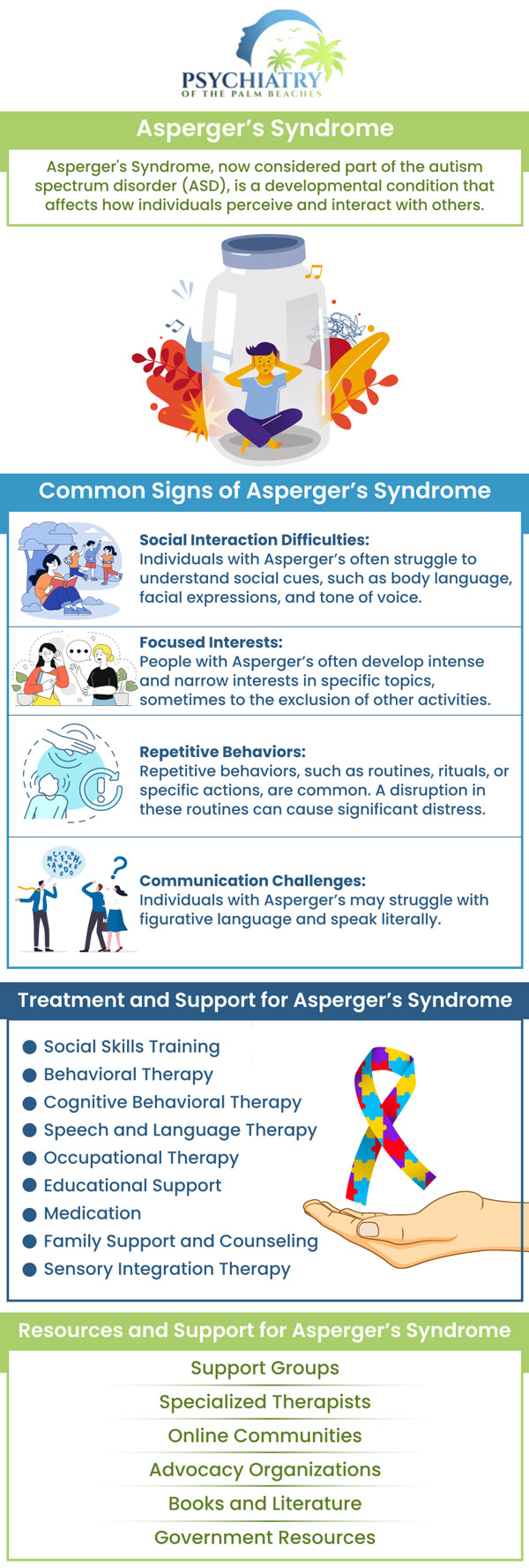
Table of Contents:
How does Asperger’s Syndrome affect social skills?
Do people with Asperger’s Syndrome have trouble with verbal communication?
Can someone with Asperger’s Syndrome learn social skills?
How does Asperger’s Syndrome affect empathy?
Understanding Asperger’s Syndrome: How It Affects Social Skills and Communication with Dr. David Husted and Psychiatry of the Palm Beaches
Asperger’s Syndrome, now recognized as part of Autism Spectrum Disorder (ASD), primarily affects the way individuals interact socially and communicate with others. At Psychiatry of the Palm Beaches, we understand that people with Asperger’s often have average to above-average intelligence and strong language skills, but may experience unique challenges in picking up on social cues and norms.
Our team frequently works with individuals who find it difficult to interpret body language, facial expressions, tone of voice, or the subtleties of conversation—such as sarcasm or implied meanings. These challenges can sometimes cause them to seem socially awkward or unaware, even though this is never their intention.
Children, teens, and adults with Asperger’s may struggle with starting or maintaining conversations, often focusing intently on their favorite topics without realizing others may not share the same interest. This can sometimes lead to one-sided discussions or missed opportunities for connection. They may also find it tough to navigate social rules like taking conversational turns, making eye contact, or respecting personal space. Because language is often taken literally, jokes, idioms, or metaphors can be confusing. We recognize that these social difficulties can make it challenging to form friendships or feel comfortable in group environments, sometimes leading to feelings of isolation or frustration. Our compassionate team provides individualized support, including social skills training, therapy, and guidance for families to help each client build confidence, improve social understanding, and develop meaningful relationships.
At Psychiatry of the Palm Beaches, we understand that individuals with Asperger’s Syndrome—now recognized as part of Autism Spectrum Disorder (ASD)—often experience unique differences in verbal communication. While many people with Asperger’s possess average to above-average intelligence and a strong vocabulary, they may still encounter challenges with the social side of communication.
Common areas of difficulty can include interpreting tone of voice, facial expressions, and body language, which are all key components of effective verbal interaction. Some individuals may interpret language very literally, making it harder to understand jokes, sarcasm, or idioms. Others may find it challenging to initiate or maintain conversations, or may speak in a way that sounds overly formal or monotone. It is also common for individuals to focus intently on topics of personal interest, sometimes without noticing if the listener is following along.
These communication differences are not a result of limited language ability, but rather reflect the distinctive ways that people with Asperger’s process and respond to social information. Our experienced clinicians can help individuals and families develop effective communication strategies through therapy, social skills training, and support. With the right guidance and practice, many people with Asperger’s thrive socially and build meaningful relationships.
Absolutely. At Psychiatry of the Palm Beaches, we understand that individuals with Asperger’s Syndrome—now recognized as part of Autism Spectrum Disorder (ASD)—often experience challenges with social interaction, communication, and interpreting social cues. However, with the right support and guidance, many people with Asperger’s can develop and strengthen their social skills.
Our team offers comprehensive social skills training, a therapeutic approach specifically designed to help individuals recognize social cues, understand conversational norms, and respond effectively in a variety of social situations. This training can be conducted in both individual and group settings by our experienced mental health professionals. We utilize evidence-based techniques such as role-playing, modeling, direct instruction, and the use of visual aids or social stories to make learning engaging and practical.
Progress in developing social skills is unique to each person and can depend on factors such as age, motivation, cognitive abilities, and the level of support available. Our practice emphasizes the importance of practicing these skills in real-life situations, and we encourage involvement from family members, teachers, and peers to provide ongoing encouragement and constructive feedback.
While social interaction may always require more conscious effort for some, consistent support and practice can lead to significant improvements. Early intervention and continuous learning are key to building greater confidence and independence in social situations.
People with Asperger’s often experience challenges with cognitive empathy. This means they may find it difficult to interpret subtle social cues—like facial expressions, tone of voice, or body language. As a result, they may struggle to intuitively understand the emotions or thoughts of those around them, sometimes appearing socially awkward or unaware of others’ feelings.
However, research and personal experience show that affective empathy is often intact—and sometimes even heightened—in individuals with Asperger’s. Once they recognize that someone is experiencing distress, many people with Asperger’s deeply care and want to help. The main challenge is in recognizing these emotional signals, not in feeling or expressing compassion.
Our experienced psychiatric team is committed to helping individuals with Asperger’s and their families understand these unique differences. Our approach includes:
Personalized Assessment: We provide thorough evaluations to help identify individual strengths and challenges related to social understanding and emotional awareness.
Social Skills Training: We offer evidence-based therapies designed to improve social communication, teach strategies to recognize social cues, and foster meaningful relationships.
Family Support & Education: We work closely with families to promote clear communication about emotions, helping loved ones better support and connect with individuals on the autism spectrum.
Compassionate Care: We strive to create a nonjudgmental environment where each individual’s experiences and feelings are respected and understood.
At Psychiatry of the Palm Beaches, led by Dr. David Husted, we are committed to providing compassionate, evidence-based care for individuals. Although Asperger’s is now classified under Autism Spectrum Disorder (ASD) in the DSM-5, many in our community still find the term helpful in describing people with average or above-average intelligence who primarily face challenges in social interaction and communication.
Our clinical team frequently works with individuals who show hallmark features of Asperger’s, such as a strong focus on specific interests and strengths in academic or technical fields. However, these individuals often experience significant difficulties interpreting social cues—like body language, facial expressions, or tone of voice—which can make daily interactions confusing or overwhelming. Understanding conversational subtleties, such as when to speak or listen, or recognizing humor and sarcasm, can also be challenging.
Communication differences may include unusual vocal tone, rhythm, or volume, and some may use especially formal or detailed language. It’s common for individuals with Asperger’s to discuss their favorite topics at length, sometimes missing cues that a conversation partner would like to shift the subject.
At Psychiatry of the Palm Beaches, we recognize that these challenges do not reflect a lack of desire for connection. In fact, many individuals with Asperger’s are eager to build relationships and may feel isolated or misunderstood because of their social difficulties. Our team believes in early intervention, personalized social skills training, and family-centered support to help each person reach their full potential.
Dr. Husted and our experienced clinicians tailor treatment plans to the needs of each individual, focusing on building confidence, developing practical social strategies, and fostering resilience. We also work closely with families and educators to promote understanding and acceptance, creating a supportive environment both at home and in the community. For more information, contact us or book an appointment online. We serve patients from Jacksonville, Boynton Beach, Palm Beach Gardens, Stuart, Royal Palm Beach, Port St. Lucie, Melbourne, Fort Lauderdale, Jupiter, FL, Delray Beach FL, Palm City FL, Wellington FL, Citrus Ridge FL, Riverside FL, Beau Rivage West FL, Palm Bay FL, Hollywood FL, North Palm Beach FL, and surrounding areas.
Check Out Our 5 Star Reviews



Additional Services You May Need
▸ Mental Wellness
▸ Relationship Coaching
▸ Depression and Mood Disorders
▸ Women’s Health
▸ Panic Disorder
▸ Medications Management
▸ Men’s Health
▸ Individual Psychotherapy
▸ Bipolar
▸ ADHD
▸ Geriatric Mental Health
▸ Couple’s Counseling
▸ Obsessive Compulsive Disorder
▸ Social Phobia Treatment
▸ Eating Disorders
▸ Post Traumatic Stress Disorder
▸ Psychotic Disorders



 Send Text
 How May I Help You?