

Why Do People With Schizophrenia Lose Interest in Daily Activities?
When most people hear the word schizophrenia, they think of hearing voices or experiencing beliefs that do not match reality. Yet some of the most exhausting parts of the condition are much quieter. You, or someone you love, might stop enjoying favorite hobbies, feel unable to start simple daily tasks, or seem emotionally distant. In psychiatry, these changes are called the negative symptoms of schizophrenia. Despite how the name sounds, “negative” does not mean having a bad attitude, and these struggles are never a sign of laziness or a lack of effort. At Psychiatry of the Palm Beaches in Jupiter, FL, our compassionate team provides a judgment-free space to talk through these quiet challenges and find realistic ways forward. For more information, contact us today or book an appointment. We are conveniently located at 3893 Military Trail Suite 3 Jupiter, FL 33458.
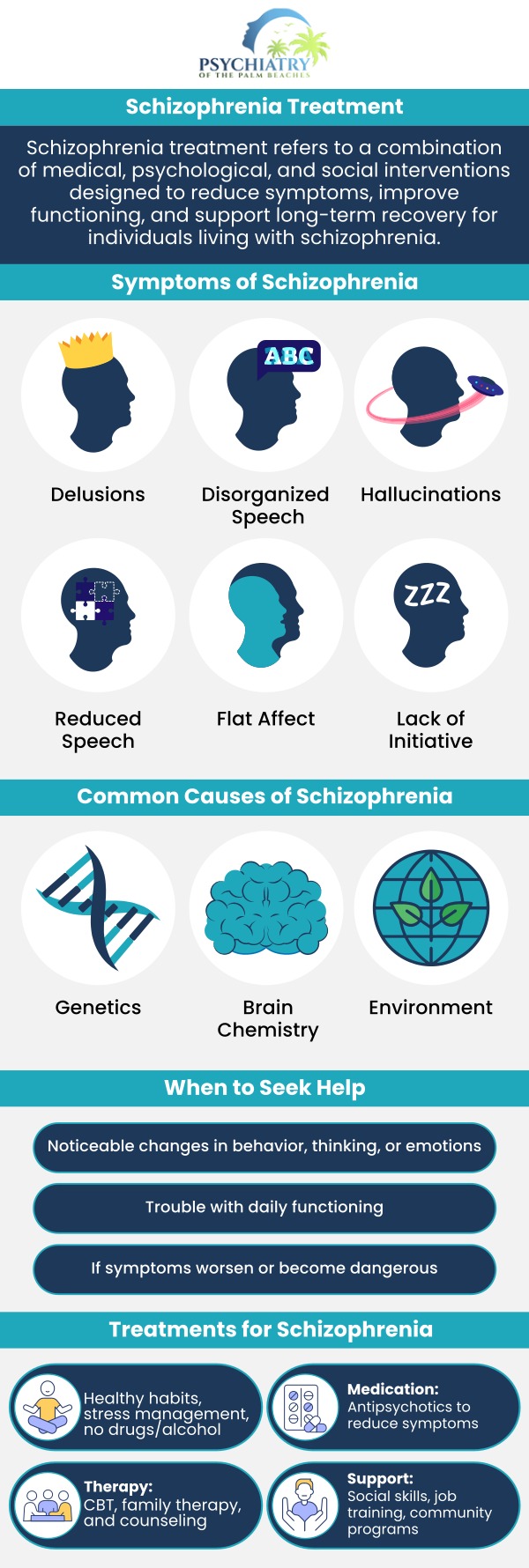
Table of Contents:
What are negative symptoms of schizophrenia?
How are negative symptoms different from hallucinations and delusions?
How can clinicians distinguish negative symptoms from depression or medication effects?
What support may help when reduced motivation affects everyday activities?
What concerns about reduced motivation or emotional expression should patients discuss with Psychiatry of the Palm Beaches in Jupiter, FL?
Negative symptoms involve a reduction in abilities or behaviors that are usually present. The word “negative” does not mean that someone has a negative attitude. It refers to something becoming less noticeable or harder to do.
Common examples include:
● Reduced motivation (avolition): Difficulty beginning or completing everyday activities, even when they matter to the person.
● Less emotional expression: Limited facial expressions, gestures, or changes in tone of voice.
● Reduced speech (alogia): Giving brief answers or speaking less than usual.
● Social withdrawal: Showing less interest in conversations or spending time with others.
● Reduced interest or pleasure (anhedonia): Finding it harder to look forward to or enjoy activities.
Someone may want to shower, prepare a meal, or call a friend but still struggle to follow through. Others may appear emotionally distant even though they continue to feel deeply. Symptoms vary in severity, and none of these changes alone confirms schizophrenia. Persistent changes deserve attention, especially when they interfere with self-care, relationships, school, or work.
Hallucinations and delusions are often called positive symptoms. “Positive” means an added experience, not something beneficial. Hallucinations involve hearing, seeing, or sensing something that is not present. Delusions are strongly held beliefs that do not match reality despite evidence to the contrary.
Negative symptoms, by contrast, involve a decrease in motivation, social engagement, speech, or visible emotion. A person might have fewer hallucinations after treatment yet continue to struggle with household tasks or connecting with friends.
Schizophrenia can also affect thinking skills, including memory, attention, and planning. These cognitive symptoms are related but distinct.
There is no single observation that can reliably explain reduced motivation or emotional expression. Clinicians look at the whole picture: when changes began, how long they have lasted, the person’s usual behavior, mood, sleep, physical health, and current treatment. With the patient’s permission, family members may help describe changes that are hard to notice during an appointment.
Depression can also cause low energy, less pleasure, and social withdrawal. Persistent sadness, hopelessness, or feelings of guilt may point toward depression, but the conditions can overlap or occur together. Medication side effects can create a similar picture. For example, drowsiness may reduce activity, while movement-related side effects can affect facial expression or physical movement.
Our team may review the timing of medication changes, ongoing hallucinations or fears, alcohol or drug use, sleep problems, and possible medical conditions. Someone avoiding people because of frightening beliefs may need different support from someone who has lost the drive to socialize.
Some symptoms arise directly from schizophrenia; others are influenced by separate, potentially treatable factors. Distinguishing them can take repeated assessments. Patients should report new symptoms or side effects and never stop or change prescribed psychiatric medication without speaking with their prescriber.
Support often begins with practical, manageable goals. Instead of expecting someone to restore an entire routine at once, it may help to choose one activity, break it into smaller steps, and create a predictable schedule. Gentle reminders, written checklists, and help from trusted people can reduce pressure. The person’s preferences should guide the plan; repeated criticism or demands may make daily challenges harder.
Clinical treatment depends on the cause of the symptoms and the person’s overall needs. Antipsychotic medication can reduce hallucinations and delusions, but persistent primary negative symptoms may respond less reliably. Medication also carries possible side effects, including sleepiness, weight changes, and movement problems, so follow-up is important.
Psychosocial approaches may also help with daily functioning. Depending on individual needs, options can include skills-based therapy, family education, social support, and programs that assist with work or education. These are general treatment options, not a promise that every program is available at our clinic. Progress may be gradual, and useful goals can be as simple as maintaining meals, attending an activity, or reconnecting with one person.
Tell our team what has changed and how it affects everyday life. Specific examples are helpful: missed meals, difficulty bathing, leaving schoolwork unfinished, avoiding friends, or speaking much less than before. Share when these changes started, whether they are getting worse, and which activities remain manageable.
It is also important to mention sadness, anxiety, sleep changes, missed doses, new medications, unwanted side effects, and alcohol or substance use. If family or caregivers have observations to share, we can discuss appropriate involvement with the patient’s consent. Our Jupiter practice provides schizophrenia care and medication management, allowing patients to raise questions about symptoms, treatment effects, and realistic goals during ongoing psychiatric visits.
At Psychiatry of the Palm Beaches, we encourage patients to discuss concerns early rather than waiting for daily routines to become unmanageable. For more information, contact us today or book an appointment. We are conveniently located at 3893 Military Trail Suite 3 Jupiter, FL 33458. We serve patients from Jupiter FL, Abacoa FL, Admiral’s Cove FL, West Jupiter FL, Palm Beach Gardens FL, and surrounding areas.
Check Out Our 5 Star Reviews



Additional Services You May Need
▸ Mental Wellness
▸ Relationship Coaching
▸ Depression and Mood Disorders
▸ Women’s Health
▸ Panic Disorder
▸ Medications Management
▸ Men’s Health
▸ Individual Psychotherapy
▸ Bipolar
▸ ADHD
▸ Geriatric Mental Health
▸ Couple’s Counseling
▸ Obsessive Compulsive Disorder
▸ Social Phobia Treatment
▸ Eating Disorders
▸ Post Traumatic Stress Disorder
▸ Psychotic Disorders



 Send Text
 How May I Help You?
