

Schizophrenia and Cognitive Difficulties: Memory, Attention, and Planning
Schizophrenia can affect more than a person’s thoughts, emotions, and perception of reality. It may also make everyday activities harder by affecting memory, attention, concentration, and planning. Someone may struggle to remember conversations, follow instructions, or organize daily responsibilities, even when other symptoms are well managed. At Psychiatry of the Palm Beaches in Goose Creek, SC, our team provides psychiatric evaluations, individualized treatment planning, and ongoing support for individuals living with schizophrenia. Understanding these cognitive challenges is an important part of recognizing when additional support may be helpful. For more information, contact us today or book an appointment online. We are conveniently located at 118 Springhall Drive Suites B&F Goose Creek, SC 29445.
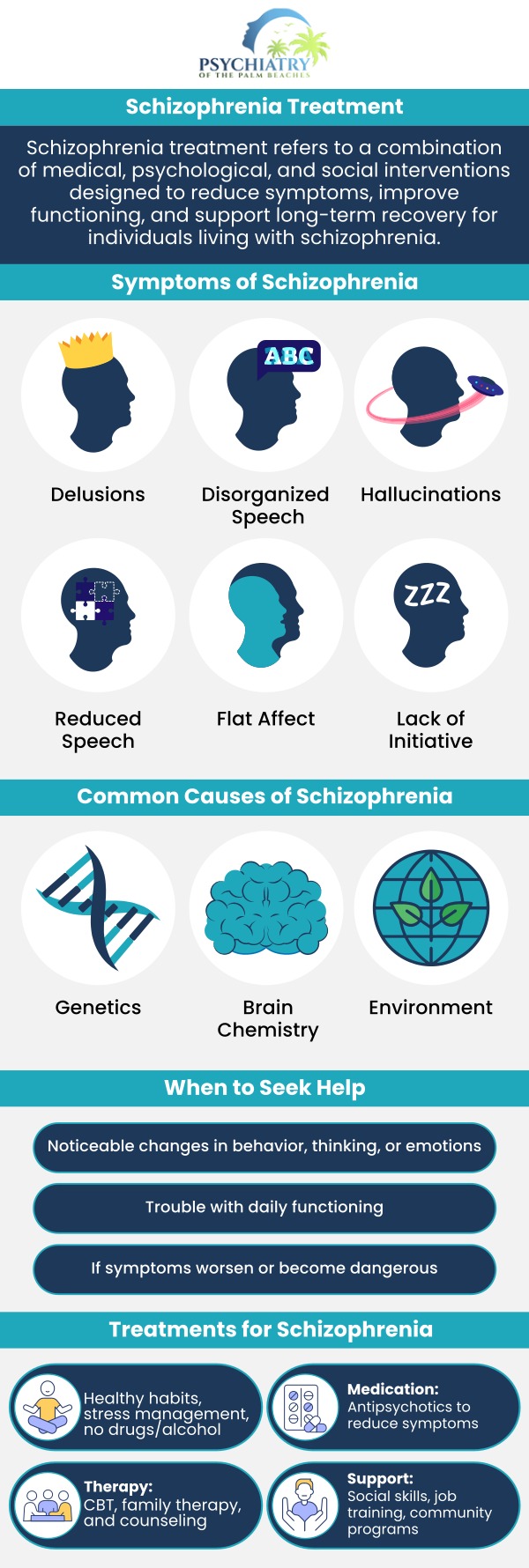
Table of Contents:
How can schizophrenia affect memory, attention, and planning?
What other factors might contribute to changes in thinking or concentration?
What practical tools can help with appointments and everyday responsibilities?
When should new or worsening cognitive difficulties be evaluated?
How can patients prepare to discuss memory and concentration concerns at Psychiatry of the Palm Beaches in Goose Creek, SC?
Medical References
Schizophrenia can affect several thinking skills, often called cognitive functions. These abilities help people process information, remember details, make decisions, and complete everyday activities. Cognitive difficulties vary from person to person and may continue even when hallucinations or delusions are less noticeable.
● Memory difficulties may involve trouble remembering information that was recently shared. For example, someone might forget appointment instructions, lose track of a conversation, or struggle to remember several tasks at once.
● Attention difficulties can make it challenging to concentrate on conversations, read for extended periods, or complete activities without becoming distracted. Tasks requiring several steps may feel especially demanding.
● Planning difficulties may affect the ability to organize activities, manage time, prioritize responsibilities, or make decisions. These skills are sometimes called executive functions.
Cognitive difficulties do not mean someone lacks intelligence or motivation. They are recognized features of schizophrenia that deserve attention and appropriate support. Recognizing them can help individuals and families develop more realistic expectations and helpful routines.
Not every memory or concentration problem is caused directly by schizophrenia. Several emotional, physical, and treatment-related factors can affect thinking abilities. Poor sleep, ongoing stress, depression, and anxiety may make concentrating or remembering information more difficult. Alcohol and recreational drugs can also interfere with cognitive functioning and complicate schizophrenia treatment.
Certain medications may contribute to drowsiness or reduced alertness. Although antipsychotic medications can help manage psychotic symptoms, they do not necessarily resolve every cognitive difficulty. Patients should discuss concerning side effects with their prescribing clinician rather than stopping or changing medication independently.
Physical health conditions can also play a role. Thyroid problems, vitamin deficiencies, infections, and other medical concerns may sometimes affect memory or thinking.
At Psychiatry of the Palm Beaches, our team considers patients’ symptoms, medical histories, medications, and overall mental health when discussing changes in daily functioning. Understanding possible contributing factors helps guide appropriate treatment decisions and referrals when needed.
Simple organizational strategies may help individuals with schizophrenia manage daily responsibilities more comfortably. These tools cannot eliminate cognitive symptoms, but they can reduce the amount of information someone must remember at one time.
A consistent daily routine can make important activities easier to follow. Keeping regular times for meals, sleep, appointments, and other responsibilities may provide helpful structure. Calendars and reminders can support appointment planning and important tasks. Phone alerts, written schedules, or visible calendars may be useful depending on personal preferences.
Breaking larger activities into smaller steps may also reduce frustration. Instead of trying to complete several household responsibilities at once, someone might focus on one task before moving to another.
Keeping medication information and appointment notes in one designated place can make health-related responsibilities easier to manage. Patients should ask their healthcare professionals about safe medication reminders and appropriate assistance when needed.
Some individuals may also benefit from structured cognitive training, skills-based therapy, or other rehabilitation services. These approaches require individual assessment, and their effectiveness can vary. Our team can discuss relevant concerns and whether additional professional support may be appropriate.
New, persistent, or worsening problems with memory, attention, and planning should be discussed with a healthcare professional, particularly when they interfere with everyday functioning.
For example, evaluation may be appropriate when someone repeatedly misses important appointments, has increasing trouble following familiar routines, struggles to manage essential responsibilities, or notices a meaningful change from their usual thinking abilities.
Our team may review mental health symptoms, sleep, medications, substance use, and physical health concerns. Additional medical testing or specialized cognitive assessment may be recommended depending on the situation.
Sudden confusion is different from gradual cognitive difficulty. Abrupt disorientation, trouble speaking, severe confusion, or confusion following a head injury requires immediate medical evaluation. Call 911 for sudden or severe symptoms.
When mental health symptoms become overwhelming, or someone experiences suicidal thoughts, confidential crisis support is available by calling or texting 988. Immediate danger requires emergency assistance. Early evaluation can help identify potentially treatable contributing factors and determine the next appropriate steps.
Preparing a few notes before an appointment can make it easier to explain cognitive concerns, especially when remembering details during conversations is challenging. Patients may find it helpful to record when their difficulties began, how often they occur, and which everyday activities are affected. Specific examples, such as forgetting instructions, losing concentration during conversations, or struggling with scheduling, can provide useful information.
Bringing a current medication list is also important. This should include prescription medications, over-the-counter products, and supplements. Patients can mention changes in sleep, mood, stress, physical health, or substance use that may be relevant.
At Psychiatry of the Palm Beaches, our team offers individualized schizophrenia treatment support that may include psychiatric evaluations, medication management, treatment planning, and ongoing monitoring. During appointments, patients can discuss how their symptoms affect daily responsibilities and what treatment goals matter most to them.
Patients may also bring a trusted family member or support person if they wish. Writing down questions and requesting clear instructions can make follow-up recommendations easier to understand. For more information, contact us today or book an appointment online. We are conveniently located at 118 Springhall Drive Suites B&F Goose Creek, SC 29445. We serve patients from Goose Creek FL, Summerville, Ladson FL, North Charleston FL, Moncks Corner FL, Hanahan FL, and other nearby communities across Berkeley and Charleston County.
• National Institute of Mental Health (NIMH) — Schizophrenia.
• National Library of Medicine (MedlinePlus) — Memory Loss.
• National Library of Medicine (MedlinePlus) — Confusion.
• Agency for Healthcare Research and Quality (AHRQ) — Be More Engaged in Your Healthcare.
• Centers for Disease Control and Prevention (CDC) — Mental Health Resources.
Check Out Our 5 Star Reviews



Additional Services You May Need
▸ Mental Wellness
▸ Relationship Coaching
▸ Depression and Mood Disorders
▸ Women’s Health
▸ Panic Disorder
▸ Medications Management
▸ Men’s Health
▸ Individual Psychotherapy
▸ Bipolar
▸ ADHD
▸ Geriatric Mental Health
▸ Couple’s Counseling
▸ Obsessive Compulsive Disorder
▸ Social Phobia Treatment
▸ Eating Disorders
▸ Post Traumatic Stress Disorder
▸ Psychotic Disorders



 Send Text
 How May I Help You?
