

Masochistic Sexual Behavior Treatment in Boynton Beach, FL
Treatment for Masochistic Sexual Behavior often combines psychotherapy, such as cognitive-behavioral techniques, with medication management to help individuals understand their triggers and reduce the compulsive nature of dangerous or distressing sexual urges. The therapeutic process focuses on resolving underlying emotional conflicts and establishing safer, healthier boundaries while addressing any co-occurring anxiety or depression. To navigate this recovery, please consult Dr. David Husted for a personalized treatment plan. For more information, contact us today or book an appointment online. We are conveniently located at 10301 Hagen Ranch Rd Suite D720, Boynton Beach, FL 33437.
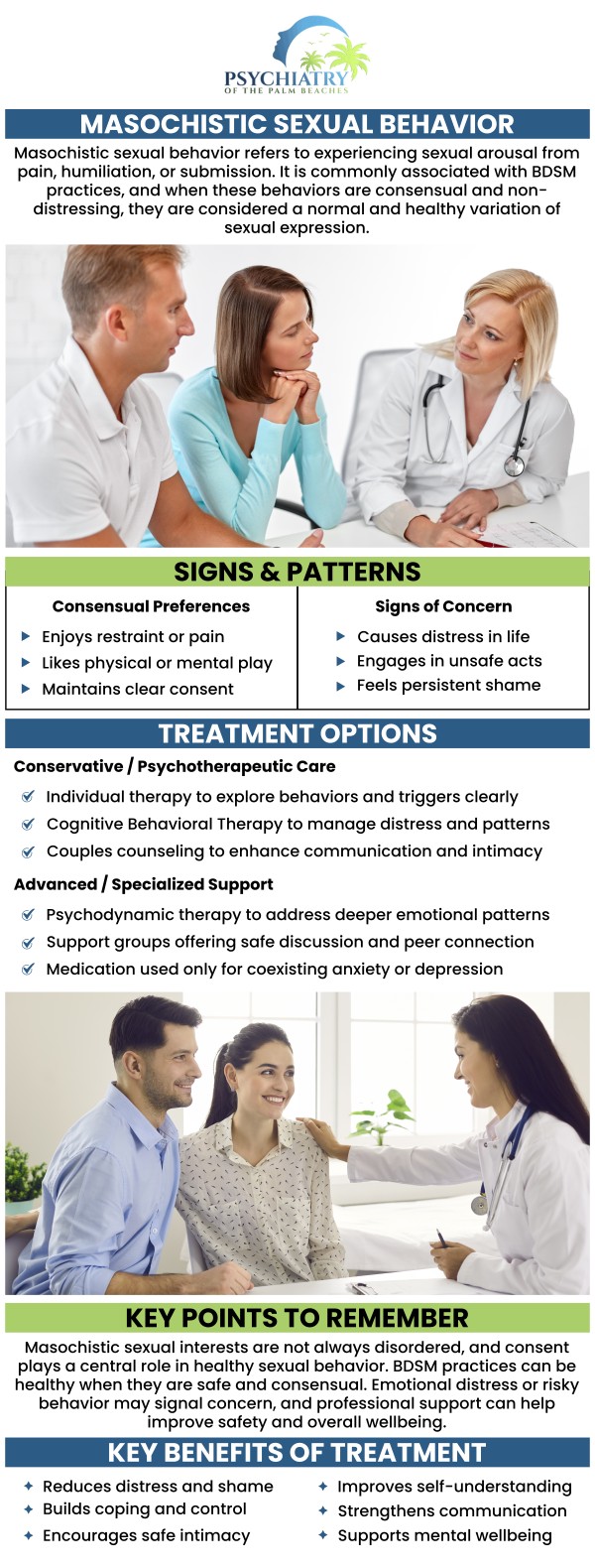
Table of Contents:
Can masochistic sexual behavior be treated in a relationship setting?
What is the best treatment approach for masochistic sexual behavior?
How can I tell if masochistic sexual behavior is becoming a problem?
Is masochistic sexual behavior related to past trauma?
Comprehensive Care for Masochistic Sexual Behavior with Dr. David Husted and Psychiatry of the Palm Beaches
Masochistic sexual behavior—deriving pleasure from pain, humiliation, or submission—is part of the broad spectrum of human sexual interests. When practiced consensually between adults, such interests are generally not considered psychiatric disorders and do not require intervention. However, challenges can arise if these behaviors cause emotional distress, relationship difficulties, or involve non-consensual elements. In such cases, seeking professional support can be beneficial.
Our Approach to Treatment
If masochistic sexual interests are creating concerns within a relationship, our team at Psychiatry of the Palm Beaches offers a supportive, nonjudgmental environment to address these issues. We encourage open communication between partners as the first step, helping couples discuss boundaries, preferences, and any worries they may have.
Our experienced mental health professionals provide couples therapy that focuses on:
● Enhancing mutual understanding
● Negotiating consent and boundaries
● Addressing emotional or psychological distress related to masochistic behavior
If one partner feels uncomfortable or pressured, our therapists facilitate honest conversations to help both individuals express their feelings and find mutually satisfying solutions. In situations where masochistic interests are linked to underlying mental health conditions or past trauma, individual therapy may also be recommended as part of a comprehensive treatment plan.
Our Commitment
Our goal is not to change or “cure” consensual sexual interests, but to ensure that both partners feel safe, respected, and fulfilled in their relationship. We tailor our treatment to the unique needs of each couple, always emphasizing consent, communication, and emotional well-being.
Masochistic sexual behavior—sometimes called sexual masochism—involves sexual pleasure from pain, humiliation, or suffering. Not all masochistic interests are harmful. When practiced consensually, safely, and without causing distress or impairment, it can be part of normal sexual diversity and may not require treatment.
However, if these behaviors cause emotional distress, interfere with daily life, or lead to harm, support can help. At Psychiatry of the Palm Beaches, our team offers confidential, nonjudgmental care for individuals seeking guidance about sexual behaviors and related concerns.
Our Approach to Care
Our psychiatrists and therapists provide comprehensive evaluations to understand your needs and identify possible contributing factors, including anxiety, depression, trauma, or compulsive patterns that may be connected to sexual behaviors.
Evidence-Based Treatment Options
Treatment is personalized. Psychotherapy—especially cognitive-behavioral therapy (CBT)—may help when distress is present. Therapy can support healthier coping skills, reduce guilt or shame, and explore emotional triggers. If trauma or compulsive sexual behaviors are involved, clinicians can address these issues in a structured, supportive way. In more complex cases where safety is a concern, psychiatric care may include more intensive interventions and, when appropriate, medication management with respect for privacy and personal values.
Safe, Nonjudgmental Environment
We provide a respectful, affirming space to discuss sexual health concerns openly. Our clinicians are knowledgeable in human sexuality and non-normative behaviors, helping you feel supported while focusing on safety, well-being, and healthy boundaries.
Consensual masochistic activities can be a healthy and fulfilling part of many individuals’ sex lives. However, our team encourages you to be mindful of how these behaviors impact your overall well-being—physically, emotionally, and socially.
Recognizing When It May Be a Problem
It’s important to pay attention to signs that your masochistic sexual behavior may be interfering with your health or daily life. Consider whether you and your partner are able to communicate openly, respect personal boundaries, and practice safe behaviors. If you find yourself frequently engaging in activities that result in unintended physical harm, or if you feel pressured to go beyond your comfort zone, this may indicate a need for further support.
Emotional responses are also key. Persistent feelings of guilt, shame, anxiety, or emotional distress related to your sexual experiences may signal underlying issues. We encourage self-reflection and honest conversations about your feelings and experiences.
Impact on Relationships and Daily Life
If your sexual behaviors are causing you to withdraw from friends, family, or social activities, or if you notice a decline in your work performance or daily functioning, these are important signs to consider. Compulsive urges or difficulty controlling these behaviors, especially when they result in negative consequences, may point to a pattern that could benefit from professional support.
Sometimes, people turn to sexual behaviors as a way to cope with difficult emotions or psychological distress. If you find that you are primarily engaging in masochistic activities to escape from problems or negative feelings, we are here to help you explore healthier coping strategies.
How Psychiatry of the Palm Beaches Can Help
Open communication, education about safe practices, and self-reflection are crucial for maintaining sexual health and well-being. If you are uncertain about your behaviors or if you feel your sexual practices are negatively affecting your life or relationships, our team offers confidential, nonjudgmental support.
Masochistic sexual behavior—meaning sexual pleasure from pain, humiliation, or submission—is not automatically linked to past trauma. Modern psychology and sexology do not support a universal or direct connection between masochistic interests and a history of abuse. For some individuals, trauma may play a role, and masochistic dynamics may be used to process emotions or regain a sense of control, but this is only true for a subset of people.
Many people engage in consensual masochistic behavior for reasons unrelated to trauma, such as personal preference, curiosity, or sensation-seeking. When practiced safely and consensually—often within BDSM—these experiences may support trust, intimacy, and satisfaction for some partners.
It’s also important to separate consensual activities from non-consensual or harmful behavior. At Psychiatry of the Palm Beaches, we emphasize consent, communication, and emotional safety in all sexual experiences. If these interests cause distress or interfere with daily life, our team offers confidential, nonjudgmental support to help you better understand your experiences without stigma.
At Psychiatry of the Palm Beaches, we understand that sexual health is a vital aspect of overall well-being and mental health. Our team, led by Dr. David Husted, offers specialized, evidence-based care for individuals experiencing distress or impairment related to masochistic sexual behavior. We are dedicated to providing a safe, nonjudgmental, and confidential environment where patients can openly address their concerns.
Understanding Masochistic Sexual Behavior
Masochistic sexual behavior involves deriving sexual arousal from experiences such as humiliation, pain, or restraint. These interests are only considered a mental health concern—such as sexual masochism disorder—when they lead to significant distress, cause problems in daily life, or carry a risk of harm. Our first priority is a thorough assessment to understand each patient’s unique situation. This includes exploring individual history, current behaviors, mental health status, and any co-occurring conditions.
Personalized and Compassionate Treatment
Our approach is highly individualized. Treatment may include:
Psychotherapy: Evidence-based therapies, such as cognitive-behavioral therapy (CBT), help patients identify and modify problematic thoughts and behaviors, build self-esteem, and develop healthy coping strategies.
Medication Management: For individuals experiencing compulsive behaviors or co-occurring psychiatric symptoms (such as mood or anxiety disorders), medication may be considered as part of an integrated treatment plan.
Couples Therapy: When appropriate, couples counseling can facilitate open communication, mutual understanding, and support within relationships.
Ongoing Support and Holistic Care
At Psychiatry of the Palm Beaches, our care is not limited to initial treatment. We provide ongoing support through regular follow-up appointments, progress monitoring, and flexible adjustment of care plans. Our experienced team is committed to reducing stigma and promoting the mental, sexual, and relational health of our patients. For more information, contact us today or book an appointment online. We are conveniently located at 10301 Hagen Ranch Rd Suite D720, Boynton Beach, FL 33437. We serve patients from Boynton Beach FL, Delray Beach FL, Lake Worth Beach FL, Palm Beach FL, Ocean Ridge FL, and surrounding areas.
Check Out Our 5 Star Reviews



Additional Services You May Need
▸ Mental Wellness
▸ Relationship Coaching
▸ Depression and Mood Disorders
▸ Women’s Health
▸ Panic Disorder
▸ Medications Management
▸ Men’s Health
▸ Individual Psychotherapy
▸ Bipolar
▸ ADHD
▸ Geriatric Mental Health
▸ Couple’s Counseling
▸ Obsessive Compulsive Disorder
▸ Social Phobia Treatment
▸ Eating Disorders
▸ Post Traumatic Stress Disorder
▸ Psychotic Disorders



 Send Text
 How May I Help You?