

Self-Defeating Personality Disorder in Adults – Recognizing the Patterns
At Psychiatry of the Palm Beaches, our team helps adults recognize the patterns of self-defeating personality disorder (SDPD). Individuals with SDPD often struggle with self-sabotaging behaviors, negative thought patterns, and low self-esteem. Our experienced team works closely with patients to identify these patterns and provide tailored treatment plans that foster healthier relationships and improved emotional well-being. Recognizing and addressing these behaviors is the first step toward effective recovery and lasting change. For more information, contact us or book an appointment online. Visit Psychiatry of the Palm Beaches serving Jacksonville, Boynton Beach, Palm Beach Gardens, Stuart, Royal Palm Beach, Port St. Lucie, Melbourne, Fort Lauderdale, and Jupiter, FL.
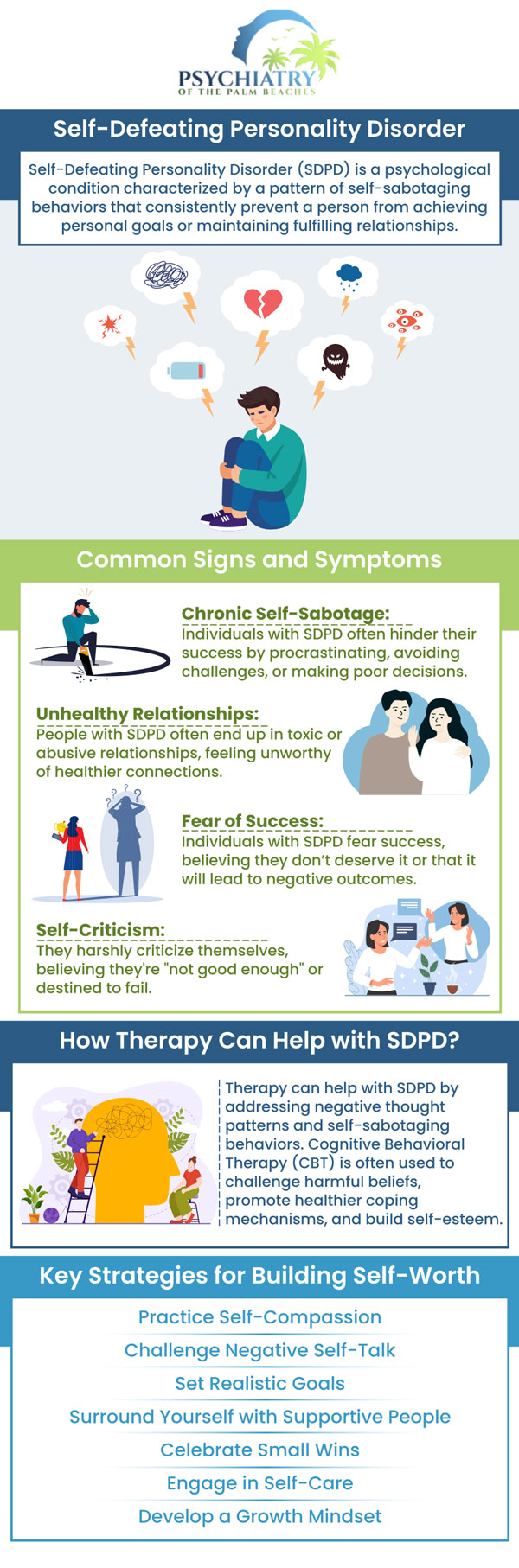
Table of Contents:
What are the most common behavioral signs of self-defeating personality disorder in adults?
How do self-defeating patterns typically develop over time?
Can early life experiences contribute to self-defeating personality disorder in adulthood?
How do adults with SDPD typically respond to success or praise?
What are common relationship challenges faced by adults with self-defeating personality disorder?
Breaking the Cycle of Self-Defeating Personality Disorder in Adults with Dr. David Husted
We recognize that navigating mental health challenges can be complex—especially when patterns of behavior seem to undermine your own happiness and well-being. One such challenge is self-defeating personality disorder (sometimes called masochistic personality disorder). This condition is marked by persistent patterns where individuals, often unconsciously, place themselves in situations that lead to disappointment, failure, or mistreatment, even when healthier options are available.
In our clinical experience, adults with self-defeating personality disorder may:
● Habitually choose relationships or environments where their needs are not met, or where they experience repeated setbacks and rejection.
● Sabotage their own success by turning down opportunities, ending positive relationships, or dismissing praise and encouragement—even when these could lead to greater satisfaction or achievement.
● Respond to positive events with guilt or discomfort, sometimes going so far as to negate these experiences by engaging in self-sabotaging actions.
● Consistently put others’ needs ahead of their own to the detriment of their own health and happiness, often driven by a sense of undeservedness.
● Provoke anger or rejection from others, engaging in arguments or provocative behaviors that reinforce feelings of unworthiness.
● Resist support or guidance, perceiving help as undeserved or feeling uneasy about the possibility of positive change.
These behavioral patterns are deeply ingrained and can affect all aspects of life—including work, friendships, and intimate relationships. While they often begin in early adulthood, they are not simply a reflection of cultural or family values; rather, they are persistent and can have significant negative consequences for an individual’s quality of life.
Our team is experienced in diagnosing and treating complex personality patterns like self-defeating personality disorder. We provide compassionate, evidence-based care tailored to each individual’s needs. Our approach may include:
● Comprehensive psychiatric evaluation to rule out other conditions and establish an accurate diagnosis
● Individualized psychotherapy, such as cognitive-behavioral therapy (CBT) or schema therapy, to help identify and change self-defeating patterns
● Supportive counseling and medication management if co-occurring mood or anxiety disorders are present
● Education for patients and families to foster understanding, healthy boundaries, and positive relationships
At Psychiatry of the Palm Beaches, we understand that self-defeating patterns can have a profound impact on your mental health and overall well-being. These patterns often develop gradually, shaped by early experiences, family dynamics, and the ways you’ve learned to cope with challenges or emotional distress. For many individuals in our Palm Beach community, these patterns may begin in childhood or adolescence—sometimes rooted in environments where emotional needs were overlooked or met with criticism. Over time, such experiences can lead to negative beliefs about oneself, which influence how you respond to stress, setbacks, or relationships.
Our psychiatric team regularly sees how these deeply ingrained patterns can persist into adulthood. For example, if you grew up fearing rejection, you might now avoid close relationships, leading to isolation and reinforcing feelings of unworthiness. These cycles are often maintained by negative thoughts, emotions, and behaviors, becoming difficult to break without help.
Our compassionate clinicians help you recognize and understand these self-defeating patterns. Many people are unaware of how their thoughts and behaviors may be contributing to ongoing struggles. Through professional evaluation, therapy, and evidence-based treatment, we support you in gaining insight and developing healthier ways of thinking and responding to life’s challenges.
We recognize that early life experiences can significantly influence the development of self-defeating personality traits that persist into adulthood. Self-defeating personality disorder—sometimes referred to as masochistic personality disorder—is characterized by patterns of behavior where individuals unconsciously undermine their own well-being, often by seeking out relationships or situations that lead to disappointment or failure.
Our team of experienced psychiatrists and mental health professionals understands that adverse childhood experiences—including chronic criticism, neglect, emotional abuse, or inconsistent caregiving—can contribute to these self-defeating behaviors. When children grow up in environments where their emotional needs are unmet or where positive achievements are met with negative feedback, they may internalize the belief that they are undeserving of happiness or success. These beliefs can shape their self-identity, impacting the types of relationships and situations they seek as adults.
Additionally, individuals raised in families where love and acceptance are conditional may come to associate suffering or self-sacrifice with approval or affection. This can lead to a cycle where, as adults, they repeatedly engage in self-sabotaging behaviors or remain in unfulfilling relationships to maintain a sense of familiarity or control. Such patterns can become deeply ingrained, making it challenging to break free without professional support.
We emphasize that not everyone exposed to adverse early experiences will develop self-defeating personality traits. Factors such as genetics, resilience, and positive relationships later in life can help mitigate the impact of early adversity. However, understanding the link between early life experiences and adult personality patterns is crucial for effective prevention and treatment.
Our practice offers evidence-based psychotherapeutic approaches, including cognitive-behavioral therapy (CBT), to help individuals recognize and challenge maladaptive beliefs. We work collaboratively with our patients to foster healthier ways of relating to themselves and others, empowering them to break free from self-defeating cycles and achieve lasting emotional well-being.
Personality Disorder (SDPD)—also known as masochistic personality disorder—often faces unique emotional challenges, especially when it comes to experiencing success or receiving praise. Rather than feeling validated or uplifted by positive feedback, individuals with SDPD may experience discomfort, guilt, or even anxiety when they achieve something significant or are complimented by others.
Our clinicians frequently observe that patients with SDPD may minimize their accomplishments, deflect praise, or attribute their success to luck instead of their own abilities. Some may even become suspicious of the motives behind the praise, fearing insincerity or worrying about potential disappointment in the future. In certain cases, such positive recognition may inadvertently trigger self-sabotaging behaviors, as individuals unconsciously seek to return to a more familiar state of struggle or failure.
These patterns often stem from deeply rooted beliefs about unworthiness or a perceived need to maintain relationships through self-sacrifice and suffering, making any form of positive recognition feel uncomfortable or even threatening. As a result, many adults with SDPD have difficulty internalizing positive experiences and may struggle to develop a healthy sense of self-worth.
Our experienced team provides compassionate, evidence-based therapeutic support to help individuals with SDPD challenge these self-defeating patterns. Through personalized treatment plans, we work with our patients to foster healthier responses to success and affirmation, empowering them to embrace their strengths and build more fulfilling lives.
We understand that adults living with self-defeating personality disorder (SDPD)—sometimes called masochistic personality disorder—often face unique and recurring challenges in their relationships. Our team frequently works with individuals who find themselves stuck in patterns that are difficult to break, particularly when it comes to forming and maintaining healthy connections with others.
One common struggle we see is a tendency to remain in relationships that are emotionally or physically unhealthy. Many adults with SDPD repeatedly choose partners who are critical, demanding, or even abusive, which can reinforce feelings of low self-worth or negative self-perception. These cycles are often difficult to recognize and even harder to change without professional support.
Another challenge is the pattern of undermining one’s own happiness or well-being. Even when positive experiences or genuine affection are present, individuals with SDPD may dismiss compliments, reject support, or unintentionally provoke conflict. This can be confusing and distressing for both the individual and their loved ones, leading to misunderstandings and emotional distance.
Difficulty expressing needs and setting healthy boundaries is also a frequent concern among our patients. Prioritizing a partner’s desires at the expense of their own can lead to resentment, frustration, or emotional exhaustion. At Psychiatry of the Palm Beaches, we help individuals explore the roots of these patterns and develop skills to communicate their needs more openly and assertively.
Self-defeating personality disorder (SDPD) often involves patterns of self-sabotage and low self-worth. Our team at Psychiatry of the Palm Beaches works with adults to recognize these harmful patterns and provides support to break the cycle. Through therapy, patients can develop healthier coping mechanisms and self-beliefs, leading to more positive life outcomes.
Feelings of guilt or unworthiness may cause someone to misinterpret positive interactions as criticism or rejection, making it hard to trust or connect with others. This can result in withdrawal or passive-aggressive behavior, further straining relationships and reinforcing beliefs of inadequacy or being unlovable. We have convenient locations to serve you. For more information, contact us or book an appointment online. We have convenient locations to serve you. We serve patients from Boynton Beach FL, Delray Beach FL, Palm Beach Gardens FL, Jupiter FL, Stuart FL, Palm City FL, Royal Palm Beach FL, Wellington FL, Citrus Ridge FL, Jacksonville FL, Riverside FL, Port St. Lucie, Beau Rivage West FL, Melbourne FL, Palm Bay FL, Fort Lauderdale FL, Hollywood FL, Jupiter FL, North Palm Beach FL, and surrounding areas.
Check Out Our 5 Star Reviews



Additional Services You May Need
▸ Mental Wellness
▸ Relationship Coaching
▸ Depression and Mood Disorders
▸ Women’s Health
▸ Panic Disorder
▸ Medications Management
▸ Men’s Health
▸ Individual Psychotherapy
▸ Bipolar
▸ ADHD
▸ Geriatric Mental Health
▸ Couple’s Counseling
▸ Obsessive Compulsive Disorder
▸ Social Phobia Treatment
▸ Eating Disorders
▸ Post Traumatic Stress Disorder
▸ Psychotic Disorders



 Send Text
 How May I Help You?